
India begins bid for UNSC non-permanent seat
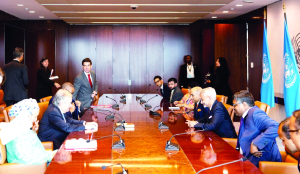
India will ensure that issues such as free, open and rule-based maritime order, including safety of seafarers, and countering terror financing get the “attention they deserve” at the UN Security Council, External Affairs Minister S Jaishankar has said.
Jaishankar made these remarks as he launched India’s official campaign for a non-permanent seat on the UN Security Council (UNSC) for 2028-29 on Monday at an event at the world body’s headquarters, attended by UN ambassadors, diplomats and officials. India has been a non-permanent member of the UNSC eight times so far. The last time it held the seat was in 2021-22.
The minister’s comments come at a time when several Indian seafarers have been killed in strikes and many rescued, as commercial vessels came under attack amid escalating tensions in West Asia.
Jaishankar said India is launching its UNSC candidature at a time when the world is facing a “profound paradox”. “Never before has the world possessed such immense capabilities to advance human welfare at this scale. At the same time, we are witnessing levels of conflict, violence and instability that threaten even those who may be very far away,” he said.
“To address this complexity, the United Nations must take the lead and the Security Council must show the way. Elections to its membership, consequently, assume great importance,” he further said. Jaishankar also said that India’s approach to the UN is rooted in ‘SHANTI: Securing Holistic Advancement through Norms, Trust and Integrity’, as he outlined in detail New Delhi’s priorities for the UNSC term. The priorities he listed were “a voice of the Global South, advancing reformed multilateralism, future-ready peacekeeping, addressing threats posed due to misuse of AI, securing maritime commons, and countering terror financing”. “In an era where supply chains connect our economies, the world is also increasingly focused on securing the maritime commons,” Jaishankar said.
He said the challenge begins with ensuring adherence to relevant international law, specifically the UN Convention on the Law of the Sea (UNCLOS). “Our collective interest is in maintaining safe and unimpeded flow of maritime commerce,” he said, adding that nations with requisite capabilities must also cooperate to combat piracy.