
Great Nicobar: Between strategic destiny and environmental responsibility
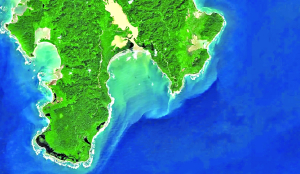
The renewed controversy surrounding the Rs 81,000 crore Great Nicobar holistic development project, triggered by Rahul Gandhi’s recent visit to the island, has once again brought into focus a larger national dilemma: how should India balance environmental concerns with strategic imperatives in an increasingly contested Indo-Pacific region? The debate is both necessary and healthy in a democracy. However, what is worrying is the manner in which some sections are attempting to portray the project solely as an ecological disaster while completely ignoring the island’s immense strategic and economic significance for India’s future maritime posture.
Having spent nearly five years in the Andaman and Nicobar Islands during my service years, I have often wondered why such a strategically located territory — situated near one of the world’s most critical maritime chokepoints — remained underutilised for decades. Great Nicobar is not merely another remote island. It is India’s southern sentinel at the mouth of the Malacca Strait, through which a substantial portion of global trade and nearly three-fourths of China’s energy supplies transit every year. Any nation with long-term strategic vision would naturally seek to develop critical infrastructure in such a location. The proposed project includes an international container transshipment terminal at Galathea Bay, a dual-use military-civil airport, power infrastructure, and an integrated township. Critics see environmental destruction; strategic thinkers see India finally awakening to maritime realities that regional powers have understood for decades.
One does not have to travel far to witness how geopolitics shapes island development. The Indonesian archipelago, located close to Great Nicobar, has undertaken extensive maritime and infrastructure expansion to secure its strategic interests and economic future. Across Southeast Asia, nations are rapidly building ports, logistics hubs, and surveillance infrastructure to strengthen their position in the Indo-Pacific competition. India cannot afford strategic hesitation while others consolidate influence around us.
This is particularly important in the present geopolitical environment, where maritime competition in the Indian Ocean Region is intensifying. The Andaman and Nicobar Islands provide India with a natural strategic advantage unmatched by any other regional power.
To neglect this advantage would be strategically irresponsible.
At the same time, it would be equally irresponsible to dismiss genuine ecological and tribal concerns. Great Nicobar is ecologically fragile, falls in Seismic Zone V, and hosts rare biodiversity, including the endangered leatherback turtle. The Shompen and Nicobarese tribal communities possess unique cultural identities that deserve the highest degree of protection and sensitivity.
I have personally been fortunate to interact with the friendly and dignified Shompen tribals during several visits to Great Nicobar. Their simplicity, self-sustaining lifestyle, and deep connection with nature leave a lasting impression on any visitor. Development cannot and should not become an excuse for cultural erasure or insensitive displacement. However, it is equally important not to romanticise isolation in a manner that permanently condemns such regions to underdevelopment and strategic irrelevance. History shows that large infrastructure projects inevitably involve some degree of displacement or ecological alteration. The real test of governance lies in how responsibly and humanely these challenges are managed. If rehabilitation becomes necessary, it must follow internationally accepted norms and ensure livelihood security, cultural continuity, healthcare, education, and dignified resettlement. Environmental safeguards too must remain scientific, transparent, and continuously monitored. Development and conservation need not always be opposing forces if approached with accountability. At the same time, opposition to the Great Nicobar project also reflects a larger lack of strategic vision. In today’s world, maritime infrastructure, island territories, logistics hubs, and surveillance systems are central to national security. India cannot afford to remain strategically constrained in the Indo-Pacific region. I am reminded here of a deeply unfortunate episode from my own professional experience concerning Narcondam Island. Based on operational recommendations, the government had approved the installation of a radar system on this strategically located island as part of our maritime domain awareness and static sensor chain.
The proposal had received clearance from the Ministry of Defence because of its immense importance for maritime surveillance. However, in 2012, under pressure from certain environmental groups and NGOs, the proposal was rejected by the Environment Ministry on the grounds that the island’s hornbill population might face regenerative issues due to radar installation in a very small corner of the island. Consequently, the radar had to be shifted elsewhere, leading to significant maritime surveillance gaps in a strategically sensitive region.
This episode remains a classic example of how excessive bureaucratic caution and narrowly framed environmental objections can sometimes undermine national security interests. Some experts believe that non-approval of this radar was due to pressure from certain external powers through some voluntary groups. Environmental protection is undoubtedly essential, but strategic blindness can prove equally dangerous.
India today stands at a crucial strategic crossroads. The Indo-Pacific is rapidly emerging as the epicentre of global power competition. China’s maritime expansion, port acquisitions, dual-use infrastructure projects, and naval outreach across the Indian Ocean are no longer speculative concerns; they are visible realities. In such an environment, strengthening the Andaman and Nicobar Islands is not an option but a necessity.
The Great Nicobar project should therefore not be viewed through the simplistic binary of “development versus environment”. It must instead be approached as a national mission requiring balance, scientific planning, transparency, environmental sensitivity, and strategic clarity. Constructive criticism is valuable. Alarmism that paralyses national initiatives is not. India’s strategic planners must ensure robust ecological safeguards, protect tribal rights, and minimise environmental damage. Yet the nation must also recognise that opportunities of this magnitude are rare, and countries rise by anticipating future geopolitical realities.
Great Nicobar offers India a major opportunity to strengthen maritime security, expand regional influence, generate employment, and project power responsibly in the Indo-Pacific.
Debate must continue, but with strategic maturity rather than emotional absolutism. National development, environmental stewardship, and tribal welfare are not mutually exclusive. With political will and careful planning, India can achieve all three together.
The author is a retired Additional Director General of the Indian Coast Guard and has served in the Andaman and Nicobar region for five years in various capacities, including Commander of the entire region; Views presented are personal.