
Government clears private university Bill
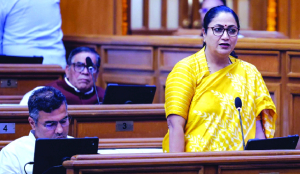
The Delhi Cabinet has approved a draft Bill for the establishment and incorporation of private universities in the National Capital Territory.
The draft Bill reserved 25 per cent of seats in every programme for Delhi students, permitting multi-storey urban campuses in place of the traditional large land-based model given the Capital’s limited land availability. The Bill also provides for the establishment of a Delhi Private Universities Regulatory Authority to oversee standards, admissions, examinations, and institutional governance.
The Bill will now be introduced in the Delhi Legislative Assembly for consideration and passage. Chief Minister Rekha Gupta said the approval marks the beginning of a new era in higher education in Delhi, creating a modern, transparent, and effective legal framework for world-class private universities in the Capital. The 25 per cent seat reservation for Delhi students in all programmes addresses a core concern about private universities potentially drawing students from across the country while providing limited benefit to local residents. The reservation will apply in accordance with the applicable reservation policy.
The Chief Minister said that despite being the nation’s Capital, Delhi had remained one of the few major regions without a clear legal framework for the establishment of private universities. As a result, a large number of students had to move to neighbouring states or abroad in search of quality higher education. Once the Bill comes into force, students will have the opportunity to study at world-class and competitive higher education institutions within their own city.
On the campus model, the bill departs from the conventional requirement of large horizontal campuses, which has historically made private university establishment difficult in land-constrained cities like Delhi. Instead, the bill allows modern multi-storey urban campuses with emphasis on academic quality, research capability, student facilities, and institutional governance rather than land area. Rather than focusing solely on expansive horizontal campuses, greater emphasis will be placed on academic quality, adequate infrastructure, research capability, student facilities, and institutional governance.
Every proposal for a private university will be evaluated by a committee comprising senior government officials, eminent academicians, UGC representatives, and financial experts. Universities will receive approval only on the basis of this committee’s recommendations. The proposed private universities will be entirely self-financed and will not receive regular government grants, though they will be eligible for research project funding under applicable rules.
The Delhi Private Universities Regulatory Authority, to be established under the bill, will oversee teaching standards, research, institutional governance, admissions, examinations, student records, and overall institutional performance. The Authority will also have the power to issue corrective directions when needed.
The Chief Minister said despite being the national capital, Delhi had remained one of the few major regions without a clear legal framework for private universities, forcing large numbers of students to move to neighbouring states or abroad for quality higher education. She said once the bill comes into force, students will be able to pursue world-class education within their own city, reducing financial burden on families and allowing students to remain close to home.
The objective is to provide students with better academic opportunities, promote research and innovation, encourage entrepreneurship, strengthen collaboration between academia and industry, and foster international academic partnerships.
Education Minister Ashish Sood framed the bill as correcting a longstanding anomaly. “While the Capital of India became a hub for students preparing for higher education, it did not become a destination for pursuing quality higher education itself. World-class private universities continued to be established in neighbouring states, while Delhi’s students were compelled to leave their own city,” he said. He said the objective is to make Delhi the Knowledge Capital of India.
The bill also creates a pathway for internationally reputed institutions and their off-campus centres to establish a presence in Delhi, strengthening the capital’s position as a higher education destination. The initiative is aligned with the National Education Policy 2020. The Chief Minister said the decision will encourage investment in education, accelerate research and innovation, create employment, and help Delhi evolve into a globally competitive higher education ecosystem.