
Future Forecast: How This Brand Is Quietly Set to Win India’s Baby Care Market
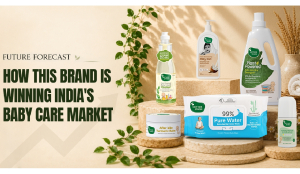
India’s baby-care market is being reshaped, not by the International giants we once followed or by one-size-fits-all skin formulations, but by brands that truly understand how parenting itself has evolved.
For a generation of digitally connected parents, baby care is no longer a quick supermarket decision. It is a high-consideration purchase shaped by ingredient lists, peer reviews, product convenience, delivery speed and, above all, trust. In this environment, homegrown brands like Mother Sparsh can pair cultural relevance with credible product experiences and have a meaningful opening.
It has built its presence steadily, beginning with a focused product proposition and expanding into a wider everyday-care portfolio. The next phase of its journey will test whether it can convert early trust and digital momentum into lasting category leadership.
A Category Moving Beyond the Traditional Shelf
Baby care in India was once led largely by established multinational names, with product choices often shaped by familiarity, doctor recommendations and store availability. That is changing quickly.
A 2025 Numerator study reported that nearly two-thirds of urban Indian households now buy baby-care products online, compared with about one-fourth four years earlier. The same study found a strong preference for premium and additive-conscious products during a child’s first two years, signalling that parents are increasingly willing to research and spend on products they believe suit their child’s needs.
This shift has created room for brands that do more than offer lotions, wipes or cleansers. Parents now look for clarity, relevance and consistency. They want a brand that understands the difference between a newborn-care routine, a toddler’s outdoor needs and the daily hygiene demands of a growing child.
That is where digitally native Indian brands have an advantage. They can listen faster, launch more specific solutions and build relationships with consumers well before a product reaches a physical shelf.
The Mother Sparsh Story: A Consumer Gap Becomes a Brand
Mother Sparsh was founded by Dr. Himanshu Gandhi after he identified a gap in baby-care products that felt both contemporary and rooted in familiar Indian care practices. Reporting on their early journey, The New Indian Express noted that the founder began research in the category since 2016, and later, when he identified the market gap, he left his role as prestigious government official in Haryana to focus fully on the venture in 2018.
The company’s early breakthrough came through its 99% Pure Water Unscented Baby Wipes, a product built around a simple and recognisable parental habit: cleansing with cotton and water. It was a focused proposition, but strategically important. Wipes are not a one-time purchase; they are a repeat-use category where product experience quickly becomes a matter of routine.
The brand’s early distribution playbook also mattered. Instead of relying solely on broad-reach advertising, Mother Sparsh used hospital and maternity-centre sampling to introduce products at a moment when parents are actively forming new care habits.
That approach is worth noting because baby-care brands are rarely built through packaging alone. They are built through repeat purchases, recommendations between parents and the quiet credibility that comes when a product becomes part of a daily routine.
Why Product Relevance Matters More Than Brand Noise
Mother Sparsh’s broader strategy has been to extend from a single hero product into adjacent care needs: baby skincare, hygiene, laundry care, mosquito protection, oral care and kid’s products.
The point is not simply portfolio expansion. It is the attempt to become relevant across multiple care occasions within the same household.
A parent who first discovers a brand through wipes may later need a bathing product, a moisturiser, a bottle cleanser or a child-friendly hygiene essential. For a baby-care company, that creates a more durable growth model than depending on a single flagship SKU.
The brand’s formulation and communication philosophy also fits the current mood of the market. It draws from ingredients and routines that feel familiar to Indian households, while presenting them in modern formats that are easier to use in everyday life. This combination of cultural familiarity and convenience is becoming increasingly valuable as parents seek products that feel practical rather than overly technical or intimidating.
Still, the real differentiator is likely to be whether those products deliver a consistently reliable experience. Ingredient-led storytelling may attract attention, but repeat purchases come only when the product performs well, remains accessible and earns confidence over time.
Omnichannel Reach Is Becoming a Competitive Moat
Mother Sparsh’s future will also depend on how well it manages distribution.
The brand has built a digital-first presence through its own website and e-commerce channels, while also maintaining a focused offline presence in baby stores. In 2025, ITC described the company as having a robust online ecosystem, with products available through its dedicated website, e-commerce channels and baby-speciality retail.
Its wider availability across marketplaces and quick-commerce platforms adds another layer of relevance. Baby-care purchases are often driven by urgency: an empty wipes pack, a last-minute travel need or an unexpected hygiene requirement does not always allow for a planned store visit. The ability to be visible where parents browse, compare and reorder is becoming just as important as brand messaging.
This is where an omnichannel strategy can become more than a distribution checklist. It gives a brand multiple ways to win: discovery through social media, consideration through reviews, conversion through marketplaces and repeat ordering through convenience platforms.
A Quiet but Credible Contender
Mother Sparsh’s story reflects a larger trend in Indian consumer business: the rise of brands that understand local habits, build digitally and earn relevance through everyday use rather than oversized promises.
Its early focus on a repeat-use product, its effort to translate familiar care practices into modern formats, its growing omnichannel presence and ITC’s planned acquisition together give the brand a meaningful strategic foundation.
Whether it becomes one of India’s defining baby-care names will depend on execution, not headlines. But in a market where parents increasingly reward relevance, reliability and transparency, Mother Sparsh appears to have built the kind of platform from which long-term category influence is possible.