
European leaders meet over Arctic routes, resources and Russian security concerns
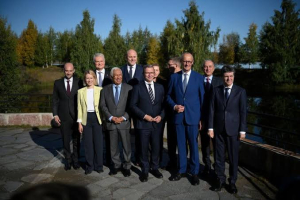
European leaders gathered in Finland on Monday to discuss intensifying competition in the Arctic, where melting ice is opening new maritime routes, vast natural resources are attracting global interest and Russia's military buildup is raising security concerns.
German Chancellor Friedrich Merz and Danish Prime Minister Mette Frederiksen were among the leaders expected to attend the two-day European Arctic Summit in Rovaniemi, a city known internationally for its Santa Claus Village.
The summit, which began Sunday, comes shortly after Norway seized a Russian vessel in the remote Arctic Svalbard archipelago at Ukraine's request. Russian President Vladimir Putin condemned the move.
Finnish Prime Minister Petteri Orpo said the Arctic had become increasingly important to Europe's security and prosperity and called for a shared understanding of the challenges facing the region.
"We have natural resources. We have new sea routes because of climate change. But also we have threats. That's why we need concrete actions," Orpo told reporters. "There is so much we can do together."
The Centres for European Policy Network, a think tank, described the backdrop to the summit as "extremely dynamic", pointing to accelerating climate change, China's expanding trade activity in the Arctic and the conflict around the Strait of Hormuz.
The disruption around the Hormuz route has further increased attention on the Northeast Passage as an alternative route for maritime shipments, it said.
The summit is also being seen as a "dress rehearsal" for a revision of the European Union's Arctic policy expected this autumn. Security is likely to occupy a central place in the revamped strategy for the first time, according to the think tank.
Thinning Arctic ice caused by climate change is gradually making previously difficult sea routes more accessible, raising prospects for expanded international trade while intensifying competition with Russia, China and other countries over the region's mineral resources.
The Arctic's strategic significance has also been complicated by tensions surrounding Greenland, the self-governing territory of EU member Denmark.
US President Donald Trump has repeatedly expressed interest in bringing the resource-rich island under US control, despite opposition from Greenland's government.
European Commission President Ursula von der Leyen last week offered 200 million euros (USD 232 million) in EU support for Greenland over the next two years.
The package is aimed at helping the territory address climate change and strengthen internet connectivity, while supporting hydropower, fisheries and education.