
Delhi transport unions plan 'E-20' protest march to Parliament on August 4
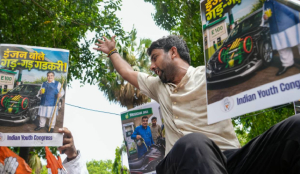
Delhi-based transport bodies have announced, on Monday, July 27, a protest march to the Parliament on August 4 demanding withdrawal of ethanol-blended petrol.
The call has been given by the Delhi Taxi and Tourist Transporters and Tour Operators Association and others.
"We are planning to hold a protest march to Parliament on August 4 against ethanol blended petrol demanding its withdrawal. We want to give a wake-up call to the members of parliaments who are sleeping till now on this issue, as the problems in vehicles from the ethanol blending are coming from across the country," Sanjay Samrat, president, Delhi Taxi and Tourist Transporters and Tour Operators Association, said.
"We do not want to make this a political issue, and are not associated with any 'E-20 Janta Party' or Cockroach Janta Party or any other political party," Samrat added, referring to the online movement against the E20 fuel, a blend of 20 per cent ethanol and 80 per cent petrol.
Harish Sabharwal, national president, All India Motor Transport Congress, said they are protesting against the government for making E20 fuel the only choice for consumers.
"We have said that ethanol blended petrol should not be forced upon commuters, there should be a choice, currently there is no option being given. We are supporting the protest march to Parliament, there is no call for any strike given by the association as of now," he said.
"This is a major issue, this is damaging vehicles, we hope the government makes E 20 blended petrol a choice for commuters," Rajender Kapoor, president, All India Motor & Goods Transport Association, said.
The protest announcement comes days after ‘E-20 Janata Party’, an online movement formed along the lines of the CJP, was launched on social media, garnering huge followers on Instagram and X.
The E20 ethanol-blending policy has been in the midst of a major controversy, centring on claims of reduced vehicle mileage, potential engine wear, and alleged conflicts of interest.
The government has defended the programme, ruling out any immediate plan to increase blends beyond 20 per cent and asserting that the fuel is safe, clean, and helps farmers.