
Coal Gasification: India’s Pathway to Energy Security and Economic Growth
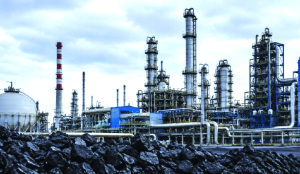
India’s coal story is both fascinating and disturbing. The country sits on one of the world’s largest coal reserves — approximately 401 billion tonnes, enough to last over two centuries at current consumption rates. And yet, every year, we spend upward of Rs 12 lakh crore importing crude oil, liquefied natural gas (LNG), fertilizers, and petrochemicals. Coal gasification can correct this dependence and that is exactly what Govt of India wants to do now.
As we know, the global energy landscape has undergone seismic shifts since 2022. Russia’s invasion of Ukraine and the Middle East crisis have squeezed the chokepoint through which over 20 per cent of the world’s oil flows, including a large share of India’s crude supply.
For India, a nation of 1.44 billion people, the world’s fastest-growing economy, her ability to industrialise, create jobs, and achieve her climate commitments is fundamentally constrained by energy insecurity.
Coal gasification, the process of converting coal into a combustible synthetic gas (syngas) offers a compelling solution, if managed carefully. In fact, it may well be the most pragmatic bridge between India’s hydrocarbon focused present and its renewable energy future. This article of mine highlights the engineering, economics, and promises of coal gasification.
Coal gasification — The science and the process
Coal gasification is the thermochemical conversion of coal into a gaseous fuel, primarily a mixture of carbon monoxide (CO) and hydrogen (H2) collectively known as syngas (synthetic gas). Unlike burning coal directly for heat or electricity, gasification transforms coal into a versatile gaseous intermediate that can be used to generate power, produce chemicals, manufacture fertilizers, create transportation fuels, and even yield hydrogen — all within a single integrated facility.
The chemistry is almost poetic. When coal, primarily carbon, is subjected to high temperatures (700°C to 1,500°C) in a controlled environment with steam (H2O) and limited oxygen, it does not burn. Instead, it undergoes a series of reactions: partial oxidation, steam reforming, the water-gas shift reaction, and methanation.
The result is a syngas whose composition can be precisely tuned — more hydrogen for fuel cells, more CO for chemical synthesis, more methane for pipeline gas.
A spectrum of high value products
The transformative power of coal gasification lies in its product flexibility. A single integrated coal gasification complex can, in principle, produce dozens of commercially valuable outputs. This is fundamentally different from burning coal for electricity — which yields only one output and destroys all carbon in the process.
These products — Syngas (CO + H2), Hydrogen (H2), Methanol, Ammonia (NH2), Synthetic Natural Gas (SNG), Liquid Fuels (CTL), Dimethyl Ether (DME), India can replace imported natural gas, create blue hydrogen bridge to green hydrogen economy, provide strategic fuel for defence and aviation.
India’s energy security — A case for gasification
To understand why coal gasification matters so urgently for India, one must first grasp the sheer scale of India’s energy import dependency — and its vulnerability in the current geopolitical environment.
India imports like crude oil, natural gas, urea, coking coal, ammonia, and petrochemicals. Every single one of these can, in principle, be produced from India’s domestic coal through gasification.
Against this backdrop, India’s National Coal Gasification Mission — which targets gasifying 100 million tonnes per annum (MTPA) of coal by 2030. It is a strategic imperative.
At 100 MTPA gasification capacity, India could theoretically produce enough syngas to generate over 20,000 MW of power, manufacture over 10 million tonnes of urea annually, and supply hundreds of millions of households with cooking gas — all from domestic resources, insulated from global price shocks and geopolitical disruptions.
Slashing the import bill: Forex, CAD, and strategic sovereignty
The arithmetic of import substitution through coal gasification is compelling. Methanol produced from coal gasification can be blended with petrol at 15-85 per cent ratios, directly displacing crude oil imports. India’s methanol demand, if fully met domestically through coal gasification, could save the country an estimated $5-8 billion annually in petroleum imports.
The fertilizer math is even more compelling. India pays roughly Rs 1.75 lakh crore annually in fertilizer subsidies, a significant portion of which flows to imported urea and its precursor, natural gas. Domestic urea production from coal-gasification-derived ammonia would not only slash the subsidy burden but also insulate Indian farmers from global fertilizer price spikes — which doubled and tripled during 2021-23. India’s Current Account Deficit (CAD) is fundamentally an energy import problem. Reducing energy imports by even 15-20 per cent through gasification—derived substitutes could save $25-40 billion annually, transforming India’s external balance sheet and materially strengthening the rupee. For RBI managing currency volatility driven by oil price shocks, this represents genuine macroeconomic stability.
How gasification fuels India’s $5 trillion dream
India’s ambition to become a $5 trillion economy and eventually a $10 trillion economy by 2035 requires a GDP growth rate of 7-8 per cent annually. At those growth rates, energy demand will roughly double by 2035. The question is not whether India needs more energy; the question is where it comes from.
Energy import costs that scale with GDP growth will act as a brake — sucking out foreign exchange, widening the current account deficit, and reducing the real purchasing power of growth.
Coal gasification represents a GDP multiplier opportunity on three levels. First, import substitution ensures every dollar of energy and chemicals produced domestically rather than imported is a dollar retained in the Indian economy, circulating through wages, taxes, and reinvestment. At $30-40 billion in potential annual import substitution, the macroeconomic gain is significant. Then comes industrialisation, cheap, domestically produced syngas, methanol, and chemicals lower the input costs for Indian manufacturing, improving competitiveness against China and other export manufacturing hubs. Third is value addition: instead of exporting raw coal at $80-120 per tonne, gasification converts coal into products worth $300-800 per tonne equivalent, a 3 to 10 times value multiplication on the same resource. “A ton of coal burned in a power plant is worth roughly Rs 7,000. That same tonne, converted to methanol and chemical feedstocks through gasification, can generate Rs 35,000-50,000 in value. Estimates suggest a fully —scaled 100 MTPA gasification ecosystem could contribute Rs 1.5-2.5 lakh crore annually in GDP, representing close to 1 per cent of India’s current GDP. There is also an export dimension.
India could become an exporter of methanol, ammonia, and specialty chemicals to neighbouring countries — Bangladesh, Sri Lanka, Nepal, Myanmar — and eventually to global markets. South Korea and Japan have already expressed interest in blue ammonia.
The opportunity is clear — India has the coal, the market, the industrial demand, and the policy intent. We now have the mission to drive the agenda. Let’s hope it flies.
The writer is a Global Thought Leader and a Futurist Served on the Board of Engineers India Ltd (Union Ministry of Petroleum & Natural Gas); Views presented are personal.