
Beyond Babur: How India and Uzbekistan are reconnecting through culture
When Babur left the Fergana Valley for India in the early sixteenth century, he could hardly have imagined the empire he founded would leave so deep a mark on India’s history, culture and architecture. Five centuries later, his birthplace in present-day Uzbekistan remains a reminder that ties between our two countries run deeper than diplomacy or trade, rooted instead in a shared cultural story.
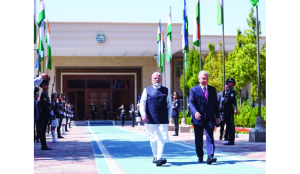
That story is entering a new chapter. Last weekend, the state visit of Prime Minister Narendra Modi to Tashkent saw India and Uzbekistan elevate ties from a Strategic Partnership to a Comprehensive Strategic Partnership.
A broad set of agreements included a three-year programme of reciprocal cultural weeks, joint film festivals, new tourist routes and a 30-day visa-free regime for travellers from each country.
Prime Minister Modi also pledged support for restoring Uzbekistan’s Buddhist heritage sites, announced Hindi-language scholarships, and proposed translating the Tamil classic Tirukkural into Uzbek.
As Uzbekistan marks the 35th anniversary of its independence, this again shows the significant role played by culture in my country’s transformation. Uzbekistan is investing heavily in heritage, museums and creative industries, recognising that culture generates opportunity, strengthens communities and connects nations.
For India, this should feel familiar. Both countries are home to ancient civilisations, and both know heritage is most valuable when part of contemporary life. India’s success in protecting its cultural assets has made it one of the world’s most compelling destinations, and Uzbekistan is similarly pairing infrastructure investment with a renewed commitment to contemporary creativity.
The connections between our histories extend well beyond the Mughal period. Long before Babur, Buddhism travelled from India to ancient Termez in southern Uzbekistan, where monasteries such as Fayaz Tepe and Kara Tepe testify to centuries of exchange across Central and South Asia.
Indian cinema built another bridge with affection for Raj Kapoor running so deep that a statue of the actor was unveiled in Tashkent in December 2024. Prime Minister Modi observed last year that India and Uzbekistan are “bound by a dynamic partnership that continues to expand across culture, economy and people-to-people ties.”
Culture is not the only element in the relationship, but it is often the one that creates the deepest connections. In February 2025, I attended the India Art Fair in New Delhi, focused on links between Central and South Asia. That spirit was again evident at last year’s Bukhara Biennial, established by the Uzbekistan Art and Culture Development Foundation (ACDF), drawing artists, craftspeople and musicians worldwide, and 1.8 million visitors.
Indian artists, including Subodh Gupta, worked alongside Uzbek collaborators on new commissions. Gupta’s pavilion, Salt Carried by the Wind, echoed a mosque that once stood on the site of a spice market where Indian merchants traded, pairing his own cooking with tableware made by Uzbek ceramicist Baxtiyor Nazirov. As Gupta observed ahead of the Biennial, “There are many similarities in our cultures, from the artisans and their ceramics to the food and architectural traditions that travelled across borders.”
Museums and archives in both countries have long collaborated, from India’s National Museum work on artefacts linked to Babur and the Mughal era to the India-Uzbekistan: Dialogue of Cultures exhibition in New Delhi, showcasing manuscripts, paintings and objects spanning centuries of exchange.
Uzbekistan is also investing in future infrastructure. The Bukhara region has attracted more than $8 billion over eight years in a wider heritage, industry and tourism drive, while a former Tashkent power station has become the Centre for Contemporary Arts, and a new National Museum of Uzbekistan, designed by Tadao Ando, is rising in the capital. Since 2021, ACDF has commissioned Uzbekistan’s national pavilions at the Venice Art and Architecture Biennales. Its projects have reached more than five million visitors across 17 countries through collaborations with over 40 institutions, including the Louvre, the Uffizi Galleries and the British Museum.
15 This visibility is fuelling one of the world’s most remarkable tourism booms with a record 11.7 million international visitors in 2025, and arrivals up 37 per cent in the first quarter of 2026 compared with the same period last year, placing Uzbekistan among the world’s fastest-growing destinations. India plays a growing role in that success. More than 80,000 Indian visitors travelled to Uzbekistan in 2025, aided by expanding air connectivity and growing cultural awareness. What they find is world-famous monuments coexisting with a vibrant contemporary scene, new museums, exhibitions and festivals alongside the legacies of the Silk Roads.
India has been woven into Uzbekistan’s cultural story for centuries, including through a children’s book about Babur produced by the ACDF. As the Prime Minister signalled on his visit to Tashkent, the opportunity now is not merely to celebrate that shared inheritance, but to build upon it together.
The writer is head of the Department of Creative Economy and Tourism of the Administration of the President of the Republic of Uzbekistan and Chairperson of the Uzbekistan Art and Culture Development Foundation; Views presented are personal.