
BCI: The fallout of a solo diktat
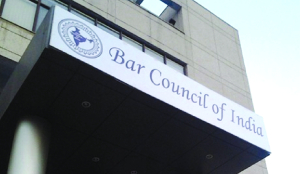
The Bar Council of India (BCI) has hogged the limelight recently for the wrong reasons. Its Chairman, Manan Kumar Mishra, is facing the wrath of the nation. The reason is his diktat, first directing State Bar Councils across India not to enrol any 2026 graduating students of the NALSAR University of Law, Hyderabad, as advocates.
This controversial directive was issued following a student campaign and protests objecting to the university’s invitation of Chief Justice of India Surya Kant as the chief guest for its convocation.
The move drew widespread backlash from the legal fraternity and student bodies for imposing a collective penalty on an entire batch, leading the BCI to withdraw the order and its Chairman, Manan Kumar Mishra, to subsequently issue an apology.
The controversy soon reached the Supreme Court. A bench led by Chief Justice Surya Kant examined the issue and made strong observations. The CJI bluntly stated that the BCI had “no business” interfering in university student protests.
The CJI emphasized that peaceful protests are a right and that students cannot be punished for expressing their views. The bench barred any coercive action against the students or faculty.
The BCI Chairman also faced direct criticism from the leadership of the Supreme Court Bar Association (SCBA). SCBA President and Senior Advocate Vikas Singh wrote a sharp letter questioning the move. He called the ban illegal and arbitrary, and criticised the BCI for targeting the future careers of young graduates.
Singh stressed that a national regulatory body cannot use collective punishment to stifle free speech.
Legal experts and constitutional scholars were quick to point out that this arbitrary exercise of power dealt a severe blow to the BCI’s institutional integrity.
By reducing a national regulatory body to an instrument of personal retaliation, the episode exposed alarming vulnerabilities in how apex professional bodies can be manipulated without internal checks and balances.
Under the Advocates Act, 1961, the BCI operates as a statutory regulatory body governed by collective decision-making, predefined rules, and principles of natural justice. The Chairman’s office possesses no emergency or arbitrary powers to single-handedly suspend or bar an entire graduating batch from enrolment. The ensuing outrage was not merely about the heavy-handed treatment of law students, but about the dangerous precedent set when leadership abandons statutory accountability in favour of unilateral diktats.
This episode has reignited a broader, much-needed national debate concerning the autonomy, transparency, and accountability of India’s apex legal regulatory bodies.
Critics argue that when statutory authorities tasked with upholding the rule of law choose to bypass democratic deliberation and institutional safeguards, they fundamentally undermine their own legitimacy.
As calls for internal reform and stricter governance grow louder, the NALSAR controversy serves as a stark reminder that professional regulatory bodies must remain strictly anchored in statutory procedure rather than arbitrary personal authority. With the directive withdrawn and an apology tendered, the immediate crisis has subsided, but the core systemic questions remain wide open.
Legal professionals and student organizations are now pushing for institutional safeguards to ensure that the powers vested in office-bearers are never again weaponised on a whim.
Civil society and legal forums are increasingly demanding statutory amendments or internal accountability mechanisms that mandate collective voting and public disclosure of all policy-level circulars. Ensuring that regulatory bodies remain insulated from personal vendettas or executive overreach is vital for preserving the trust of the legal community and the public at large. Ultimately, the incident has highlighted that the true strength of an apex institution lies not in the unchecked authority of its leaders, but in its steadfast adherence to democratic process, transparency, and the rule of law.
Beyond his role at the BCI, Mishra is also a Member of Parliament in the Rajya Sabha from the BJP. Many critics believe his harsh order had political motives, noting that the ban looked like an attempt to please political interests by targeting students who questioned authority. This was not a one-time incident. In the past, Mishra has often used the BCI platform to make politically charged statements. He has frequently invited criticism for using the BCI’s official platform and letterhead to issue politically polarized statements. Several key instances highlight this pattern. During political street agitations (such as public protests at Jantar Mantar), Mishra issued an aggressive public statement on the BCI letterhead. He claimed the protests were hijacked by “anti-national elements” and foreign adversaries trying to destabilize India, drawing fierce pushback from lawyers who felt a neutral professional body should not take political sides.
In December 2019, during nationwide anti-CAA (Citizenship Amendment Act) protests, Mishra signed a formal BCI letter expressing strong solidarity with the police and armed forces, and calling on bar leaders and students to suppress the protests. Once again, groups of lawyers publicly objected, pointing out that using the BCI platform for partisan political narratives was a disservice to the legal profession.
When prominent senior advocates and legal figures openly criticized certain judicial developments or decisions, Mishra frequently issued sharp, lengthy retorts on behalf of the BCI.
Critics argued these statements read less like neutral regulatory actions and more like targeted political attacks against critics of the government, and that turning a professional legal regulator into a tool for politics damages the dignity of the entire legal fraternity.
Mishra has headed the BCI for a long tenure spanning roughly 14 years. Over this extended period, he has been re-elected multiple times. However, this latest episode has brought his leadership under severe introspection.
Following the controversial NALSAR directive, sections of lawyers’ bodies and legal forums have openly called for his resignation. Critics feel that staying at the helm for too long has created an environment lacking internal accountability.
Many within the legal community express concern that his primary focus has increasingly shifted toward party politics rather than the core welfare of lawyers and legal education. Observers note that an apex regulatory body requires undivided attention to solve deep-seated professional challenges, rather than getting entangled in political alignments and external controversies.
The author is a senior journalist in legal affairs; Views presented are personal.