
The Future of traumatic brain injury rehabilitation: Technology, Therapy and Personalized Care
Introduction
Twenty years ago, a person with a serious head injury who survived the ICU was largely handed back to their family with a physiotherapy referral and a lot of hope. Recovery was something you waited for rather than something you built.
That has changed considerably. Traumatic brain injury rehabilitation today is a structured medical field with measurable goals, specialist teams and, increasingly, technology that lets patients practise far more than a therapist could ever deliver by hand. It is still slow work. But it is no longer guesswork, and the difference in outcomes is real.
Understanding Traumatic Brain Injury and Its Impact on Recovery
A traumatic brain injury (TBI) occurs when a sudden blow, hit or force damages the brain. In India, road accidents and falls are common causes. The effects of TBI can vary depending on the area and severity of the injury. While some people may experience weakness, balance problems or difficulty walking, others may struggle with memory, concentration, speech, planning or emotions. Fatigue and sensitivity to light or noise can also affect daily life. These challenges may continue even after the physical symptoms improve. This is why trusted neurological rehabilitation focuses on physical, cognitive, emotional and behavioural recovery.
Why Rehabilitation Is Central to Traumatic Brain Injury Recovery
There is no medicine that repairs damaged brain tissue. What exists instead is neuroplasticity, the brain's ability to reorganize itself and route functions through undamaged areas.
Neuroplasticity is not automatic. It responds to demand. The brain strengthens the pathways it is asked to use, repeatedly, with effort, and with correct technique. That is why TBI rehabilitation looks so repetitive from the outside, and why intensity and consistency matter more than any single therapy.
Neurological Rehabilitation does a second job that gets less attention. It prevents the complications that quietly destroy progress: joint contractures, pressure sores, chest infections, blood clots, spasticity, falls and malnutrition. Preventing these is not glamorous, and it is roughly half of what determines the outcome.
 What Does Traumatic Brain Injury Rehabilitation Involve?
Serious traumatic brain injury treatment after the acute phase is a coordinated team effort rather than a series of separate appointments.
At Antara Care Homes, a structured care plan is led by a PM&R specialist, a doctor trained in physical medicine and rehabilitation, who sets goals and coordinates the whole team around one plan.
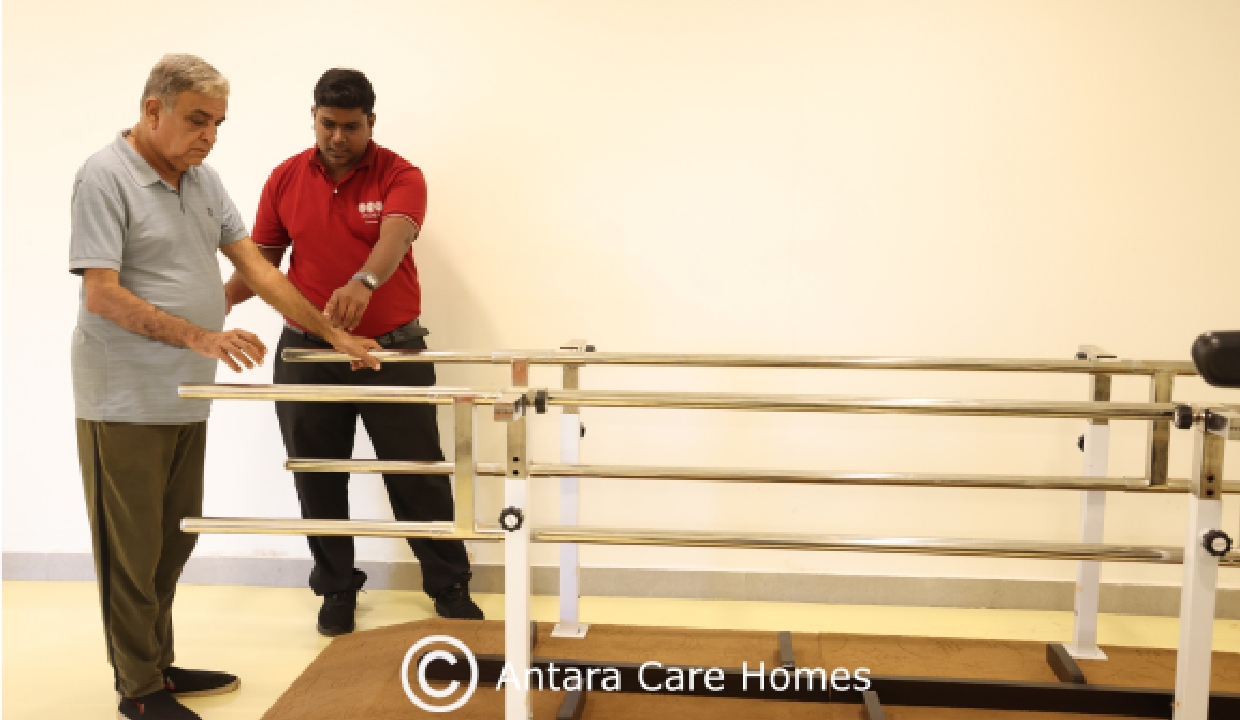
Physiotherapy rebuilds movement from the ground up, starting with bed mobility and sitting balance, progressing to standing tolerance, transfers and walking.
Occupational therapy covers the arm and hand alongside the practical business of living: dressing, bathing, eating, and later the cognitive work of attention, memory strategies and planning.
Speech therapy addresses slurred speech, word finding difficulty, and swallowing problems, the last of which matters enormously because unsafe swallowing leads directly to pneumonia.
Nutrition therapy supports everything else. A recovering brain and a body doing daily therapy both have high energy and protein demands, and recovery stalls without them.
Nursing care and trained caregivers run underneath the whole programme, 24 hours a day, seven days a week. Turning schedules, skin checks, catheter and bowel management, medication timing and vital sign monitoring are what keep a patient well enough to attend therapy at all.
An in house pharmacy means medication adjustments happen the same day rather than after someone drives out and back.
Insurance claim support is provided to families for hassle free procedure.
How Technology and Personalised Care Are Changing TBI Rehabilitation
Technology is making Structured Neurological Rehabilitation more effective by helping patients practise movements more often and safely. Robotic gait training, for example, can support body weight and help patients practise walking when they may not yet be ready to walk independently. At Antara Care Homes, robotic rehabilitation is offered after assessing whether it is suitable for the patient. However, technology works best when combined with skilled therapists and personalised care. Treatment plans are designed around each patient's condition, goals and daily life, with the right exercises, safety measures and regular progress reviews to support recovery.
What Should Families Look for in a TBI Rehabilitation Programme?
Ask direct questions and expect specific answers:
- Is a PM&R specialist leading the plan, or is it physiotherapy alone?
- Are occupational therapy, speech therapy and nutrition therapy available in house?
- Is nursing cover genuinely 24 hours, with trained caregivers?
- Is there an in house pharmacy for same day medication changes?
- Does the facility have oxygen access in rooms, emergency call buttons, grab bars and anti skid flooring?
- Is cognitive and behavioural rehabilitation part of the programme, or only physical therapy?
- How many hours of active therapy will the patient receive each day?
- How is progress measured, and how often is it reviewed with the family?
- Is robotic rehabilitation available for patients assessed as suitable?
- What does discharge planning include, and is insurance and insurance claim supoort provided?
Visit before deciding. Meet the therapists who will actually treat your family member. A centre that answers these clearly is usually a centre that does the work.
Conclusion
The future of traumatic brain injury recovery is not one breakthrough machine. It is better assessment, more repetitions, coordinated teams, safer buildings and care that follows the patient home.
If your family is at the start of this, begin rehabilitation as early as doctors allow, choose depth of team over any single piece of equipment, and prepare for a long project. Progress will feel slow week to week. Measured across months, it is usually far greater than anyone expected at the beginning.