
AI-171 Crash Survivor Account: First Responder Says “We Wish We Could Save More Lives”
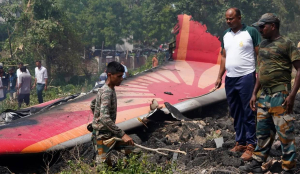
Even a year after the devastating Air India crash involving flight AI-171, one of the first responders at the site says his greatest regret remains that more lives could not be saved during the tragedy that killed 260 people.
Satinder Singh Sandhu, a supervisor with 108 Emergency Services, was among the first to reach the crash site near Ahmedabad Civil Hospital in Asarwa, barely 200 metres from the BJ Medical College hostel complex where the aircraft went down.
He recalls hearing a massive explosion at around 1:31 pm on June 12, 2025, followed by a thick plume of smoke rising from the hostel area. Initially fearing a bomb blast, he rushed towards the site and alerted senior officials to send additional ambulances and fire support.
Within minutes, emergency teams reached the location, where the London-bound Air India flight AI-171 had crashed shortly after take-off from Sardar Vallabhbhai Patel International Airport. The aircraft struck the hostel complex in Meghaninagar, triggering a massive fire and widespread destruction.
Sandhu said the first priority was to evacuate the injured. Among those rescued in the early moments was a gardener with burn injuries, along with a family of three who were quickly shifted to Civil Hospital.
He also recounted stopping an injured man who was attempting to re-enter the burning hostel complex. That individual was later identified as Vishwas Kumar Ramesh, the only known survivor of the disaster.
As rescue operations intensified, nearly 35 ambulances were deployed by the 108 Emergency Services, with additional support from other agencies. Firefighters, police personnel, and civic authorities worked together in a large-scale rescue and recovery operation.
Over the first few hours, around 70 injured victims were transported to Civil Hospital, while rescue teams continued operations late into the night. The work extended for several days as charred remains and body parts were recovered from the debris.
The crash killed 241 passengers onboard and 19 people on the ground, making it one of the deadliest aviation disasters in recent history.
Reflecting on the tragedy, Sandhu said the experience continues to haunt him. “The biggest regret is that we could not save more lives,” he said, recalling the scenes of devastation and the smell of burning fuel that still linger in memory.
He added that the disaster could have been even worse had the aircraft struck a more densely populated residential area or the Civil Hospital campus itself.
Even today, he said, passing the site brings back vivid memories of the crash and the overwhelming scale of the emergency response.