
A feast fit for the butter thief - The flavours of Janmashtami
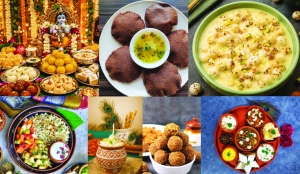
From midnight prayers to Chappan Bhog, Janmashtami brings devotion to the table, blending regional flavours, cherished rituals and Krishna’s playful spirit.
Janmashtami, the birth anniversary of Lord Krishna, falls this year on September 4 (September 5 for Vaishnava and ISKCON traditions), marking the eighth avatar of Vishnu’s descent to earth to end the tyranny of King Kansa and restore dharma. Krishna’s midnight birth in a Mathura prison cell to Devaki and Vasudeva remains one of Hinduism’s most cherished stories - the child who would grow up to deliver the Bhagavad Gita, teaching karma and devotion to a fractious world. For devotees, the day is less ritual than homecoming: Bal Gopal, the mischievous butter-stealing infant, is welcomed back into every household.
Celebrations open with a day-long vrat, broken only after the midnight Nishita Puja, when Bal Gopal’s idol is bathed in panchamrit, dressed in new clothes and cradled in a jhula.
Temples in Mathura and Vrindavan hold jagran through the night; Maharashtra and Gujarat erupt the next morning into Dahi Handi, human pyramids scaling for curd pots slung high above the street to re-enact Krishna’s boyhood butter raids. Further south, Gokulashtami unfolds more quietly, with tiny rice-flour footprints tracing Krishna’s path from doorstep to altar.
But it is food that truly carries the festival’s spirit. Its centrepiece is Chappan Bhog - 56 dishes recalling the seven days Krishna went without food while holding aloft Govardhan Hill, after which the Brajwasis cooked him eight meals a day to make up the loss. Makhan-mishri, butter whipped with sugar crystals, remains the essential offering, alongside panjiri, kheer, peda, rabri and the honeycombed disc of ghewar across the north. Once presented to Bal Gopal, the spread is distributed as prasad, turning neighbourhoods into one shared table. Fasting devotees turn instead to sabudana khichdi, kuttu and singhara flour, and fresh fruit, avoiding grain and salt until the midnight vrat breaks.
Regional larders reshape the feast entirely. Tamil Nadu and Karnataka offer crunchy seedai and murukku alongside sweet aval; Maharashtra and Gujarat pair Dahi Handi’s chaos with shrikhand, poha and panchamrut-laced ladoos; Bengal answers with delicate sandesh and rasgulla; Bihar fries up vegetable taura fritters and simmers makhane ki kheer; and Puri’s Jagannath temple sends out khichdi, dahi pakhala and khaja as mahaprasad. Across every kitchen, though, one instinct holds constant: Krishna is fed first, and only then does the household eat - devotion, quite literally, served on a plate.