Sky-high protest ends after notification of anti-sacrilege law
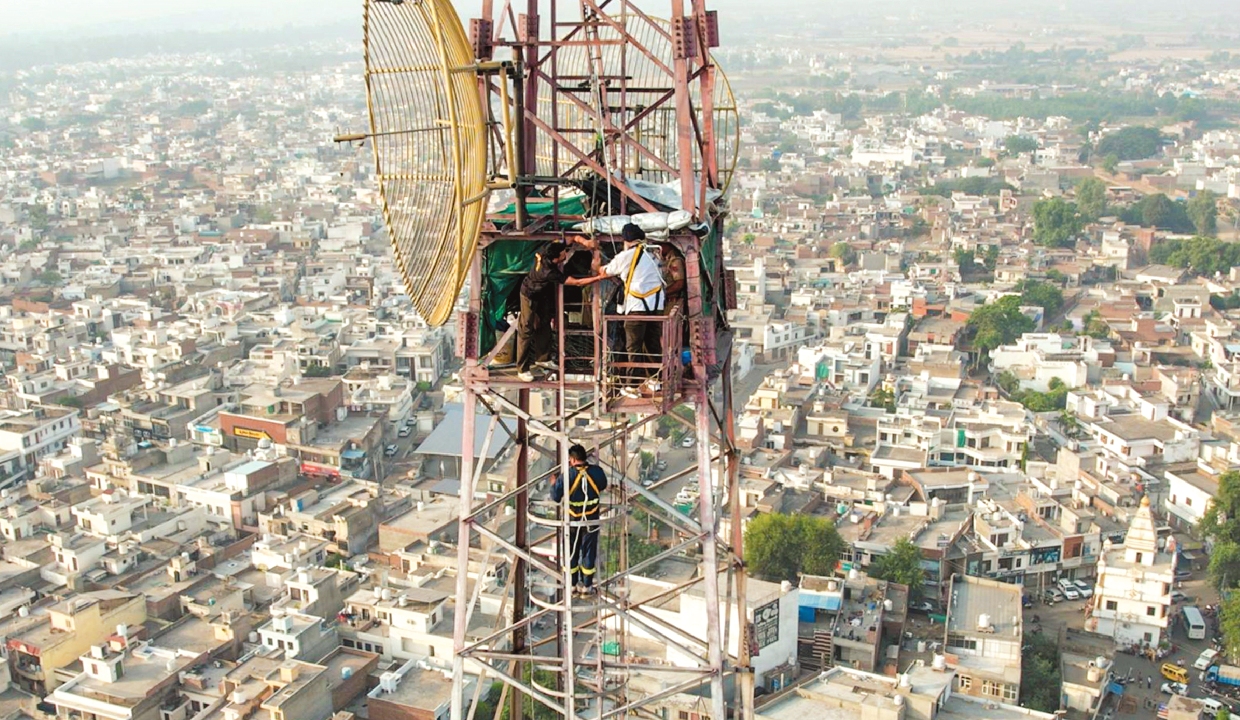
Gurjeet Singh Khalsa’s 560-day protest atop a 400-foot mobile tower in Samana ended Friday morning, closing one of Punjab’s most dramatic and relentless protests after the State formally notified a stringent anti-sacrilege law — the very demand that had kept him suspended between sky and earth for over 18 months.
The 43-year-old former Army sepoy-turned-activist climbed the towering BSNL structure on October 12, 2024, refusing to descend until the Government enacted strict legal provisions to punish sacrilege of the Guru Granth Sahib. His descent came only after the Jaagat Jot Sri Guru Granth Sahib Satkar (Amendment) Act, 2026, was officially notified, fulfilling his core demand for harsh penalties against those found guilty of beadbi.
What began as an act of defiance evolved into a test of endurance rarely seen in Punjab’s protest history. For 560 days — through searing summers, biting winters, storms, and isolation — Khalsa lived in a cramped 8-by-10-foot makeshift shelter near the tower’s antenna. A tarpaulin sheet served as his roof, ropes carried up food once a day, and a polythene bag doubled as a sanitation arrangement. Supporters below turned the tower base into a near-permanent vigil site, reinforcing his solitary protest with collective faith.
A resident of Kheri Nagaiyan village in Patiala district, Khalsa’s military discipline is widely credited for sustaining him through the ordeal. Yet the prolonged immobility took a visible toll. Doctors later confirmed muscle atrophy (wasting away or shrinking of muscles), diabetes complications, and hypertension — evidence of the physical cost of his prolonged defiance.
The turning point came earlier this month when the Punjab Assembly convened a special session on April 13 and passed the amendment Bill aimed at tightening punishment for sacrilege cases. Governor Gulab Chand Kataria granted assent on April 19, but Khalsa remained unmoved until the law was formally notified in the official gazette — a step he had insisted upon from the beginning.
Once the notification was issued, preparations began for a carefully coordinated descent. The high-stakes rescue operation commenced at 7.25 am on Friday under heavy security. Teams from the fire services, district police, and civil administration deployed specialised equipment, including a crane-lift and hydraulic turntable ladder, to safely secure Khalsa at the upper platform.
Officials fastened him with chains and a safety belt before lowering him in stages from the dizzying height. Within minutes, he stepped onto the ground at around 7.35 am — frail but conscious — greeted by chants of “Jo Bole So Nihal, Sat Sri Akal” from supporters who showered flower petals in celebration.
Moments after touching ground, Khalsa declared the protest a victory, attributing his survival to faith and expressing gratitude to the State Government for enacting the law he had fought for. He specifically thanked Chief Minister Bhagwant Mann and Assembly Speaker Kultar Singh Sandhwan for pushing the legislation forward.
He was immediately shifted to a hospital in an ambulance for medical examination, while supporters continued celebrations outside.
The newly-enacted law introduces stringent punishment for sacrilege offences. It prescribes a minimum of seven years’ imprisonment, extendable up to 20 years, for offences involving desecration, along with fines ranging from `two lakh to Rs 10 lakh. In cases involving criminal conspiracy intended to disturb communal harmony, punishment can extend to life imprisonment, accompanied by fines of up to Rs 25 lakh.
Behind the towering spectacle lay a family living in uncertainty. His wife, Gurpreet Kaur, watched the descent with visible relief, recalling that what began as a protest expected to last days stretched into nearly two years. Their son, Ashmeet Singh, completed his matriculation examinations during his father’s time atop the tower, while Khalsa’s brother managed the family’s dairy business in his absence.
Khalsa’s protest — unusual in scale, duration, and symbolism — drew attention across Punjab and became a defining image of agitation politics centred on religious sentiment. His descent marks not just the end of a physically perilous vigil, but the culmination of a sustained struggle that reshaped the legal framework governing sacrilege offences in the State.