Security statement endorsed by Ukraine’s allies significant step: Macron
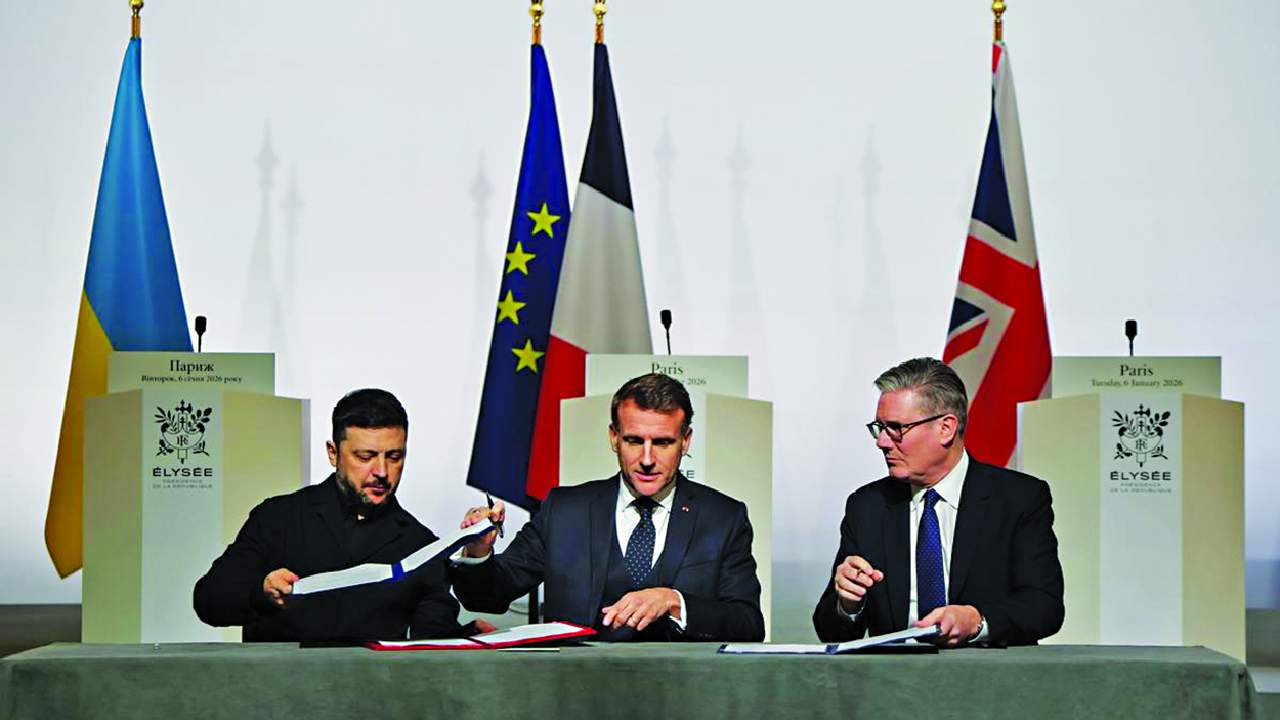
French President Emmanuel Macron said that a security Statement endorsed by Ukraine’s allies, including the US, is a “significant step” toward ending Russia’s invasion of its neighbour as part of a peace settlement. Following a meeting of more than two dozen countries in Paris, Macron said officials agreed on ceasefire monitoring mechanisms under US leadership.
A joint Statement said the allies also agreed to continue long-term military assistance and armament to Ukraine’s armed forces, which “will remain the first line of defence and deterrence” after any peace deal is signed. Foreign countries will provide reassurance measures on land, sea and in the air to be enacted once “a credible cessation of hostilities has taken place.”
The allies still must finalise “binding commitments” setting out what they will do to support Ukraine and restore peace in case of a future attack by Russia. Prospects for progress at the meeting were uncertain as the Trump administration’s focus is shifting to Venezuela, while US suggestions of a Greenland takeover are causing tension with Europe, and Moscow shows no signs of budging from its demands in its nearly 4-year-old invasion.
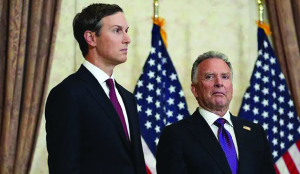
The countries dubbed the “coalition of the willing” have been exploring for months how to deter any future Russian aggression should it agree to stop fighting Ukraine. Macron’s office said an unprecedented number of officials attended in person, with 35 participants including 27 heads of State and Government. The US envoys, Steve Witkoff and Trump’s son-in-law Jared Kushner, met with Macron at the Elysee presidential palace for preparatory talks ahead of the gathering.
Moscow has revealed few details of its stance in the US-led peace negotiations. Officials have reaffirmed Russia’s demands and have insisted there can be no ceasefire until a comprehensive settlement is agreed. The Kremlin has ruled out any deployment of troops from NATO countries on Ukrainian soil.
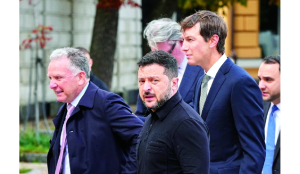
A series of meetings on the summit’s sidelines illustrated the intensity of the diplomatic effort and the complexity of its moving parts. Ukrainian President Volodymyr Zelenskyy met with Macron ahead of the summit. French, British and Ukrainian military chiefs also met, with NATO’s top commander, US Gen. Alexus G. Grynkewich, participating in talks that France’s army chief said focused on implementing security guarantees. Army chiefs from other coalition nations joined by video.
Macron’s office said the US delegation was initially set to be led by Secretary of State Marco Rubio, but he changed his plans after the US military intervention in Venezuela. Tension rises over Greenland comments: Trump on Sunday renewed his call for the US to take control of Greenland, a strategic, mineral-rich Arctic island.
The leaders of France, Germany, Italy, Poland, Spain and the UK on Tuesday joined Danish Prime Minister Mette Frederiksen in defending Greenland’s sovereignty in the wake of Trump’s comments about the self-governing territory of the kingdom of Denmark.
But the continent also needs US military might to back up Ukrainian security guarantees and ward off Russia’s territorial ambitions. That could require a delicate diplomatic balancing act in Paris.
Participants are seeking concrete outcomes on five key priorities once fighting ends: ways to monitor a ceasefire; support for Ukraine’s armed forces; deployment of a multinational force on land, at sea and in the air; commitments in case of more Russian aggression; and long-term defence cooperation with Ukraine.
But whether that’s still achievable Tuesday isn’t so clear now, after the US military operation targeting Maduro in Venezuela. Ukraine seeks firm guarantees from Washington of military and other support seen as crucial to securing similar commitments from other allies. Kyiv has been wary of any ceasefire that it fears could provide time for Russia to regroup and attack again.
Recent progress in talks: Witkoff had indicated progress in talks about protecting and reassuring Ukraine. In a December 31 post, he said “productive” discussions with him, Rubio and Kushner on the US side and, on the other, national security advisers of Britain, France, Germany and Ukraine had focused on “strengthening security guarantees and developing effective deconfliction mechanisms to help end the war and ensure it does not restart.”
France, which with the UK has coordinated the multinational effort to shore up a possible peace plan, has given only broad-brush details about its scope. It says Ukraine’s first line of defence against a Russian resumption of war would be the Ukrainian military and that the coalition intends to strengthen it with training, weaponry and other support.