SC: Mere presence of lawyer in discharge of duty not intimidation
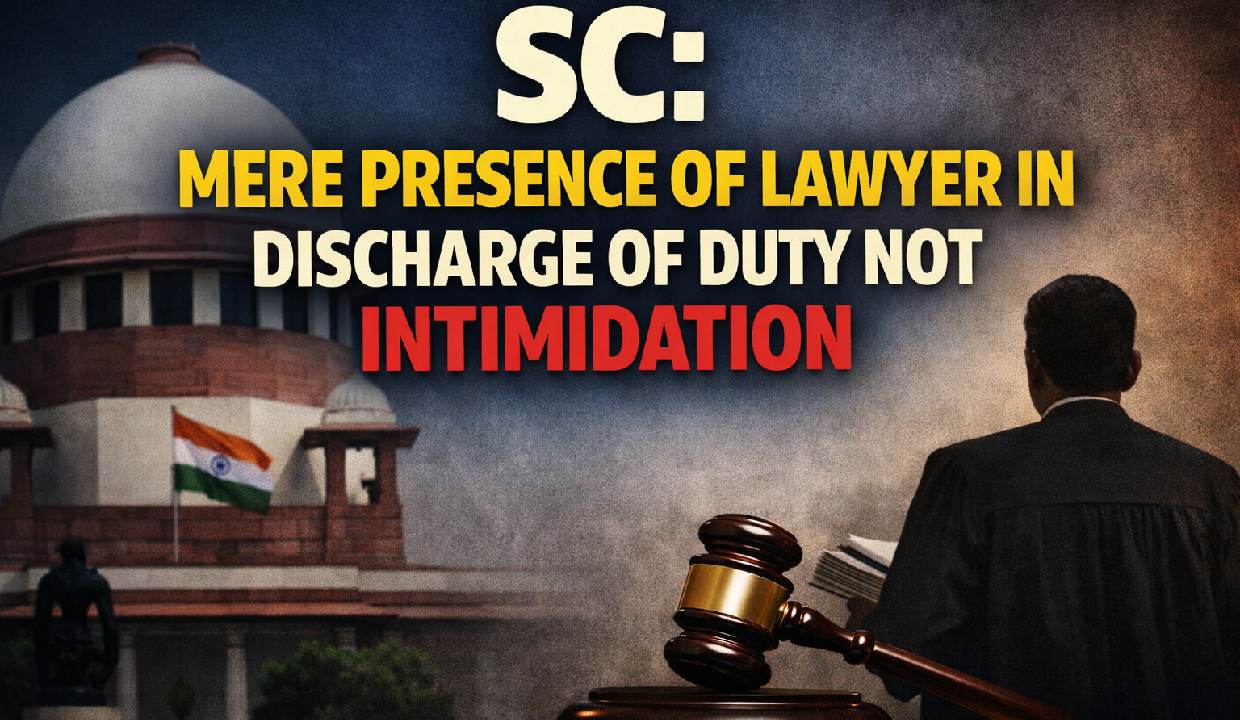
Quashing a criminal case registered against an advocate, the Supreme Court has said that the mere presence of a lawyer in his capacity of discharging professional duty of either giving advice or suggestion cannot amount to intimidation.
A bench of Justices Aravind Kumar and PB Varale said vague allegations unsupported by prima facie cogent evidence cannot constitute an offence indicated under Section 506 of the IPC (criminal intimidation).
The Supreme Court quashed the criminal case for an offence under Section 506 of the IPC registered against lawyer Beri Manoj, who is an uncle of an accused in the Protection of Children from Sexual Offences Act (POCSO) case.
The bench noted that there was improvement in the statement of the victim given under Section 161 of the CrPC (statement before a police officer) and Section 164 of the CrPC (statement before a magistrate).
“Last but not the least, the mere presence of a lawyer (appellant in the instant case) in his capacity of discharging professional duty of either giving advice or suggestion cannot amount to intimidation and this is foundational fact being conspicuously absent in the instant case, we are perforced to disagree with the contention of learned counsel for the complainant (victim) and the learned counsel appearing for respondent number 1 the State,” the bench said in its order of January 20.
The Supreme Court said it notices from the clear statement recorded under Section 164 of the CrPC that no intention of criminal intimidation was prima facie established since prosecution of a person for criminal intimidation requires clear intention to cause alarm, irrespective of whether the victim was alarmed or not. “In the absence thereof, continuation of the prosecution against the appellant by virtue of a vague reference to the expression ‘an uncle’ cannot, by itself, disclose any offence.
Vague allegations unsupported by prima facie cogent evidence cannot constitute an offence indicated under section 506 of the IPC,” it said.