SC asks HCs to fix timelines for concluding hearing in acid attack cases
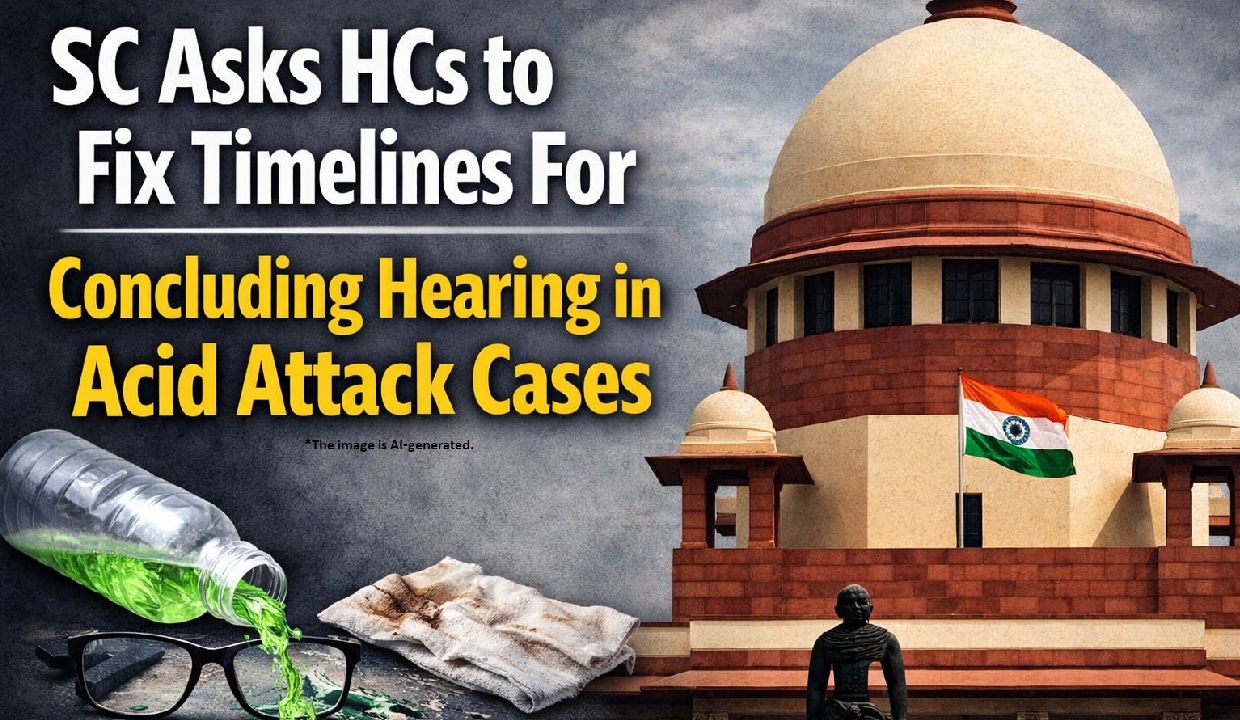
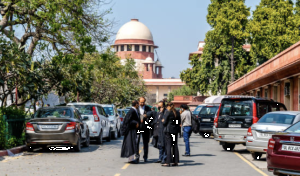
The Supreme Court on Monday asked all the High Courts to fix timelines for trial courts to ensure expeditious conclusion of acid attack cases in the country.
A bench comprising Chief Justice Surya Kant and Justice Joymalya Bagchi took note of the status reports filed by several High Courts on pendency and the present status of acid attack cases, and said a more proactive approach was needed. The CJI asked the High Courts to entrust the task of monitoring the trials in acid attack cases to the High Court judges who are the administrative in-charge of the trial courts.
The top court granted the last opportunity to all the states to follow its directions issued from time to time on a PIL filed by Haryana-based Shaheen Malik, who herself is an acid attack survivor.
The CJI asked the States to urgently deal with the aspect of payment of adequate compensation to the victims of acid attacks.
The bench also asked Shaheen Malik about the status of her personal acid attack case.
She said the accused was acquitted by the Rohini trial court and an appeal against the acquittal was filed in the Delhi High Court.
Malik urged the CJI to ask senior advocate Siddharth Luthra to fight her legal battle in the High Court.
“At the outset, we request senior advocate Siddharth Luthra to represent the appellant in the Delhi High Court as pro bono free legal aid counsel,” the bench ordered.
The senior advocate agreed and offered his services and assured the CJI that he will represent her in the High Court.
In another case of an acid attack survivor, the top court transferred the criminal trial from a court at Bhiwani in Haryana to Saket in Delhi after taking into account the victim’s serious medical condition and the difficulties she faces in participating in the proceedings.
The CJI noted that the victim suffered grave injuries in the incident, including severe damage to one of her eyes, and is currently undergoing treatment at a private hospital here.
The bench, while directing the Haryana government to transfer the accused from a jail in Bhiwani to Tihar Central Jail in Delhi, said given the circumstances, it would be nearly impossible for the victim to effectively participate in the trial if it continued in Haryana.
While dealing with Malik’s PIL, the bench on January 27 batted for “extraordinary” punitive measures for convicts in acid attack cases.
It had asked the Centre to consider amending the law to sternly deal with such cases on the lines of dowry death matters, where the onus of proving innocence lies on the accused.
The top court also asked all states and Union territories to provide a slew of information, including the year-wise details of the number of acid attack cases, their status in courts, besides the rehabilitation measures to support the victims.
It also asked states and UTs to provide information about the number of cases in which chargesheets are filed in trial courts.
The PIL sought expansion of the definition of disabled persons under the law to ensure that the victims who suffered life-threatening damages to their internal organs due to forced ingestion of acid get adequate compensation and other reliefs, including medical care.
The bench asked Additional Solicitor General Archana Pathak Dave, representing the Centre, that some legislative intervention might be necessary from the Centre to make the punishment stringent.
The CJI also suggested a reversal of the onus of proof, like in dowry death cases. “Think of some legislative intervention...this is not less serious than dowry death also,” he said.
Leave a Comment
Comments (1)
काफी गंभीरता से कार्रवाई होनी चाहिए मैं भी एसिड अटैक पीड़ित हूं मेरे मामले में दो आरोपी जेल में है मुख्य आरोपी की गिरफ्तारी कई महीने बीत जाने के बाद भी पुलिस द्वारा नहीं की जा रही है बल्कि उसे राहत देने के लिए हाईकोर्ट में मेरा मेडिकल भी नहीं भेजा गया फिर भी माननीय उच्च न्यायालय द्वारा आरोपी की आज का खारिज करते हुए पुलिस को कड़ी फटकार लगाई गई