Saudi, UAE receive export consignment valued at Rs 2.35 crore from Assam
Assam has marked a significant milestone in its agro-forest economy with the first legally approved export of agarwood chips to Saudi Arabia and the United Arab Emirates, opening a new chapter for an industry with vast global demand and strong revenue potential.
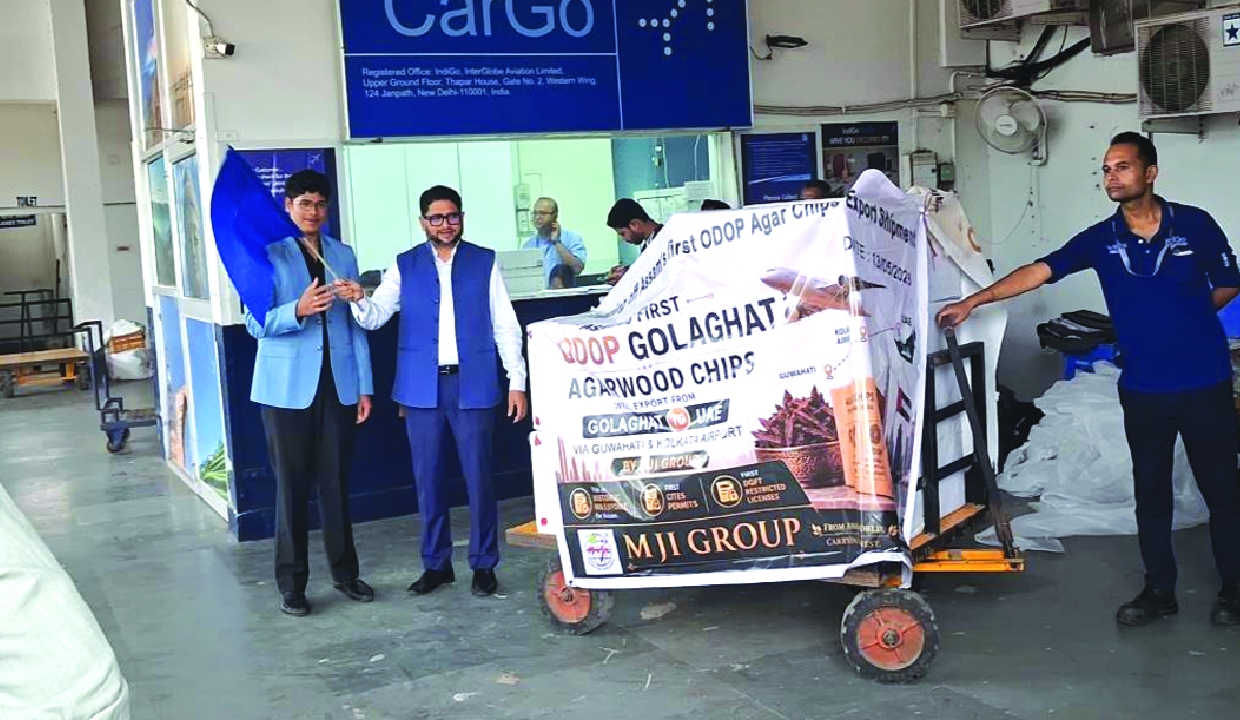
The consignment, comprising 100 kg of agarwood chips to Saudi Arabia and 12 kg to the UAE, was dispatched from the cargo terminal of Lokpriya Gopinath Bordoloi International Airport on Wednesday. The shipment was valued at Rs 2.35 crore.
First export with full regulatory approval
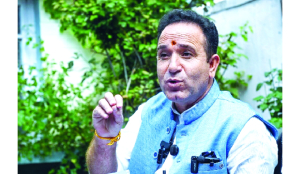
The consignment was exported after securing all statutory clearances, including a CITES permit and a restricted export licence from the Directorate General of Foreign Trade (DGFT). The shipment was flagged off by Founder Chairman, MJI Group and Chairman, All Assam Agarwood Planters & Traders Association Dr Jehirul Islam, who described the event as a historic breakthrough for Assam’s indigenous agarwood sector.” This achievement is the result of years of research, policy advocacy, farmer engagement, plantation development, processing innovation and international compliance efforts,” Dr Islam said.
Premium product in global demand
Agarwood, also known as Oud, is one of the world’s most valuable aromatic raw materials and is widely used in luxury perfumes, incense, cosmetics and traditional products across the Gulf, Europe and Southeast Asia.
Assam-grown agarwood is highly valued for its superior quality, rich aroma and high oil content, giving the state a strong advantage in international markets. Industry stakeholders believe organised exports can generate substantial opportunities for farmers, nursery owners, distillation units, traders and small enterprises across Assam and the wider Northeast.
Policy support boosts organised trade
Dr Islam credited the Government of Assam and Government of India for facilitating the export and thanked Assam Chief Minister Himanta Biswa Sarma for supporting the implementation of the Assam Agarwood Promotion Policy, 2020.
The policy was introduced to legalise and regulate cultivation, processing and export of agarwood while creating a transparent and farmer-friendly ecosystem.
Move expected to curb illegal trade
According to Dr Islam, the policy framework will help curb the illegal movement of agarwood, which for years, deprived local growers and entrepreneurs of fair returns. He said regulated exports would enable producers in Assam to directly access global buyers instead of depending on informal channels and intermediaries. Industry can generate Rs 50,000 crore annually.
Dr Islam said the Agarwood industry has the potential to generate up to Rs 50,000 crore in annual revenue for Assam if cultivation, processing and exports are scaled up in an organised manner.
He said the sector could emerge as one of the state’s leading foreign exchange earners, driven by rising international demand for agarwood chips, oud oil, perfumes and other value-added aromatic products.
Major boost for rural economy
Experts believe the organised agarwood sector could transform Assam’s rural economy and become one of Northeast India’s most significant export industries.
Beyond raw chip exports, the sector offers considerable scope for value-added manufacturing, including oud oil, perfumes, bakhoor, incense products, cosmetic ingredients and aromatherapy products.
Expansion of plantations and processing facilities is expected to generate employment opportunities for rural youth and strengthen Assam’s agro-based industries.
Expansion plans underway
MJI Group and MJI Aromatics Pvt Ltd plan to expand plantations, establish advanced processing facilities, build a global brand for Assam oud and train farmers to meet international standards. Industry leaders say the successful export positions Assam to emerge as a global hub for agarwood, oud and fragrance products, transforming a traditional forest resource into a modern export-driven industry.