Rohini air pollution hotspots reviewed by Speaker Vijendra Gupta
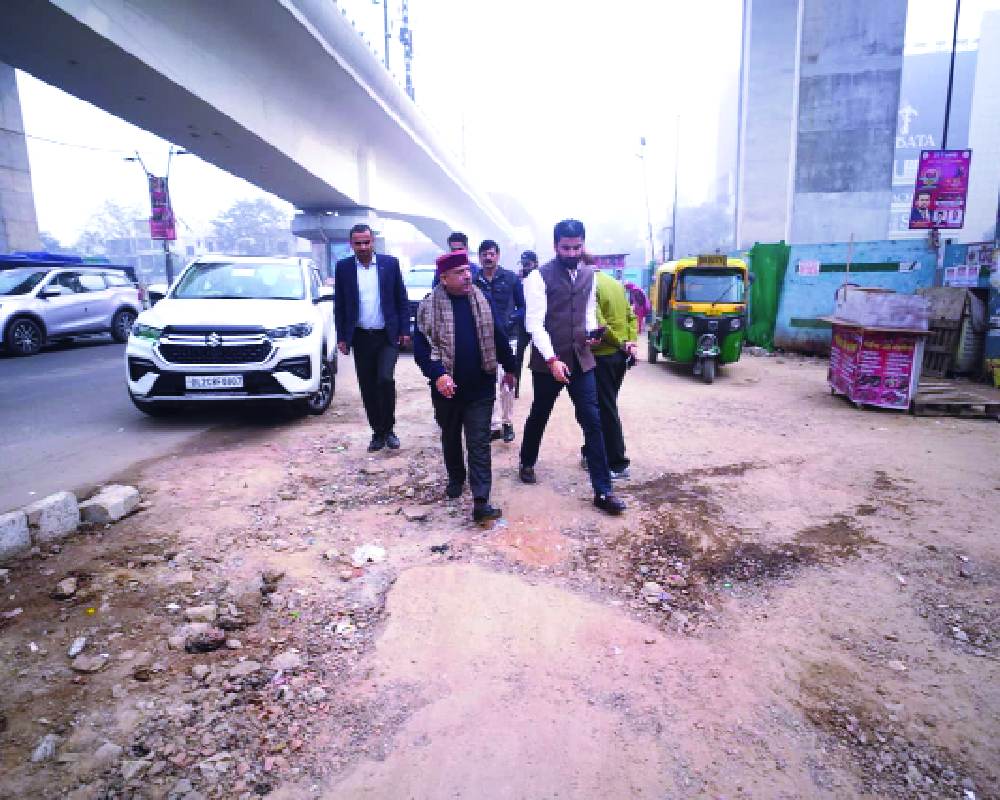
Delhi Assembly Speaker Vijender Gupta on Saturday reviewed the air pollution hotspots across his constituency, Rohini and directed civic agencies to undertake immediate, coordinated action to control dust-related pollution, terming it a “preventable governance challenge” rather than an unavoidable reality.
During the inspection at Madhuban Chowk in Rohini Sector-8, he reviewed areas identified as major dust-pollution hotspots where roads remain dug up, untarred or covered with loose soil. Vehicular movement on these exposed stretches has repeatedly resuspended dust, while stalled infrastructure and drainage works have left road surfaces untreated for months, resulting in prolonged exposure for local residents and raising public health concerns.
He observed that air pollution caused by road dust and unfinished civic work is not an inescapable reality, but a preventable governance challenge, one that calls for time-bound action, coordinated administration and firm accountability.
The inspection was conducted by the speaker after recent assessments had identified several locations in the area as dust-pollution hotspots, where roads remained dug up, or covered with loose soil.
It was observed that vehicular movement on these exposed stretches repeatedly resuspends dust. At the same time, the suspension of infrastructure work, including drainage-related projects under pollution-control measures, has left road surfaces untreated for extended periods, he said.
Residents in the area have reported sustained exposure to dust over several months, raising serious public health concerns.
Gupta noted that scientific assessments consistently identify road dust as one of the most significant contributors to particulate pollution in the national Capital, that account for a substantial share of PM10 and a meaningful portion of PM2.5, during winters when stagnant atmospheric conditions aggravate pollution levels.
Taking note of the findings, the Speaker directed immediate and visible remedial measures across the identified hotspots in the area. These include a time-bound dust-suppression mandate through daily mechanised sweeping and regular sprinkling of water or approved dust suppressants.
He also instructed for weekly joint inspections to be conducted by the Delhi Pollution Control Committee (DPCC), Delhi Development Authority (DDA), Municipal Corporation of Delhi (MCD), and the Traffic Police, supported by geo-tagged reporting and clearly defined compliance timelines.
To address administrative and coordination gaps, Gutpa directed the establishment of a Rohini Dust Action Cell under the MLA’s office to ensure coordinated functioning among DDA, MCD, DPCC, and the Traffic Police.