Reckless for reach: Social media warping road safety needs to stop
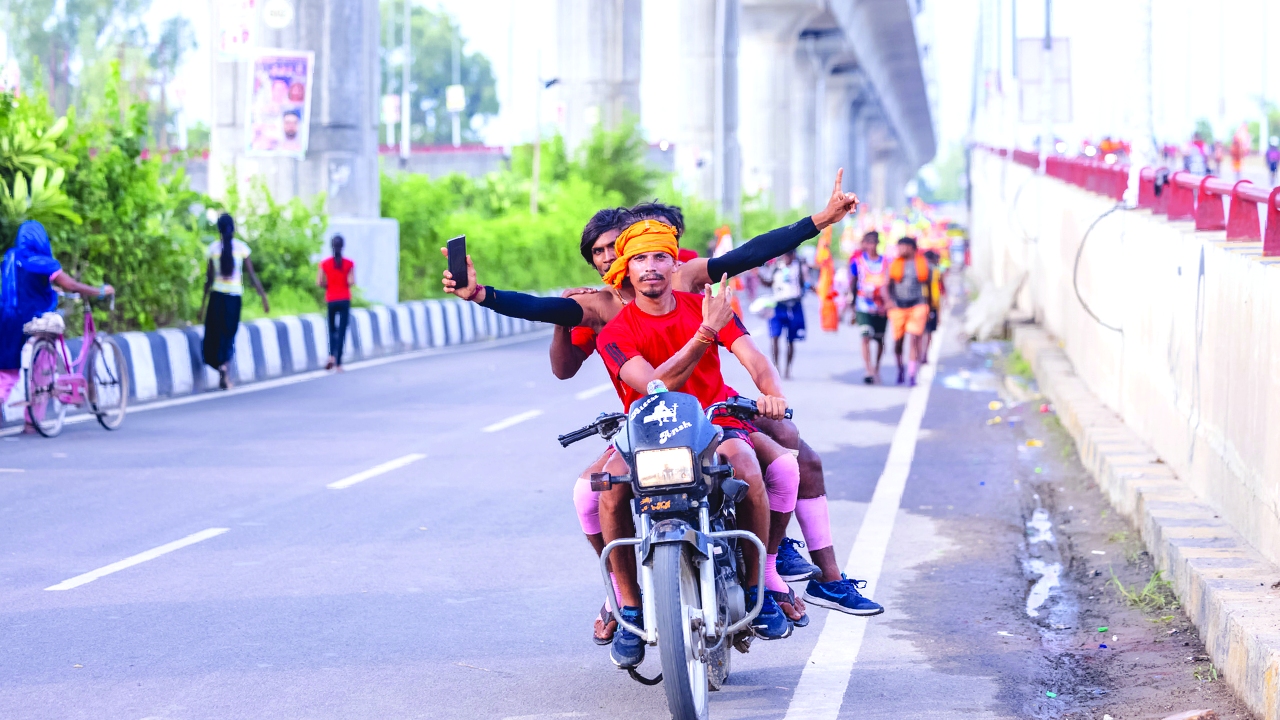
Across India, young people are increasingly treating public roads as film sets. In Delhi, a group of drivers recently shot a high-speed stunt video on a busy stretch, swerving across lanes before slamming into a divider. In Maharashtra, a biker attempting a viral “no-hands” reel died after losing balance on a highway. In another case, a luxury car convoy blocked a major road simply to capture cinematic shots, holding up traffic and risking lives. These are not aberrations — they are symptoms of a growing, normalised recklessness.
India already loses nearly 2,00,000 people every year to road accidents. That number is not abstract — it is a daily toll of preventable deaths. And instead of confronting this crisis with seriousness, a dangerous new culture is taking root: reckless driving for social media validation.
What makes this trend especially disturbing is its intent. These are not accidents born of error — they are deliberate acts of risk, performed for an audience. Riders without helmets, three people on a motorcycle at high speed, drivers hanging out of sunroofs, cars racing well beyond legal limits—these are staged, recorded, and uploaded with pride. The road is no longer just a shared public space; it has become a backdrop for spectacle.
A recent video showed a driver casually sitting on the roof of a moving car, trusting driver-assistance systems to keep him alive. That such behaviour is not immediately met with universal outrage — but instead garners views and engagement — reveals how deeply the problem has taken hold.
Social media platforms are not neutral in this ecosystem. Their algorithms actively reward extreme behaviour. The more dangerous the stunt, the higher the reach. This has created a perverse incentive structure where risk translates into visibility, and visibility into influence. Even sections of the automotive media and influencer ecosystem have blurred the line — glorifying 0-100 km/h runs and top-speed tests on public roads where such speeds are illegal. Some car manufacturers, too, have quietly leaned into this narrative, amplifying performance without emphasising responsibility.
Law enforcement has responded in pockets. Police in cities like Bengaluru and Mumbai have begun tracking viral videos, issuing fines, and seizing vehicles.
But these are reactive measures, chasing visibility rather than preventing behaviour. By the time a video goes viral, the damage is often already done.
This is no longer a law-and-order issue alone-it is a systemic failure that demands coordinated intervention. The Ministries of Information Technology and Road Transport must step in decisively. Platforms must be compelled to identify, throttle, and demonetise dangerous driving content at scale. The technology to do this already exists; what is missing is the will to enforce it.
At the same time, penalties for such behaviour must become swift, certain, and severe. Licence suspensions, heavy fines, and criminal charges where warranted should not be exceptions-they should be the norm. Public roads cannot be allowed to function as arenas