Racket siphoning free Govt medicines busted
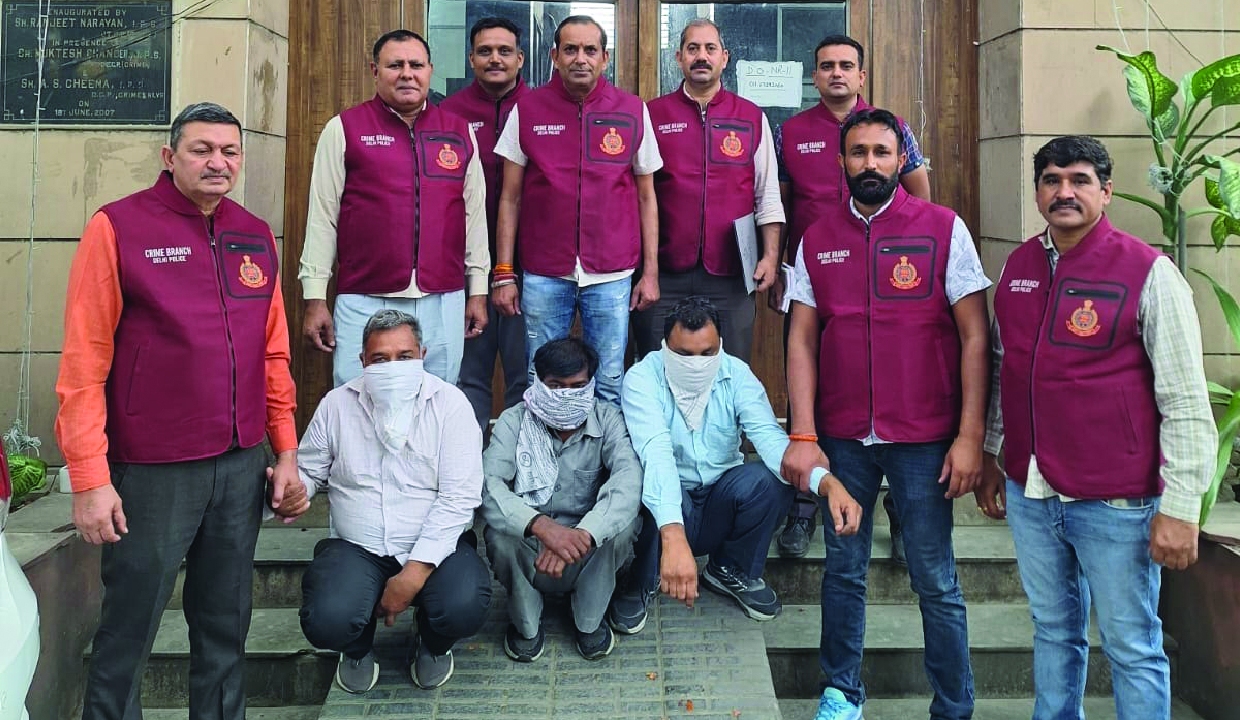
A covert network siphoning off life-saving medicines meant for free distribution in Government hospitals has been busted by the Delhi Police Crime Branch, with drugs worth around Rs 70 lakh recovered and five persons arrested in connection with the racket.
According to the police officials, the operation exposed an organised chain that diverted essential medicines from hospital stocks into the open market through brokers. The accused were caught transporting cartons marked “GOVT. SUPPLY NOT FOR SALE,” revealing a systematic breach of public healthcare supply lines.
“This operation reflects our commitment to prevent misuse of government resources and ensure that essential medicines reach the intended beneficiaries,” said Pankaj Kumar, Deputy Commissioner of Police, Crime-IV. He said further investigation is underway to trace the full network and financial trail.
The case began with specific intelligence developed by police officials. Acting on the input, a Crime Branch team reached Jai Bharat Transport at Rajendra Market in Tis Hazari on April 2. There, three men: Neerej Kumar, Sushil Kumar, and Laxman Mukhia were intercepted while moving a large consignment of medicines in a Mahindra Champion tempo and a Baleno car.
The recovered stock included high-value antibiotics and critical care drugs such as Cefixime, Amoxycillin with Clavulanate, Ceftriaxone, Ceftazidime, and Meropenem. Also seized were Erythropoietin injections, Rabies Antiserum, and other essential medicines. All items bore government supply markings, indicating they were not meant for commercial sale.
Police said the seized medicines were intended for free distribution in government hospitals. Their diversion not only caused a financial loss to the exchequer but also posed a serious risk to patients who depend on public healthcare.
During interrogation, the accused revealed that the racket had been operating for the past one to one-and-a-half years. Neerej Kumar, a wholesale medicine dealer from Saharanpur who runs Aditya Pharmacy, emerged as the main receiver and distributor. He allegedly sourced diverted medicines from Delhi and supplied them across multiple cities through a network of brokers. Sushil Kumar, a taxi driver, assisted in transporting smaller consignments between Delhi and Saharanpur for payment per trip. Laxman Mukhia, a tempo driver based in Delhi, handled bulk transportation from hospital points to transport hubs.
The probe soon led investigators inside a government hospital. Based on disclosures, two more accused were arrested: Binesh Kumar, a pharmacist and storekeeper at Deen Dayal Upadhyay Hospital, and Prakash Mehto, a contractual helper at the hospital.
Police said Binesh Kumar manipulated stock records to divert medicines from the official inventory.
Prakash Mehto acted as a link between hospital staff and external buyers. He handled extraction, storage, communication, and financial transactions, including digital payments, and earned commissions from the illegal trade.