PV Narasimha Rao: Leadership that Reshaped a Nation
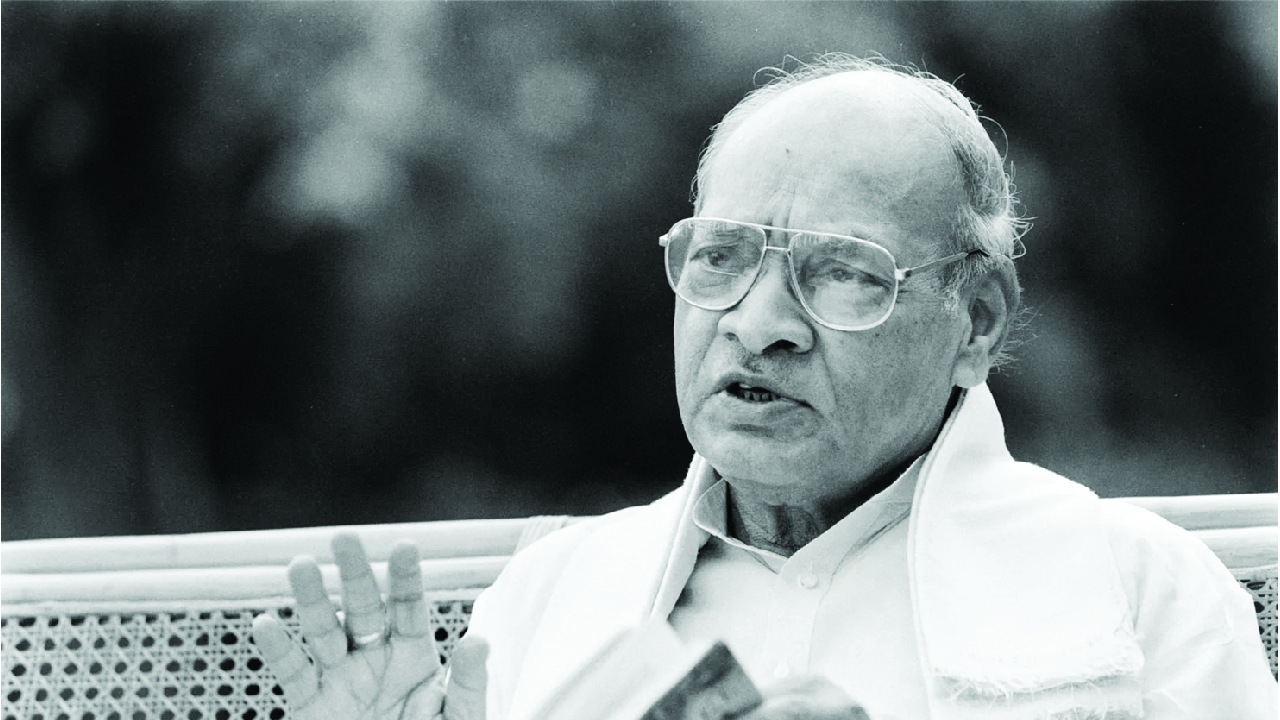
As India marks the 21st Death Anniversary of PV Narasimha Rao and reflects on more than three decades of economic reforms, it is an appropriate moment to reassess the significance of the choices made during 1991-96 and the continuity those reforms have found across successive Governments.
PV Narasimha Rao’s contribution to India lies not merely in initiating economic reform, but in fundamentally redefining the relationship between the State, the market and society. His leadership during a moment of profound national crisis altered India’s economic trajectory in ways that continue to shape the country’s present and future.
Leadership at a Moment of Crisis
When Rao assumed office in June 1991, India was confronted with an unprecedented balance of payments crisis. Foreign exchange reserves had fallen to levels sufficient to finance only a few weeks of imports. The situation demanded not incremental adjustment, but bold political decision-making. While the idea of reform had circulated within policy and academic circles for decades, what India lacked was political ownership at the highest level.
Rao provided precisely that. Within weeks of taking office, his Government initiated sweeping structural reforms-dismantling the Licence-Permit-Quota regime, liberalising trade, rationalising tariffs, adjusting the exchange rate to restore competitiveness, and opening key sectors to foreign investment.
These measures marked a decisive break from a heavily controlled economic framework that had constrained growth and innovation for decades.
A Structural Break in India’s Growth Path
The reforms of 1991-96 triggered a clear structural shift in India’s growth trajectory. The economy moved away from the so-called “Hindu rate of growth” of about 2-3 per cent, towards a higher and more sustained growth path. In the post-reform decades, India’s average growth rate rose to 6-7 per cent, enabling large-scale poverty reduction and deeper integration with global markets. India’s GDP, which stood at approximately $270-280 billion in 1991, has since expanded to around $.4 trillion today, placing India among the world’s largest economies.
Equally significant has been the diversification of growth, particularly in services, information technology, manufacturing, and export sectors that were previously constrained by excessive regulation.
PV Narasimha Rao: Leadership That Reshaped a Nation
Poverty reduction has been one of the most consequential outcomes. While estimates vary by methodology, there is a broad consensus that the proportion of Indians living in poverty has declined sharply since the early 1990s, reflecting the long-term impact of growth enabled by reform.
Reforms with a Human Face
Contrary to simplistic portrayals, Rao did not view economic reform as an abandonment of social responsibility. His vision was rooted in a balanced approach, combining economic efficiency with social protection.
Rural development received sustained attention during his tenure. The 73rd and 74th Constitutional Amendments strengthened Panchayati Raj institutions, deepening decentralisation and linking local governance with national development priorities. Employment generation, infrastructure expansion and welfare delivery remained integral components of the reform framework.
Rao’s central insight was clear: growth and social justice are not competing objectives. Sustainable welfare requires wealth creation; without growth, redistribution becomes fiscally untenable.
Continuity and Deepening of Reforms
India’s reform journey did not end in 1996. Subsequent Governments built upon the framework Rao established, adapting it to changing domestic and global conditions. In recent years, under Prime Minister Narendra Modi, this reform trajectory has been consolidated and deepened.
Since 2014, India’s economy has expanded significantly in scale and resilience. Major structural reforms, including the Goods and Services Tax, the Insolvency and Bankruptcy Code, large-scale infrastructure investment, financial inclusion through Jan Dhan, and the creation of robust digital public infrastructure, strengthened formalisation and efficiency.
India has also seen improvements in welfare coverage and service delivery, enabled by technology-driven governance and better fiscal management. The emphasis on manufacturing, logistics, renewable energy and skilling reflects preparation for the next phase of growth.
While challenges remain-particularly in employment generation, human development outcomes and inequality, the direction of reform has remained broadly consistent with the foundations laid during 1991-96.
The Road Ahead
As India aspires to become a developed economy by the middle of this century, the lessons of PV Narasimha Rao’s leadership remain deeply relevant. Reform is not a one-time event, but a continuous process requiring political courage, institutional capacity and social consensus.
Rao demonstrated that decisive leadership, guided by pragmatism rather than ideology, can transform a nation’s prospects. The economic confidence India exhibits today owes much to the reforms he initiated and to the continuity of that vision over the past three decades.
Remembering PV Narasimha Rao is therefore not merely an act of commemoration. It is a reaffirmation of India’s enduring commitment to openness, pragmatism and reform -- principles that continue to guide the country’s economic journey.
(The writer is Chairman of PV Global Foundation and the third son of late PV Narasimha Rao: Former Prime Minister of India)