Punjab: Akal Takht-Mann clash as faith, politics collide
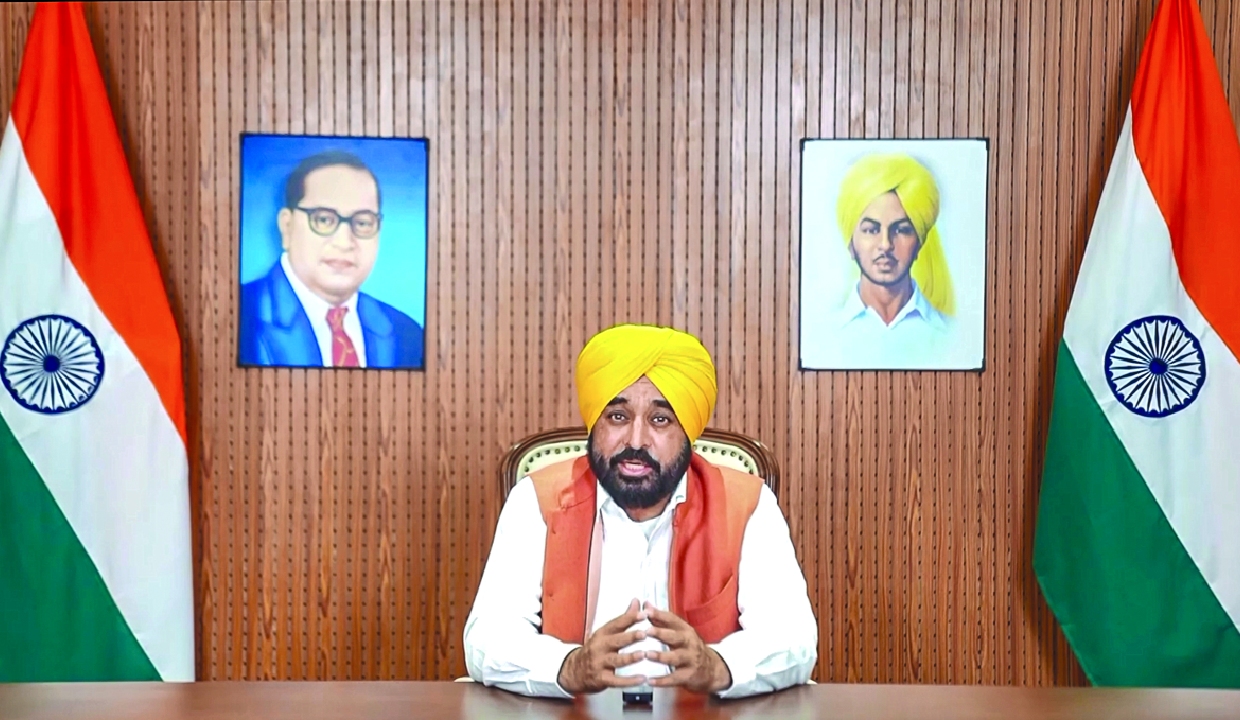
The confrontation between Punjab Chief Minister Bhagwant Mann and the Akal Takht has rapidly evolved from a controversy over a viral video into a politically charged battle that could reshape the narrative ahead of the Assembly elections. Coming just days after AAP national convenor Arvind Kejriwal projected Mann as the party’s chief ministerial face, the episode has shifted the focus from governance and welfare to religion and identity - issues that have historically carried immense electoral weight in Punjab.
The timing is politically significant. Kejriwal’s announcement was meant to consolidate the party around Mann’s leadership and launch its campaign for a second consecutive term on the plank of governance and development. Posters proclaiming “Vadhiya langhe panj saal, saara Punjab Mann naal” had begun appearing across the State, signalling AAP’s confidence in its leadership.
Instead, the party now finds itself defending its tallest leader against allegations that have pushed its governance agenda into the background.
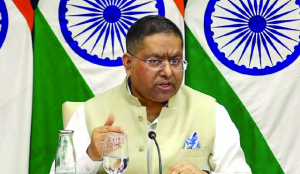
The Akal Takht’s decision declaring Mann “Guru dokhi” and “Panth virodhi” has placed AAP in a delicate position. The party must defend its Chief Minister while avoiding any perception of confrontation with Sikhs’ highest temporal seat. Mann’s own response reflects this balancing act. He has repeatedly reaffirmed the supremacy of the Akal Takht and his reverence for the institution, while questioning what he describes as politically motivated functionaries and appointments influencing its decisions.
By doing so, AAP appears to be drawing a distinction between the sanctity of the institution and the neutrality of its present management, attempting to challenge the politics surrounding the decision without challenging the institution itself.
Politically, Mann has also sought to change the narrative. Rather than allowing the controversy to revolve around the viral video, he has linked it to his Government’s stringent anti-sacrilege law, arguing that vested interests have targeted him because the legislation received public support. His repeated emphasis on protecting Punjab’s “Paani, Jawani, Kisani and Bani” is an attempt to portray himself as a leader under attack for pursuing Punjab-centric policies rather than someone facing a purely religious censure.
Ironically, the controversy invites comparisons with the sacrilege incidents that politically damaged the SAD after 2015. The series of desecration cases and the subsequent police firing at Behbal Kalan and Kotkapura severely eroded the SAD’s panthic image and contributed to its electoral decline. More than a decade later, AAP now finds itself confronting allegations that seek to associate its own Chief Minister with hurting Sikh sentiments. While the circumstances are entirely different, the political attempt to link a ruling dispensation with sacrilege-related issues reflects a familiar pattern in Punjab politics.
The episode also underscores a larger battle for Punjab’s panthic space. For decades, the SAD projected itself as the principal panthic party and political representative of Sikh interests. However, successive electoral setbacks and the fallout from the 2015 sacrilege controversy weakened that position. AAP’s enactment of a stringent anti-sacrilege law was widely viewed as an effort to reassure Sikh voters and strengthen its own panthic credentials. The present confrontation, therefore, is not merely about a viral video but about competing claims over political legitimacy and credibility on issues deeply intertwined with Sikh identity.
Mann’s decision to publicly name SAD chief Sukhbir Singh Badal is politically significant, as it seeks to portray the row as a struggle for political relevance rather than a religious dispute. In doing so, AAP is attempting to challenge SAD on its traditional panthic turf and deny it the opportunity to reclaim lost political ground ahead of the polls.
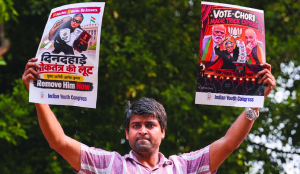
For the opposition, the controversy presents a valuable political opportunity. The SAD is likely to use the Akal Takht’s pronouncement to reclaim lost panthic ground, while the Congress has already framed the issue as one of moral legitimacy by demanding Mann’s resignation. The BJP, too, has attempted to highlight the administrative and political implications of the directive, adding to the pressure on the ruling party.
For AAP, the challenge is that a campaign intended to centre around governance, welfare schemes and administrative performance now risks being overshadowed by an emotionally charged religious debate. Punjab’s political history shows that once elections become intertwined with questions of faith and identity, electoral calculations often become unpredictable.
Ultimately, what began as a dispute over a controversial video has evolved into a contest over political legitimacy, Panthic credibility and public perception. For AAP, the immediate task is to ensure that a religious controversy does not eclipse five years of governance. For the opposition - particularly the Shiromani Akali Dal - it presents an opportunity to reclaim its traditional political space and redefine the electoral discourse.