Protests erupt across States after Khamenei killing
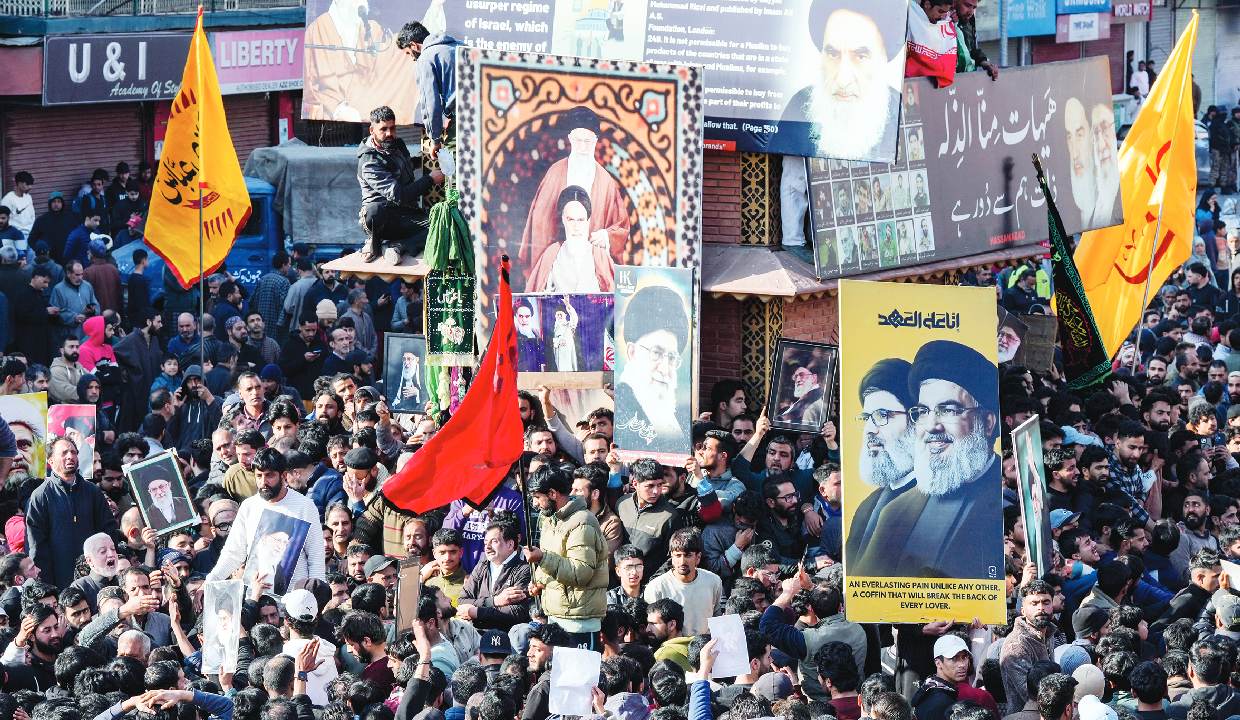
Several parts of India, including the Kashmir valley and Kargil, on Sunday witnessed sporadic protests hours after the Iranian State media confirmed that the Supreme Leader Ayatollah Ali Khamenei had been killed in coordinated US-Israeli airstrikes on Tehran.
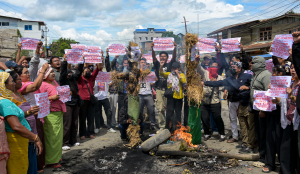
Protests also broke out in the old city area of Lucknow, New Delhi, Jammu, Ramban, and parts of Punjab, with hundreds of people from the Shia community condemning the killing of Iran’s Supreme Leader, Ayatollah Ali Khamenei. The Shia community in Ajmer also announced a three-day mourning over the killing of Khamenei.
The announcement was made by Syed Asif Ali, a community leader, who appealed to members of the Shia community to observe mourning and refrain from celebrations during the period. Scenes of extreme distraught and slogannering were also witnessed in Bihar, Jharkhand, and Telangana, where protesters, holding Khamenei’s posters, voiced their anger against the US and Israeli military actions.
However, in Karnataka’s Chikkaballapur district, where Khamenei once visited, observed silence, and shops and commercial establishments voluntarily closed.
Prominent clerics, including Mirwaiz Umar Farooq and spokesperson of the All-India Shia Personal Law Board (AISPLB), condemned the attack while announcing a “national mourning” for three days. Shia Muslims organised a protest at Delhi’s Jantar Mantar in support of Ayatollah Khamenei. All India Imam Association (AIIA) President Sajid Rashidi said, “Ayatollah Khamenei wasn’t just a Shia leader, he was a leader of all Muslims... Muslims across the world are mourning his death, and this is an achievement in itself because he broke all barriers between Shias and Sunnis, and his efforts will be remembered till times immemorial...”
Lal Chowk, the historic city centre of Srinagar, witnessed the largest gathering of mourners in the valley early Sunday morning.
Large-sized posters of the spiritual leader were hung around the iconic clock tower. Thousands of mourners raised anti-US and anti-Israel slogans against the killing of their spiritual leader.
The Central Kashmir district of Budgam and parts of north Kashmir’s Baramulla district also witnessed protests in the valley. Director General of Police Nalin Prabhat, along with senior officers, took stock of the law-and-order situation and exercised restraint to contain the tempers.
The Union Territory administration also kept a close vigil to prevent any untoward incident. The internet speed was restricted to prevent the circulation of unverifiable content aimed at flaring up the passions.
Jammu and Kashmir Chief Minister Omar Abdullah called for calm, asking people to “avoid any actions that could lead to tension or unrest”.
In Lucknow, a large number of followers of Ayatollah Khamenei, dressed in black, gathered at prominent points including Akbari Gate, Nakhas, Hussainabad and surrounding localities, raising slogans against the US and Israel.
Heavy police presence was deployed across the area to maintain law and order during the protest.
“Bada Imambara and Chota Imambara will remain closed for tourists for the next three days,” declared Maulana Mohammad Mirza Yasoob Abbas, an Islamic cleric and speaker of AISPLB.
He said a jalsa (gathering) has been organised on Sunday evening at Chota Imambara, which will be followed by a protest march where effigies of the presidents of the US and Israel will be burnt.
Lucknow’s prominent Shia cleric Kalbe Jawad appealed to people to join the protest march, and the condolence meet, observe three-day mourning, and take the mission of Khamenei forward. In Ludhiana, Punjab’s Shahi Imam, Maulana Mohammad Usman Rahmani Ludhianvi, led a protest against the killing of Iran’s Supreme Leader.
He also demanded from the Indian Government that a week-long national mourning be observed for the supreme leader.
Meanwhile, Jammu and Kashmir Chief Minister Omar Abdullah Sunday said that the J-K Government is in “close coordination” with the External Affairs ministry to ensure the safety and well-being of J&K residents, including students, currently in Iran.
Political leaders in the Valley have also condemned the attacks on Iran and the killing of Khamenei.
“Today marks a deeply tragic and shameful point in history with Israel and the USA, boasting about the killing of Iran’s beloved leader, Ayatollah Ali Khamenei. What’s more disgraceful and shocking is the explicit and implicit support given by Muslim countries who chose convenience and expedience over conscience,” former J&K chief minister and People’s Democratic Party (PDP) president Mehbooba Mufti said in a post on X, adding, “History will stand testament to who fought for justice and who helped the oppressors. Prayers with the people of Iran. May Allah grant them strength and victory over the forces of tyranny and injustice.”
National Conference president Farooq Abdullah also expressed “profound anguish” over the assassination of Iran’s Supreme Leader Ayatollah Ali Khamenei in joint strikes by the US and Israel.
“Abdullah has strongly denounced the act, describing it as a tragic and destabilising development with serious implications for peace and stability in the region,” the ruling National Conference (NC) said in a statement.
Abdullah appealed for calm and urged the administration to handle the situation with sensitivity and discretion, ensuring that those who wish to mourn are able to do so respectfully, without fear or undue restrictions, while maintaining public order.
The Valley’s chief cleric, Mirwaiz Umar Farooq, has also condemned the killing of Khamenei and called for a shutdown on Monday.
“Deeply saddened and outraged at the brutal killing of Iran’s Supreme Leader, Ayatollah Syed Ali Khamenei, by the US and Israel, which has shaken the Muslim world. The people of J&K collectively condemn this brutality and the ongoing aggression against Iran, as well as the massacre of innocent girl students in Minab,” Mirwaiz said. “In this hour of immense sorrow, our hearts beat with the resilient people of Iran,” he added.
J&K CM Omar Abdullah called for calm, asking people to avoid any actions that could lead to tension or unrest