PM inaugurates new terminal of Guwahati airport
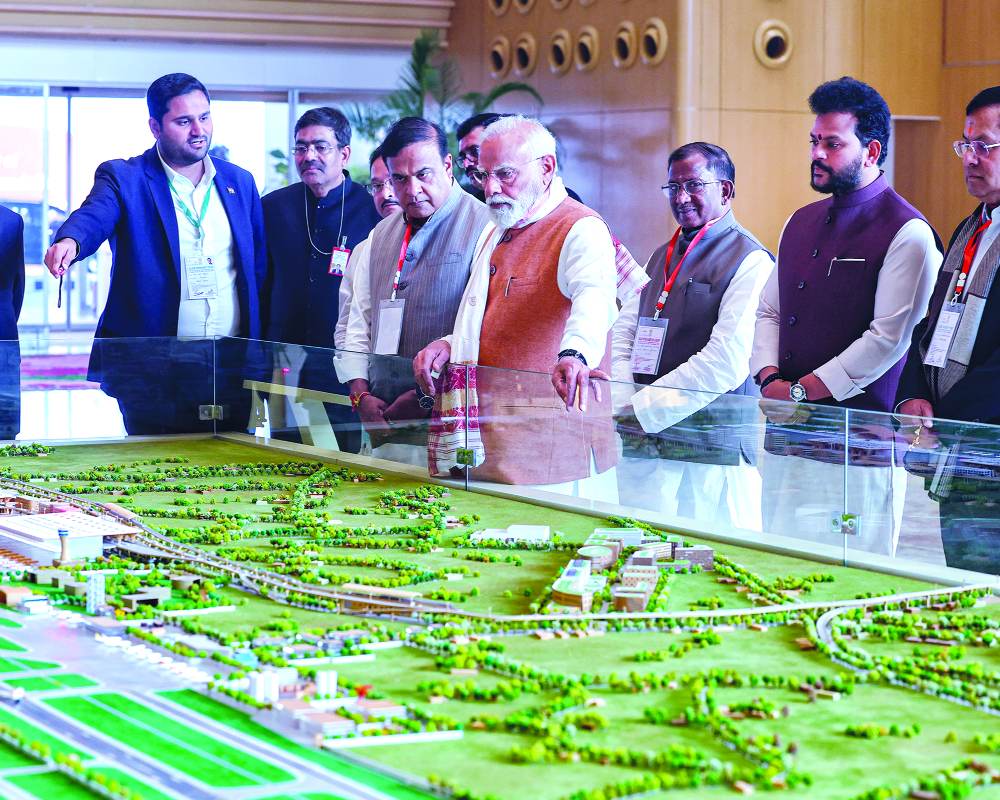
Prime Minister Narendra Modi on Saturday inaugurated a new terminal of the Lokapriya Gopinath Bardoloi International Airport (LGBIA). The Integrated Terminal 2 Building is designed to handle 13.1 million passengers per year. Modi also undertook a tour of the new terminal built at a cost of Rs 4,000 crore. The airport is named after Assam’s first Chief Minister, whose 80-foot statue was also unveiled by Modi outside the airport.
Officials said the total cost of the project is Rs 5,000 crore, including Rs 1,000 crore earmarked specifically for Maintenance, Repair and Overhaul (MRO) facilities.
The airport is aimed to be a key aviation hub for Northeast India and a gateway to Southeast Asia, they said. The new terminal has an area of 1,40,000 square metres, and its design draws inspiration from Assam’s rich biodiversity and cultural heritage, they added.
The new terminal building is the “country’s first nature-themed airport,” designed to handle 13.1 million passengers per year, officials said. The transition from the old terminal to the new one is scheduled to begin in February, with domestic flights initially operating from the new facility. The process is expected to be completed by the end of March, with both domestic and international flights shifting to the new terminal, while the existing terminal will be converted into a cargo hub, they said.
Designed by Indian architects, the terminal draws inspiration from Assam’s rich biodiversity and cultural heritage, and is “the country’s first airport built around a nature theme”. Named ‘The Bamboo Orchids’, the terminal design is inspired by Assam’s iconic ‘kopou phool’ (foxtail orchid) and indigenous bamboo varieties – Bholuka bamboo from Assam and Apatani bamboo from Arunachal Pradesh – celebrating the ecological and cultural richness of the northeast.
The terminal’s architecture reflects the cultural identity of the region while integrating modern technology, sustainability and passenger comfort, in line with India’s vision of inclusive, future-ready infrastructure, the officials said. The bamboo-inspired interiors have made use of around 140 metric tonnes of locally sourced northeast bamboo, setting a new benchmark for sustainable construction in Indian airports, they said.
The terminal also features Kaziranga-inspired landscapes, with lush and environmentally friendly green spaces that mirror Assam’s forests. Traditional Assamese headgear ‘japis’ has been incorporated into various design elements, while the rhino motif, symbolising strength and calmness, features prominently across the terminal. Fifty-seven distinctive columns, designed to resemble bouquets of the foxtail orchid, adorn the departure and arrival areas.
Arriving passengers will also experience a ‘sky forest’, passing through a lush green zone with around one lakh plants from 100 species of local flora, creating an immersive forest-like ambience.
“This positions Guwahati as a critical passenger and cargo hub for all eight northeastern states – Assam, Meghalaya, Nagaland, Manipur, Tripura, Mizoram, Arunachal Pradesh and Sikkim – enhancing connectivity to destinations known for tea gardens, wildlife reserves, riverine landscapes, living-root bridges and hill tourism,” the official said.
The project has been developed by Guwahati International Airport Ltd (GIAL), with operations led by Adani Airport Holdings Ltd (AAHL). Equipped with DigiYatra-enabled passenger processing, smart check-in systems and expansive, naturally lit interiors, the terminal has been designed to handle 13.1 million passengers annually by 2032, significantly boosting both domestic and international connectivity.