Palestinians in Gaza mark anniversary of 1948 mass expulsion, say today’s catastrophe is worse
Blink and you might miss the few stone walls that are all that’s left of the village that Yusuf Abu Hamam’s family was forced to flee when he was an infant in 1948.
The village, al-Joura, was demolished by the Israeli military at the time. It has since vanished under neighbourhoods of the southern Israeli city of Ashkelon and the grounds of a national park.
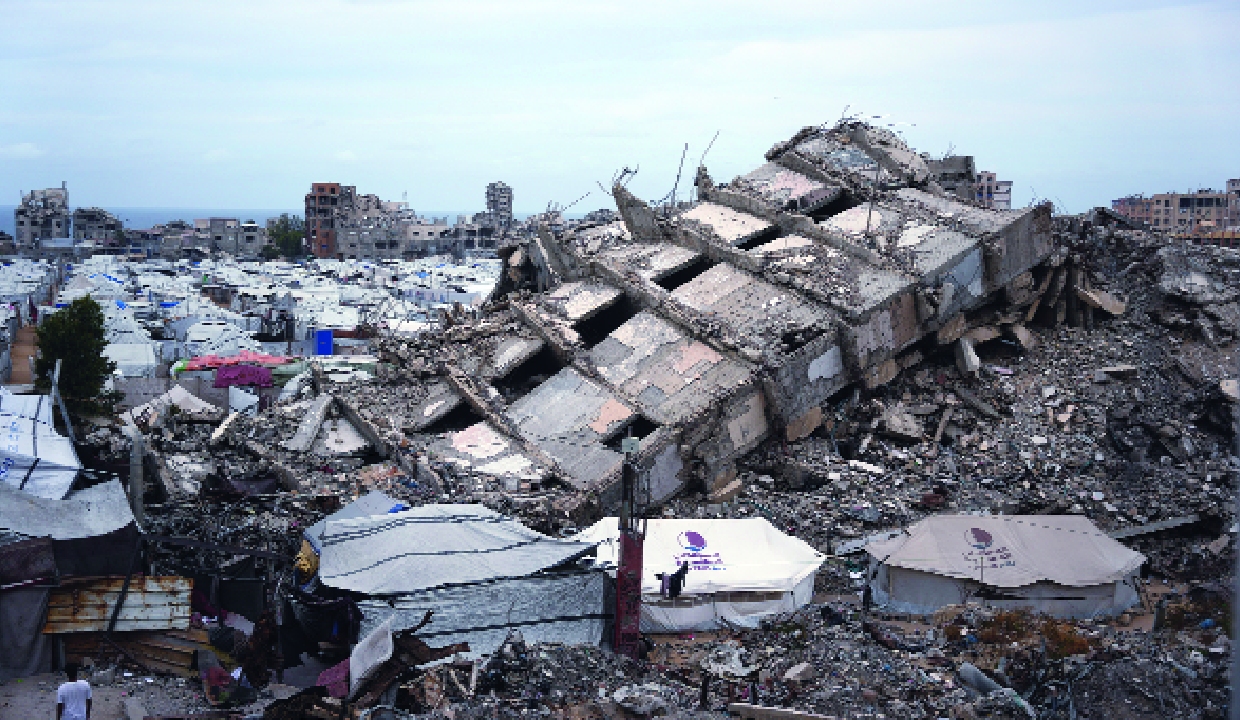
The neighbourhood where Abu Hamam’s family ended up — and where he spent most of his life - now lies also largely in ruins. Buildings in the Shati Camp in the northern Gaza Strip have been razed and wrecked by Israeli bombardment and demolitions during the past 2 and a half years of war.
On Friday, Abu Hamam and millions of Palestinians mark the 78th anniversary of the Nakba, Arabic for “catastrophe,” referring to the mass expulsion and flight of some 750,000 Palestinians from what is now Israel during the 1948 war surrounding Israel’s creation.
It’s the third commemoration of the Nakba since the war in Gaza began. The 78-year-old Abu Hamam, one of a dwindling number of Nakba survivors, says the current war is an even greater catastrophe. More than six months after an October ceasefire, he and the rest of Gaza’s more than 2 million people are now crammed into less than half of the 25-mile-long strip along the Mediterranean coast, surrounded by an Israeli-controlled zone encompassing the rest of the territory.
“There is no country left,” Abu Hamam said, speaking next to his home, which was heavily damaged by Israeli shelling earlier in the war. “A square kilometre and a half extending from the sea, this is what we are living in … It’s indescribable, unbearable.”
For Palestinians, the Nakba meant the loss of most of their homeland. Some 80 per cent of the Palestinians who lived in the area that became Israel were driven from their homes by forces of the nascent state before and during the war.
The fighting began when Arab armies attacked following Israel’s establishment as a home for Jews in the wake of the Holocaust. Palestinians who remained behind hold Israeli citizenship. After the war, Israel refused to allow Palestinian refugees to return to ensure a Jewish majority within its borders.
Palestinians became a seemingly permanent refugee community that now numbers some 6 million, with most living in refugee camps in the Israeli-occupied West Bank, Lebanon, Syria, Jordan and Gaza.
Around 530 Palestinian villages in what became Israel were destroyed, according to the Palestinian Bureau of Statistics. Abu Hamam’s birth village was one of them. Al-Joura was seized by the Israeli military as it advanced against Egyptian forces in November 1948.
Soldiers were ordered to destroy every home in al-Joura and neighbouring villages to ensure their Palestinian populations couldn’t come back, according to military archives cited by Israeli historian Benny Morris. Refugees swelled the population of the tiny patch of territory along the southern coast that became the Gaza Strip.