Opposition unites against delimitation
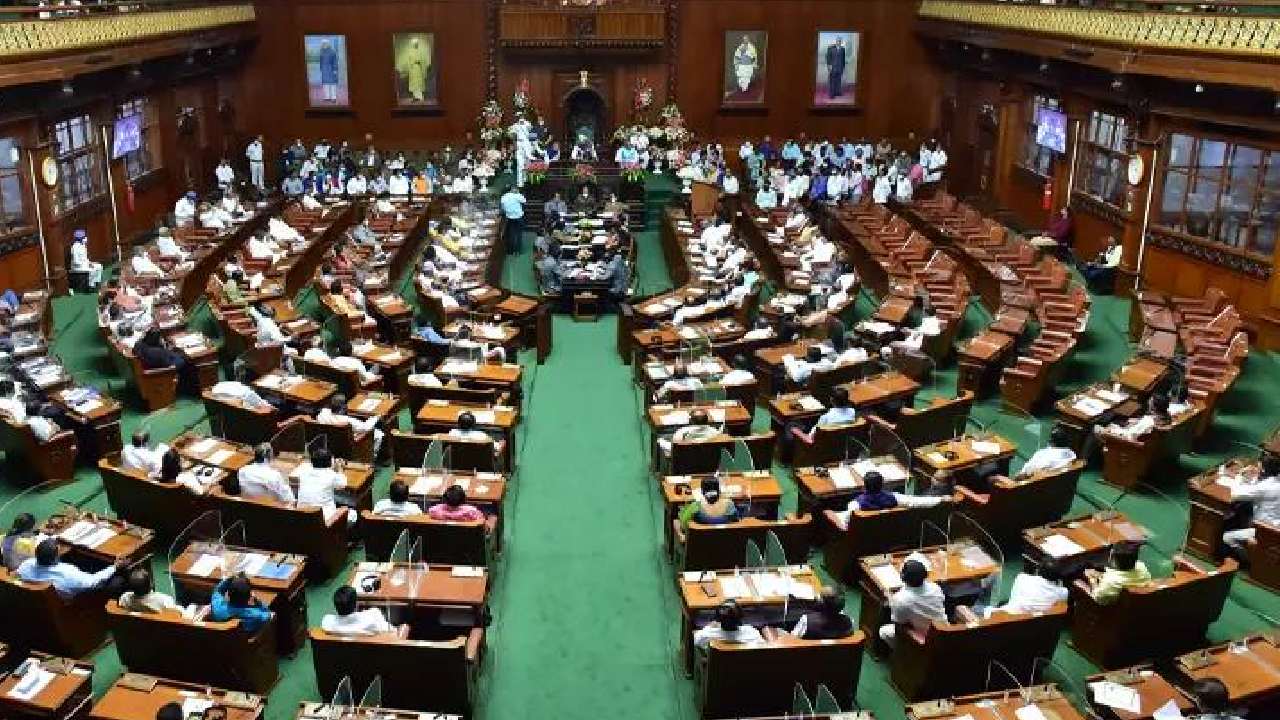
The three-day special sittings of the Budget session of Parliament from Thursday is likely to start on a stormy note as the Government and the Opposition are set to cross swords in the Lok Sabha on a key Constitution amendment bill that has provisions for the women’s quota law implementation and the contentious delimitation exercise.
Several Opposition parties have decided to unitedly vote against the delimitation provisions in Parliament, while asserting that they are not against womens’ reservation but opposed to the manner in which the bill is being brought.
While the Government is set to push the bill as a big-ticket reform, the Opposition has decided to oppose the bill due to its provisions on delimitation.
Congress president Mallikarjun Kharge echoed the strategy of the Opposition parties and said they have decided to unitedly vote against the delimitation provisions in the Constitution amendment bill in Parliament, asserting that they were not against women’s reservation but opposed to the “politically motivated” manner in which the bill was being brought.
All Opposition parties want a one-third reservation for women. They want it implemented based on the current Lok Sabha strength of 543 for the 2029 general election, Ramesh told reporters after the meeting.
Top Opposition leaders met at Kharge’s residence to discuss a joint strategy on the bills brought for the implementation of the women’s quota law and delimitation. Besides Kharge and Rahul Gandhi, the other leaders at the meeting included DMK’s T R Baalu, the RJD’s Tejashwi Yadav, Trinamool Congress’s Sagarika Ghosh, Shiv Sena (UBT) leaders Sanjay Raut and Arvind Sawant, and the NCP-SCP’s Supriya Sule, with Samajwadi Party chief Akhilesh Yadav joining virtually.
CPI leader Annie Raja, CPI-M’s Nilotpal Basu, AAP leader Sanjay Singh, and Independent MP Kapil Sibal also attended. IUML’s E T Mohammed Bashir and RSP’s N K Premachandran were present. Congress general secretaries K C Venugopal and Jairam Ramesh attended as well.
The treasury and Opposition benches are rallying support at the Centre as well as in states amid concerns in the southern part of the country, including Tamil Nadu, that a delimitation exercise under the provisions of the bill would reduce their political standing because of a better performance on population control.
Tamil Nadu Chief Minister and senior DMK leader M K Stalin and the Telangana CM Congress’s A Revanth Reddy sharpened their attack on the Centre over the issue of delimitation. Stalin has warned of a “massive agitation” if the state is harmed, and his Telangana counterpart is flagging “injustice”.
Reddy has written an open letter to Prime Minister Narendra Modi, urging him to convene an all-party meeting to deliberate on the proposed delimitation, alleging that an increase in Lok Sabha seats based on pro rata, without considering economic contribution, would lead to a distortion in the country’s federal balance.
Reddy has also written to his counterparts from Andhra Pradesh (Chandrababu Naidu), Karnataka (Siddaramaiah), Kerala (Pinarayi Vijayan), Puducherry (N Rangasamy) and Tamil Nadu, calling for collective engagement among southern states to ensure that their concerns are articulated effectively at the national level.
Kerala Chief Minister Pinarayi Vijayan alleged that delimitation could undermine the federal structure and adversely affect states like Kerala. The Government is executing a “devious plot” to usher in delimitation under the cover of women’s reservation, TMC leader Derek O’Brien charged,
In a social media post, Rahul Gandhi alleged that the Government’s proposed amendments to the Constitution constitute an “attempted power grab” through the use of delimitation and gerrymandering. The Leader of Opposition in the Lok Sabha emphasised that his party would not permit southern, northeastern, northwestern, and smaller states to be treated unfairly.
“We will not allow ‘Hissa Chori’ from OBC, Dalit and Adivasi communities by ignoring the caste census data. We will also not allow Southern, North Eastern, North Western and smaller states to be treated unfairly,” Rahul said.
Lok Sabha seats will be increased to a maximum of 850 from the current 543 to “operationalise” the women’s reservation law before the 2029 parliamentary polls, following a delimitation exercise to be carried out on the basis of the last published census.
According to the draft Constitution amendment bill, which will be introduced and is expected to be passed in the upcoming special sitting of Parliament, seats would also be increased in state and Union territory assemblies to accommodate 33 per cent reservation for women.
Amending the Constitution requires a special majority in both Houses of Parliament: a majority of the total membership (more than 50 per cent) and a two-thirds majority of members present and voting. So if all 540 members, who are in the House currently, are present and voting, the two-thirds majority mark would be 360.
The total strength of the NDA in the Lok Sabha stands at 292, while the major Opposition parties have 233 MPs.
The proposal includes increasing Lok Sabha seats from the current 543 to up to 850 to “operationalise” the women’s reservation law ahead of the 2029 parliamentary elections, following a delimitation exercise based on the last published census.
According to the draft Constitution amendment bill to be introduced in Parliament, seats in state and Union territory assemblies would also be increased to ensure 33 per cent reservation for women.