
- HOME
- INDIA
- WORLD
- BUSINESS
- STATES
- LAW & JUSTICE
- ENTERTAINMENT
- SPORTS
- VIEWPOINT
- LIFESTYLE
- TECH
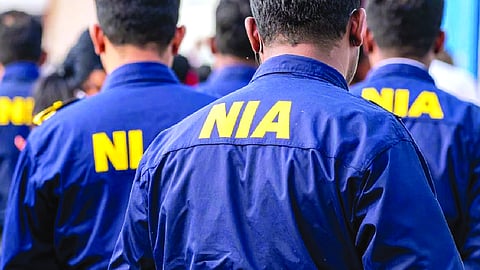
American mercenary Matthew Aaron VanDyke and the six Ukrainian nationals have admitted to the National Investigation Agency (NIA) that they conducted training for Myanmar-based ethnic armed groups on several occasions and illegally imported huge consignments of drones along with jamming equipment from Europe to Myanmar via India. These ethnic groups have known links to banned insurgent outfits operating in India’s Northeast.
It was disclosed by the NIA in the designated court. NIA and central security agencies have widened their probe to identify the local support that was actively involved in transporting weapons and jammers via the Northeast.
Indian security agencies are now probing local facilitators in India’s Northeast who may have assisted the group, as well as possible links to banned insurgent organisations active in India. Those who helped the group move through Mizoram and Assam have been identified. This has raised fears that the Northeast has become a ‘corridor for foreign mercenaries’.
Mathew VanDyke and Ukrainian nationals, Maksym Honcharuk, Petro Hubra, Ivan Sukmanovskyi, Marian Stefankiv, Taras Slyviak, and Viktor Kaminskyi, the seven accused, are in the custody of the NIA until March 27, 2026. They face charges under the stringent Unlawful Activities (Prevention) Act (UAPA).
The group stands accused of using tourist visas as cover to smuggle drones and jamming gear from Europe, then illegally crossing into Myanmar to train Ethnic Armed Groups (EAGs) linked to the Northeast Indian insurgents. There, they ran pre-scheduled camps teaching drone assembly, combat operations, and signal-jamming tactics aimed at Myanmar’s junta forces.
VanDyke is the prize catch. Founder of Sons of Liberty International, he fought Gaddafi in Libya (2011), trained rebels against Assad in Syria, and embedded with Ukrainian forces against Russia. Now he stands accused of recruiting battle-hardened Ukrainian veterans to export that same expertise to Myanmar’s Kachin, Chin, and Arakan armies — groups with documented pipelines to Indian insurgent outfits ULFA and NSCN that are active in the sensitive Northeastern region.
Mizoram Chief Minister Lalduhoma had flagged the issue in the State Assembly last year, noting that nearly 2,000 foreigners visited the State between June and December 2024. Many of them were not genuine tourists, and some were crossing into Myanmar for arms training. The re-imposition of the Protected Area Permit regime was partly aimed at curbing such activities.
The NIA is expected to reveal more details once the current custody period ends. Investigators are also examining whether the operation involved espionage, funding of Indian insurgent groups, or the creation of sleeper cells in the Northeast. This case highlights the growing use of India’s eastern borders by foreign actors and the deepening security collaboration between India and friendly intelligence agencies.
NIA sources say the Myanmar EAGs they trained have direct ties to banned Indian outfits active in the Northeast. In a sharp breakthrough disclosed in court, VanDyke and the Ukrainians have admitted during interrogation that they conducted these trainings “on more than one occasion” and illegally imported huge consignments of drones plus jamming equipment from Europe through Indian Territory. The revelations came after a Russian intelligence tip-off triggered a three-month NIA surveillance operation.
This is not an isolated incident; it is a wake-up call. This is no random adventure. It is a geopolitical blowback. The Ukraine war has flooded the market with cheap, skilled mercenaries and drone tech. Western networks, possibly with quiet intelligence backing, are deploying them to bleed the Myanmar junta and disrupt Beijing’s Belt-and-Road ambitions in Southeast Asia, sources added.
Russia, which maintains ties with the Myanmar Junta, simply passed the file to its trusted BRICS partner India. Result: a three-month NIA surveillance operation and simultaneous airport swoops. For India, the stakes are existential. Mizoram’s porous border has become a superhighway for foreign fighters and lethal hardware. Myanmar rebels training in Indian Territory risk reverse-flow: advanced drones and tactics reaching Northeast militants already using similar tech in Manipur clashes. Mizoram.
Ukraine has cited geopolitical motivation, demanding consular access and Ukrainian-language charges. Washington remains silent; meanwhile, Indian security agencies are hunting local facilitators in Assam and Mizoram while tracing the remaining eight members of the original 14-man team. The arrest of these foreign mercenaries has sent a crystal-clear message that India will not be anyone’s unwitting playground in the new era of hybrid proxy wars. The eastern frontier is now a live theatre where Russia-China alignment, Western disruption tactics, and Northeast insurgencies collide.
Delhi’s response has been swift, it’s intelligence-driven and unapologetic. India has sent signals that it intends to control the script. As the investigation gains momentum, we may see more details coming out about the covert operations launched by Western intelligence agencies to keep the Northeastern NIA region of India on the boil.