New labour codes aim to balance flexibility and worker protection: Law ministry
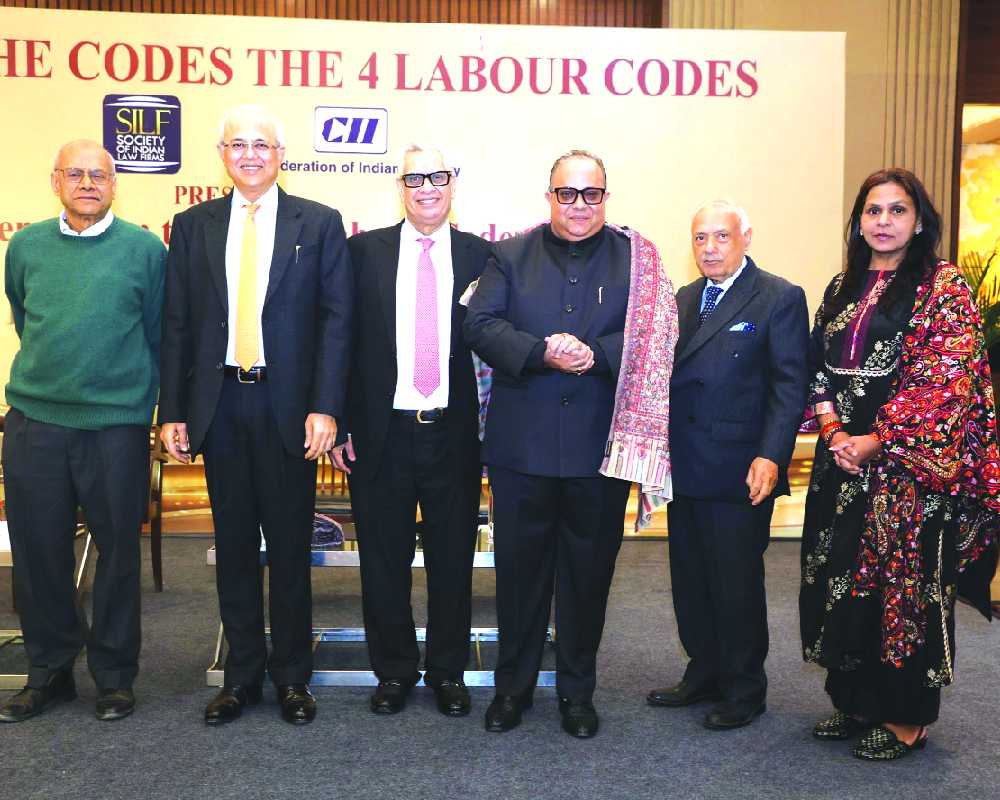
Amid continuing debate over the four new labour codes, Dr Manoj Kumar, Additional Secretary in the Union Ministry of Law and Justice, on Thursday said the reforms seek to ensure that economic flexibility and worker security are complementary rather than competing objectives.
Speaking at the Labour Codes Conference organised by the Society of Indian Law Firms (SILF) and the Confederation of Indian Industry (CII), Dr Kumar described labour law as the moral and economic architecture of a nation. He said the new codes mark a shift from multiplicity to harmonisation, complexity to clarity, and from regulation by fear to regulation by confidence.
The reform initiative, he said, lies at the intersection of economic growth, social justice and constitutional governance. Addressing criticism of the codes, Dr Kumar underlined that stakeholder consultations are an integral part of the legislative process. “Every input received during public consultations is considered, whether accepted or not,” he said.
Justice Manmohan, Judge of the Supreme Court, emphasised the need for effective implementation of the codes by states, noting that labour is a concurrent subject. He said laws must evolve with changing times, adding that earlier labour legislations often contained outdated and conflicting definitions. Highlighting the emergence of gig and platform-based work, Justice Manmohan said the new labour codes significantly expand worker protections by extending minimum wages, timely payment of wages and social security coverage to organised, unorganised, gig and platform workers.
However, senior advocate Colin Gonsalves expressed concerns over possible dilution of worker rights and called for stronger protections for gig workers, citing regulatory approaches in countries such as the UK and Germany. He also stressed the need to strengthen trade union rights. SILF President Dr Lalit Bhasin said the codes reflect a balanced approach to sustainable economic development and worker protection, calling for greater collaboration among stakeholders.