More chips, deeper cracks in IT
During intra-day trading yesterday, the Nifty IT index plunged more than 700 points initially, before it recovered a bit. It was still in red towards the end of the session. Yet, a few optimists hang around, as they claim that generative artificial intelligence (AI) does not pose an existential threat to the Indian software firms. Despite this duel between those with extreme views, there seems to be no reversal in an ongoing downward trend, which began much before the Iran war, and crucial announcements by the largest chip-maker, Nvidia, which was recent, and a leading AI player, Anthropic, some time ago.
To put it in perspective, over the past six months, the Nifty IT is down by a massive more than 7,500 points, or almost 21 per cent, with leading stocks at 52-week lows. If one considers the past three months, the fall in the index is steeper, more than 9,000 points, or over 24 per cent. In the past week, it dipped by more than 1,500 points, or just over five per cent. Hence, despite some optimism in a few quarters, the trajectory seems to be downward, and steeper, without a halt.
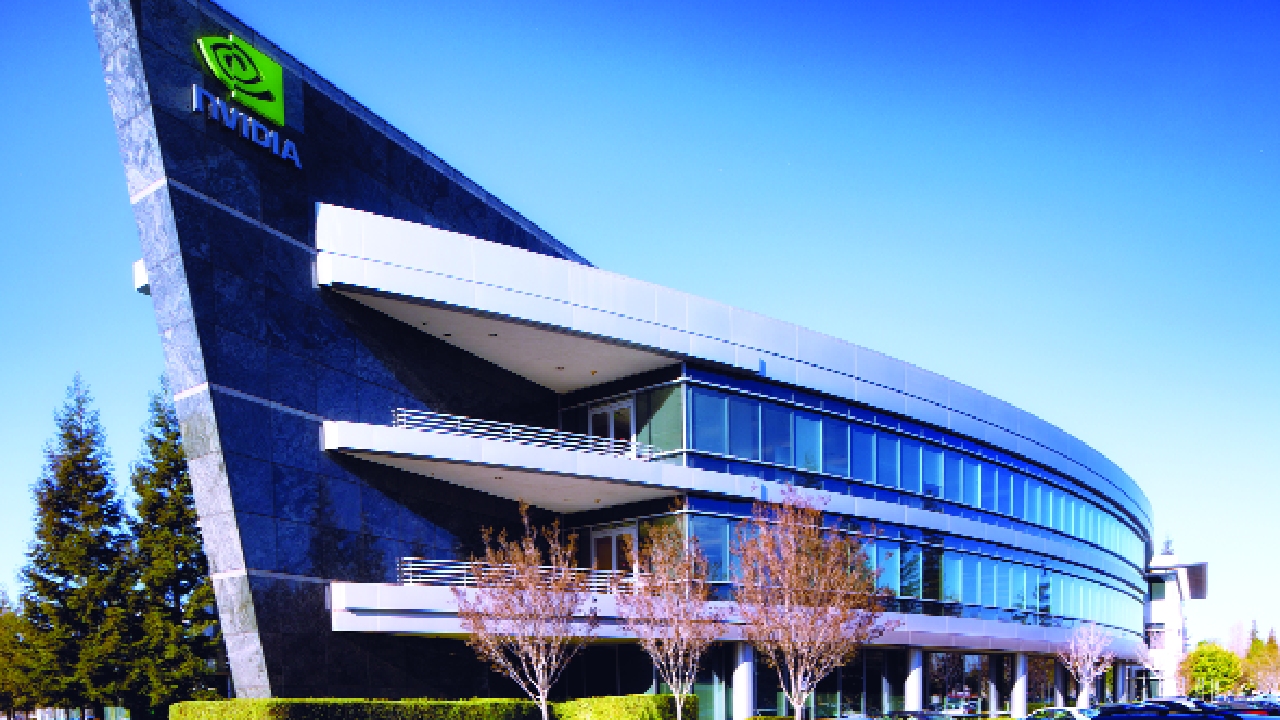
For the IT stocks, the latest free-fall trigger came from Nvidia, which declared that the potential revenues it can earn from AI chips may be $1 trillion by 2027. During an event, CEO Jensen Huang introduced a new central processor, with an embedded AI system, which was built using a technology that was licensed for $17 billion in December 2025. The quick transition, in three months, stupefied the stock markets, and led to fresh selling in Indian IT stocks. “The inference inflexion has arrived…. And demand just keeps going up,” said Huang.
Last month, in early February 2026, Anthropic, which owns Claude AI, launched a legal AI tool, which rattled the software sector. While this was dubbed as having a Tsunami effect on the legal tech segment, it created fears that similar developments could expand to others. Despite the generalist versus specialist debate, i.e., the latest plugins will impact generic and routine work, the news impacted what experts and investors believed about the future potential of AI tools. The volatility came from a realisation that software firms would lose out, and be forced to sack more people than they did in the past.
However, a brokerage house saw the Nvidia-Anthropic developments, along with the others, as riddled with a fear-psychosis. It used sarcasm, and quoted the humour writer, Mark Twain, to express its outlook. “Reports of my death are greatly exaggerated,” as Twain remarked which, according to the brokerage, expressed the feeling that the death and decline of the software sector is highly overstated or blown-up. The latter admitted, “Given the advent and adoption of Gen AI, obituaries of the Indian IT services industry are being written all around. The concerns have been amplified by the sharp stock reactions….”
Yet, the brokerage house stated that Gen (generative) AI does not pose a factual threat to software. In the future, firms will need system integrators for plug-and-play enterprise software inputs and outputs to meet specific needs. Other analysts contend that growth of the large IT firms may be slower, mid-sized ones may become niche players, and small ones may only thrive on innovations, but the IT sector will survive, and even stabilise revenue and profit growths. In a sense, there may be a re-re-rating, after the re-rating in the past, but not a wipeout.
A twin-trend strategy may save the software firms. First, they will need to change their business models, which were rejigged and perfected over the past three decades or so, from plain onsite, offsite, to outsourcing. Now, the focus will shift from low-cost outsourcing services to high-value AI-driven cloud modernisation, and global capability centres (GCCs). The first two will require re-skilling of the workforce, and strategic shifts in leadership mindset. GCCs will need massive investments for R&D to enable a push from IT services to high-end product engineering and innovation. Data centres will need the hardware push, and hundreds of billions of dollars, which may prove to be a constraint.
Second, as some insiders contend, “Indian IT firms will focus more on domestic problem-solving,” and not handling global clients. As one of the blogs, which was written a year ago, explained, “The threat it (AI) poses to the current business models is high. It is high time for the Indian IT companies to press the reset button…. The new focus will be on support at the domestic level on near-shores or friendly nations…. The trend has already begun, with younger professionals focusing more on solving domestic problems with the help of technology, and trying to bring societal transformations. This would be a game-changer….”
What this implies is that Indian IT, after three decades, will need to look inwards rather than outwards. For years, Indian firms handled the work of foreign clients based in North America, Europe, and parts of Asia. Now, they may be forced to look at work that can be generated within the country to make a difference in corporate productivity, and political governance. The urge to earn dollars, euros, and yen may be a thing of the past. The new business model may be based on earning rupees, which can then be translated into foreign currency.
However, at present, the understanding has not fully entered the mindset, or is completely understood by IT leaders. Even as they faced problems in America due to visa and other pressures, apart from accusations and allegations, they pressed on with their outward models, and sought alternative and new markets. The thinking was to substitute any loss in American revenues by European, Asian, or Middle Eastern money. But this may be a short-term survival measure, and possibly the savvy analysts and investors recognise it. Hence, they are reluctant to revalue the stocks higher, at least at present.
Yet another note on LinkedIn provides three scenarios, bear, base, and bull. In a bear case one, AI leads to inhouse teams, shrinking outsourcing, low margins, and further valuation resets. In a base case, IT firms integrate AI models built by others, and AI is embedded into services, even as new models evolve. In a bull case, AI reduces manpower but hikes tech spends, billing shifts to outcomes and not hours, and revenue per employee zooms even as their numbers reduce. In conclusion, “AI is not killing Indian IT. It is killing the old (or existing) operating (business, and accepted) model.”