MCD, NDDB sign MoU to set up CBG plants for cow dung utilisation
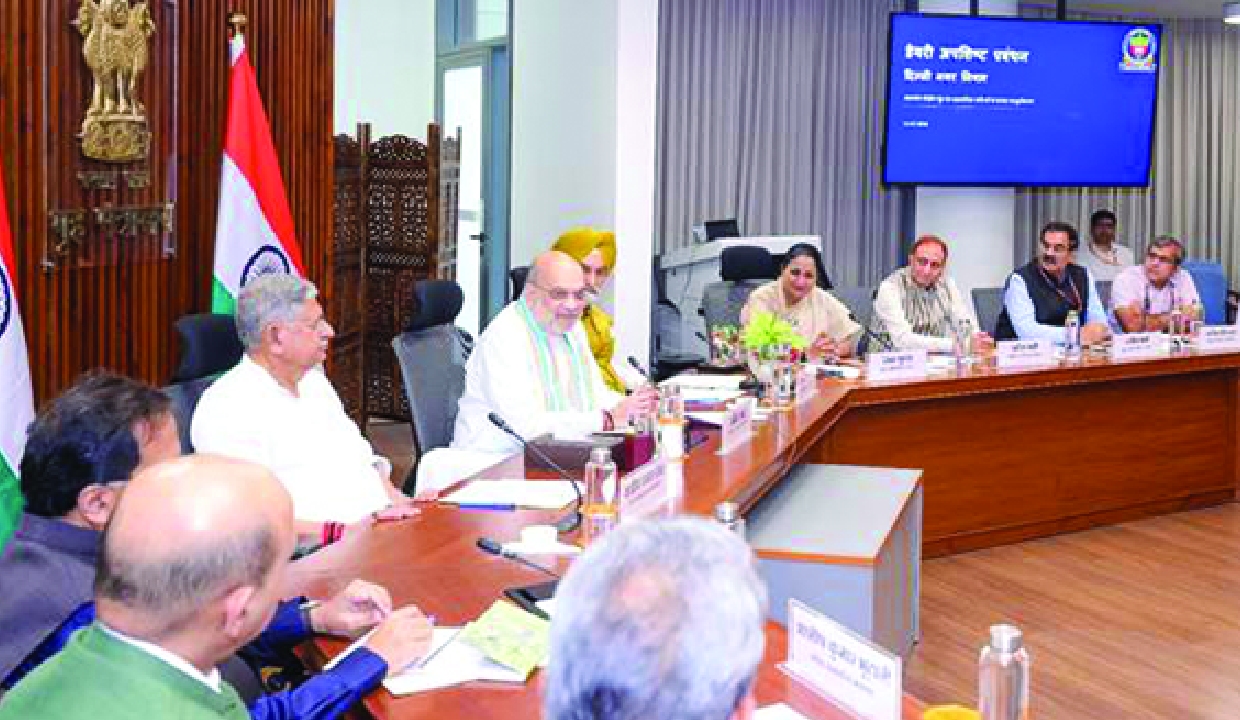
The Municipal Corporation of Delhi (MCD) and the National Dairy Development Board (NDDB) on Wednesday signed a Memorandum of Understanding (MoU) to establish Compressed Bio-Gas (CBG) plants in the national Capital for the scientific utilisation of cow dung, in a move aimed at reducing pollution in the Yamuna River and promoting waste-to-energy solutions.
The MoU was signed in the presence of Union Home Minister and Minister of Cooperation Amit Shah. Union Minister for Animal Husbandry and Dairying Rajiv Ranjan Singh alias Lallan Singh, Delhi Lieutenant Governor Taranjit Singh Sandhu, Chief Minister Rekha Gupta, the Union Home Secretary, the Cooperation Secretary, and senior officials from the Centre and the Delhi Government also attended the event.
Addressing the gathering, Shah described the agreement as a model that could be replicated in major cities across the country. He said the initiative would improve urban cleanliness, generate Compressed Bio-Gas (CBG), promote organic farming, and enhance the income of livestock farmers.
He said the agreement marks an important step towards fulfilling Prime Minister Narendra Modi’s resolve to clean the Yamuna River. According to Shah, preventing the discharge of waste and sewage into the river is essential for restoring its water quality.
The Home Minister said work has already begun on around 80 treatment plants in Delhi for the treatment of sewage and industrial waste.
He added that arrangements are being made to ensure that no cow dung enters the Yamuna in the future, noting that proper disposal of waste generated by nearly 1.25 lakh cattle is critical to achieving that objective.
Shah said the Government aims to ensure that not a single litre of untreated wastewater enters the Yamuna by December 2028.
Further, Amit Shah said cow dung collected under the initiative will be processed at the Nangli, Ghoga-Goyla and Ghazipur waste disposal plants.
Calling the project a significant step for urban sanitation and rural livelihoods, the Home Minister said it has the potential to become a model for metropolitan cities across India before being expanded to benefit livestock farmers in rural areas.