Legacy of debate and dissent honoured at the Chandan Mitra Memorial Lecture
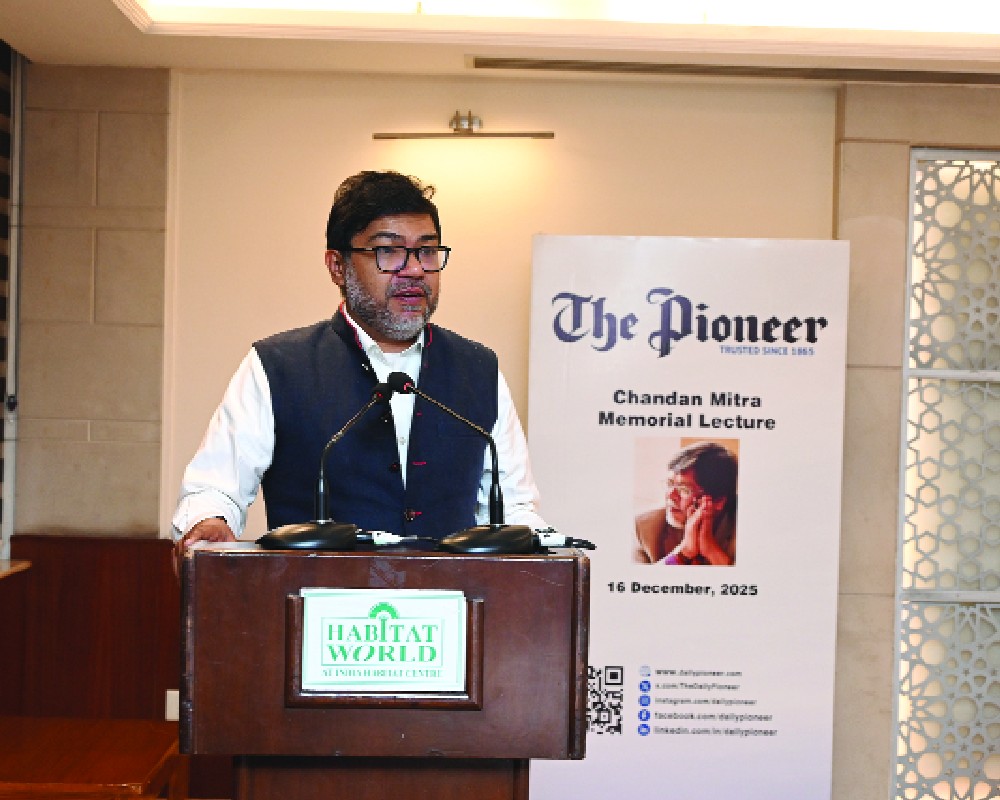
At a packed Tamarind Hall in the India Habitat Centre on Monday evening, journalists, politicians and old friends came together to pay respects to Chandan Mitra, Editor, Member of Parliament, and public intellectual, at the first Chandan Mitra Memorial Lecture, an event that came to be an assessment of not just a life led in newsrooms and legislatures, but also that of an intelligentsia in an evolving democracy.
The keynote address by ex-Rajya Sabha MP and columnist Swapan Dasgupta set the tone for the evening. Speaking from memory, Dasgupta sketched a painfully long and sometimes uncomfortable trajectory of the English-speaking elite of India, the very milieu he and Mitra shared, and admitted that the country had clearly shifted out of this milieu.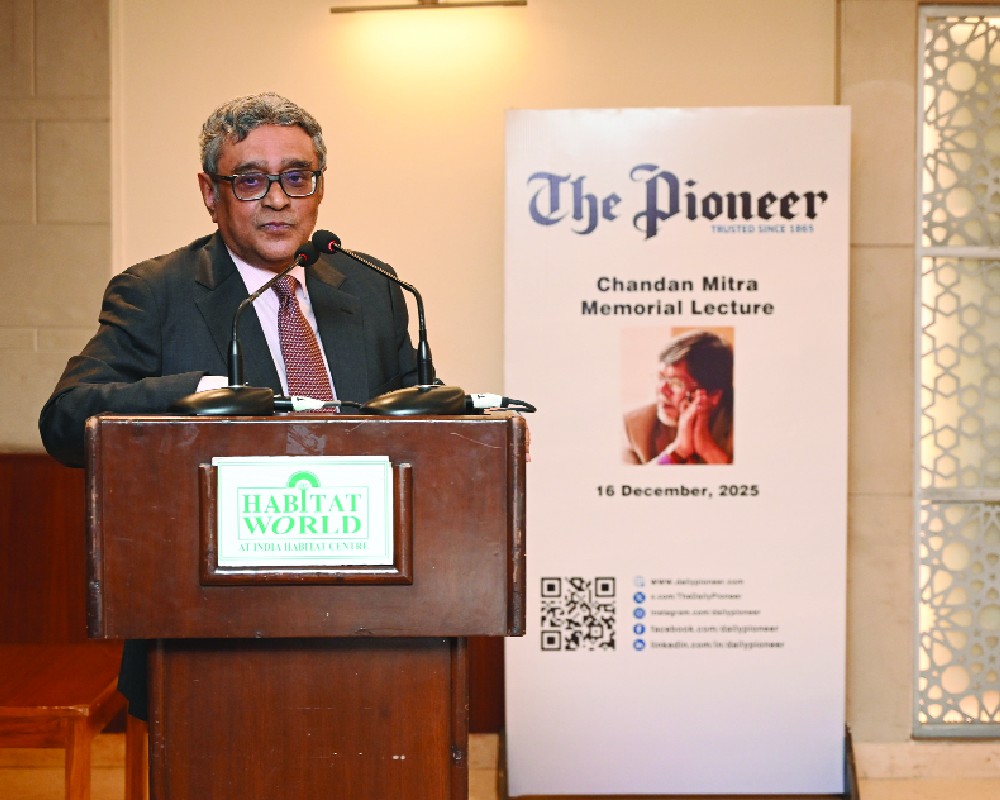
Dasgupta, on the other hand, remembered his own personal experience of listening to Mitra: “We were both students of St Stephen’s College in Delhi. Our friendship was many years in the making, with a lot of arguments and a passion to lecture each other in our beloved ‘passion with disagreement’ fashion. We agreed on some things, but on most other things, we differed. And that was quite alright.”
The meat of the talk, however, was about more than memory alone. Dasgupta described a generation brought up almost entirely on Western education, saturated in notions of rationalism and an overweening conviction about what was best for India. “It was an arrogance, an assumption of superiority, an assumption of having the sole correct perspective, an assumption of being the representative of national wisdom,” he said.
This dominance is no more. “The power of the cube has declined,” says Dasgupta. “Democracy has gradually transferred decision-making from intellectuals to everyone.” The kind of arguments that were held in coffee houses and editorial pages “are being driven by mass politics. Twitter. Elections. People like us belonged to a phase of history. India is rediscovering its mojo in its own way. No thanks to us.”
This dual role can be explained by an anecdote from the early years of independence, as described by Dasgupta, relating to an exchange between Jawaharlal Nehru and K. M. Munshi on the reconstruction of the Somnath temple. This dichotomy between a rational approach and a faith in the civitas continued into modern India with more fervour.
“Chandan Mitra was a personification of these contradictions in his own person. As much Western-educated as he was rooted in his own Indian culture, his India was formed by Bollywood films and experience as much as by books and theory. ‘Chandan speaks fantastic Hindi,’ Dasgupta remembered, which was quite rare for a Bengali of his generation and upbringing.”
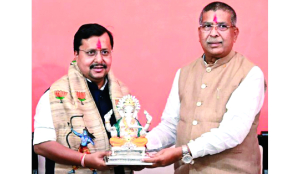
“We didn’t really get a chance to remember him in such a gathering when he passed four years ago,” said Kushan Mitra, a journalist himself and the current publisher of The Pioneer, who is carrying forward his father’s legacy. Present on the occasion were Chandan Mitra’s old colleagues like Sanjeev Bikhchandani, Pranjoy Guha Thakurta who also shared their experiences about Mitra. The Pioneer Group Chairman Prashant Tewari was also present.
“This is our way of doing that now.” “It was part of the process of reclaiming and reinterpreting my father’s memory and our family’s memory,” said Kushan about the lecture that was also meant for “trying to keep alive the ideals that my father represented through his journalism.”
The concluding notes of the evening were more in the tone of acceptance than nostalgia. If Chandan Mitra represented the notions of irreverence, independence, and spirited dissent, then, the speakers felt, the takeaway from the man himself is the understanding that sometimes an age has come to an end, and the time has arrived to let new voices shape the discourse.