Keir Starmer announces resignation as UK PM
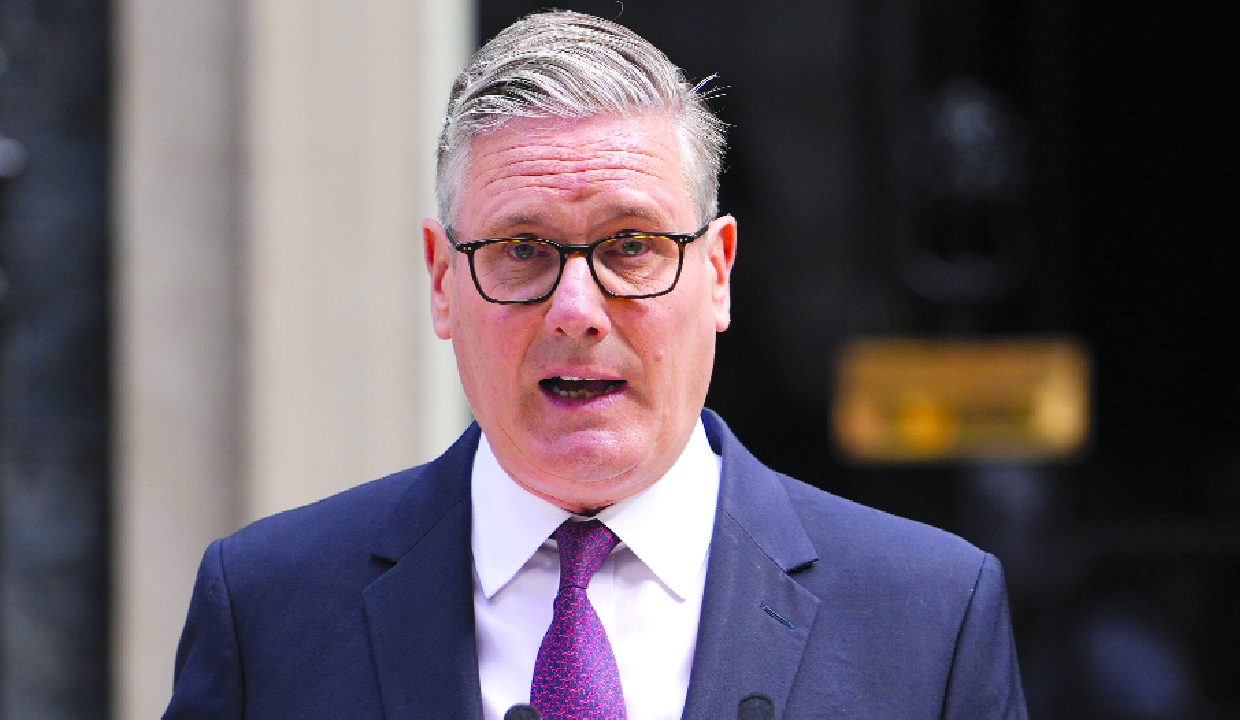
British Prime Minister and Labour Party leader Keir Starmer on Monday announced his resignation, triggering a leadership contest that will determine his successor in the coming weeks, with a new prime minister expected to be in place before Parliament returns in September.
The 63-year-old said he would remain in office until a new Labour leader is elected and pledged his “full and unequivocal support” to his successor to ensure an orderly transfer of power.
“I have heard the answer of my parliamentary party to that question, and I accept that answer with good grace,” an emotional Starmer said during a statement outside 10 Downing Street. “The question my party is asking now is whether I am best placed to lead us into the next general election. Every decision I have taken has been about putting the country I love first. That is why I will resign as leader of the Labour Party,” he said.
Starmer revealed that he had informed King Charles III of his decision earlier on Monday. The outgoing prime minister said he would ask the Labour Party’s National Executive Committee (NEC) to establish a timetable for selecting his successor. Nominations are set to open on July 9, with the process expected to conclude before Parliament’s summer recess on July 17.
However, growing support within Labour for Andy Burnham, who returned to the House of Commons on Monday after winning a crucial by-election last week, has fuelled speculation that he could secure the leadership unopposed and take office as prime minister as early as mid-July.
“I will put myself forward as part of this process,” Burnham said in a social media post shortly after Starmer’s announcement.
“In the case of a contest, this timetable will ensure a new leader is in place before Parliament returns in September,” Starmer said. “I will remain in post as Prime Minister until the contest is complete, and I will do everything I can to ensure an orderly handover of power.”
He added that his successor would inherit “a Britain that is far stronger and fairer than the one I inherited two years ago” and expressed confidence that Labour would remain well positioned to seek a second term in Government.
Starmer led Labour to a landslide victory in the July 2024 general election, ending more than a decade of Conservative rule. While his government initially enjoyed strong public support, his popularity declined sharply in recent months amid a series of controversial policy decisions and internal party tensions.
During his farewell remarks, Starmer reflected on his government’s achievements, highlighting economic growth, rising wages, increased investment and major infrastructure projects.
“Look at what we have achieved in just two years - an economy that is stronger, growing faster than our peers, wages rising faster than inflation in every single month since we came to power, investment secured, infrastructure being built,” he said. “Change promised by a Labour Government, change fought for by a Labour Government, change delivered by a Labour Government.”
The departing leader also pointed to his role in rebuilding Labour after its electoral setbacks, noting that he inherited a party that was “politically, financially and morally bankrupt” and transformed it into a government with a commanding parliamentary majority of 174 seats.
At one point, Starmer struggled to contain his emotions as he paid tribute to his family.
“When I leave the biggest job in the country, I shall spend more time on the most important job - being the best husband I can to my fantastic wife, Vic, who has been a rock by my side through good times and bad, and being the best dad I can to my beautiful children, who are my pride and joy,” he said.
Potential contenders in the leadership race are expected to include former Health Secretary Wes Streeting, alongside Burnham. Candidates must secure the backing of at least 20 per cent of Labour MPs and meet additional support thresholds from constituency Labour parties or affiliated organisations and trade unions.
Starmer’s departure will leave the United Kingdom searching for its seventh prime minister in a decade, continuing a period of significant political turnover that has characterised British politics in recent years.
His premiership faced mounting challenges over the past year, including criticism surrounding the appointment of Peter Mandelson as the UK’s ambassador to the United States and growing backlash over welfare reforms, tax policy reversals and changes to social benefits. With support within his Cabinet reportedly weakening, pressure mounted for a change in leadership direction, ultimately leading to Starmer’s decision to step down.