Kashmir’s wazwan tradition faces a mutton supply crisis with Punjab’s goonda tax
Ahead of the peak marriage season, the Kashmir valley is fast running out of its mutton reserves, leaving hosts high and dry.
If the crisis persists for a few more days, many guests may have to return home without relishing mouthwatering Wazwan delicacies.
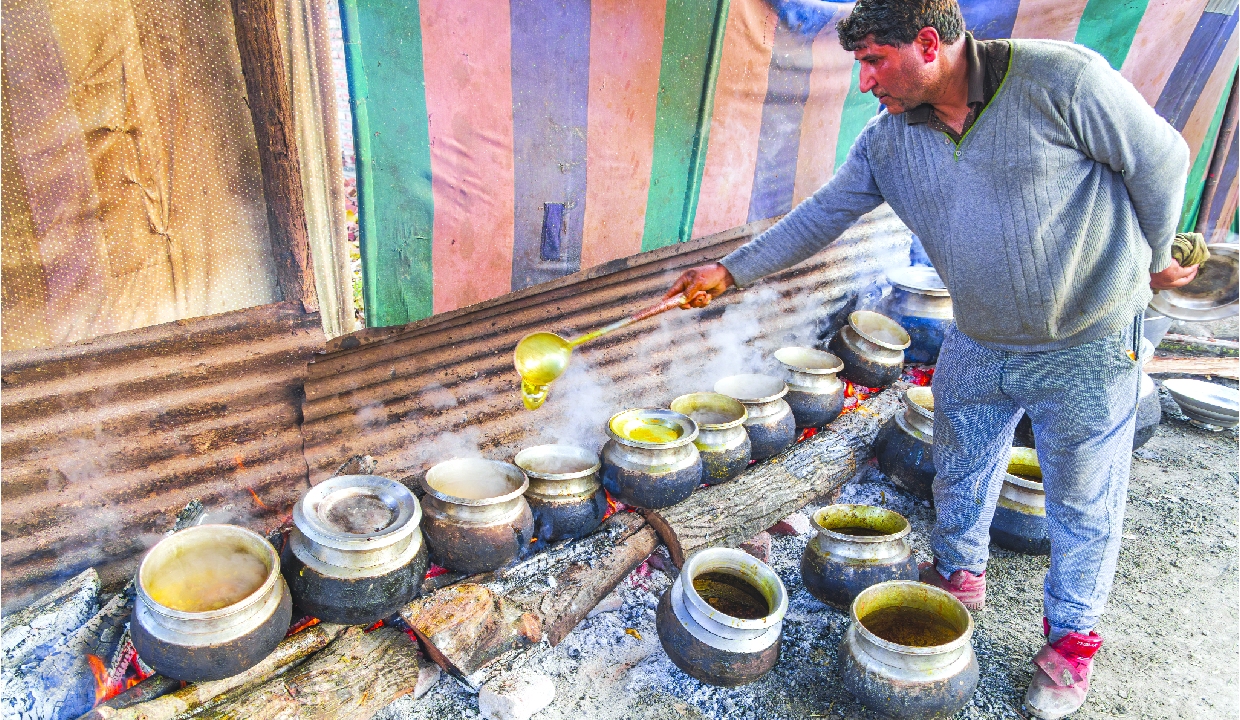
Wazwan is traditionally served at weddings and family gatherings, where guests share a multi-course feast from a large copper platter called the trami. The feast is best known for its rich meat dishes — Rogan Josh, Rista, Gushtaba, Tabakh Maaz, etc.
The imposition of a 4 per cent tax (unauthorised fees) on livestock trucks transiting through Punjab has triggered the current crisis.
Mutton dealers in the valley have termed this charge a Goonda tax (extortion), alleging that contractors at checkpoints extract tens of thousands of rupees per truck.
For the last nine days, the wholesale mutton dealers have suspended fresh imports of live sheep and goats after alleging that transporters are being forced to pay between Rs 20,000 and Rs 25,000 per truck while crossing Punjab.
General Secretary of the Wholesale Mutton Dealers Union, Mehraj Ganie, said traders have been compelled to halt supplies despite the ongoing marriage season.
“We have stopped importing livestock for the last few days. Whatever stock was available within Kashmir has almost been exhausted. Marriage functions are getting affected, but we have no option. Trucks carrying livestock are being charged Rs 20,000 to Rs 25,000 while passing through Punjab. These charges are illegal and have made transportation unviable,” he added.
With hundreds of weddings scheduled in the coming weeks, dealers have appealed to families to postpone functions until the issue is resolved.
Abdul Majeed Bhat, a resident of Hyderpora, is contemplating postponing his son’s wedding in view of the mutton crisis.
“My son is scheduled to get married on the 25th of July. I am unable to decide whether to go ahead with the wedding feast. We might have to postpone it,” Bhat said.
According to the Mutton Dealers Association, Kashmir imports 60 to 80 truckloads of livestock every day during the peak marriage season.
Local production meets only about half of the Valley’s annual requirement, forcing J&K to depend on imports for roughly 40 to 50 per cent of its mutton consumption.
Each truck carries sheep worth around Rs 20 lakh, taking the total value of daily livestock imports to nearly Rs 14- 16 crore during this period.
Most of these stocks are booked from Rajasthan, Haryana, Gujarat and Uttar Pradesh before entering Jammu and Kashmir through Punjab.
Khazir Mohammad Regoo, president of the All Kashmir Wholesale and Retail Mutton Dealers Association, told a local news agency in Srinagar that dealers held a meeting with concerned authorities in Punjab on Sunday.
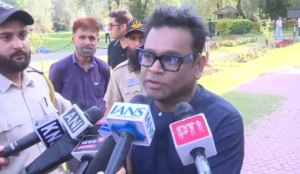
“It’s a ‘gunda tax’. We already pay tax in Delhi when purchasing mutton. This extra 4 percent burden is unjustified and has choked supply lines to Kashmir,” Regoo said. “He further said that a meeting with the Punjab CM is likely in the coming days.”
Chief Minister Omar Abdullah has already taken up the issue with his Punjab counterpart, seeking immediate relief for mutton dealers and removal of the additional levy. The CM’s intervention comes amid mounting public anger over soaring prices and supply disruptions ahead of the wedding season.
Abdullah informed Mann that livestock-laden vehicles bound for Jammu & Kashmir were allegedly being stopped by certain contractor groups operating in connection with cattle fairs, and subjected to unauthorised fee collection, despite carrying all valid permits and requisite documentation.
“I have taken up this issue with the Punjab Government, seeking immediate intervention to ensure the unhindered movement of livestock transport vehicles through Punjab,” Abdullah had said.
“They are just using the highway. There is no justification for unauthorised levies being imposed on the mutton dealers from Jammu and Kashmir,” he added.
The chief minister posted on social media a letter he had written to Mann last week, seeking his intervention.
In the letter, he told Mann that such disruptions not only caused avoidable delays, but also financial losses and hardship to transporters, adversely affecting animal welfare.
The chief minister said the matter was being examined by the Department of Food, Civil Supplies & Consumer Affairs through an internal committee.
“The findings indicate that transporters are reportedly being compelled to make substantial payments per vehicle during transit without any apparent legal sanction. The committee has further observed that livestock movement is exempt from GST and that the continued imposition of such charges is placing an additional burden on the livestock trade, with consequential impact on meat prices and consumers in Jammu & Kashmir,” he added.
Abdullah reminded Mann that Punjab and Jammu & Kashmir share longstanding bonds of friendship, cooperation and economic interdependence.
“Any such practices, if found to be occurring, are inconsistent with the spirit of cooperation that has traditionally characterised relations between us and have understandably caused concern among the trading community,” he wrote.