IPL’s Billion-Dollar Signal: Why RCB and Rajasthan Royals Sales Reflect a Robust Global Sports Brand
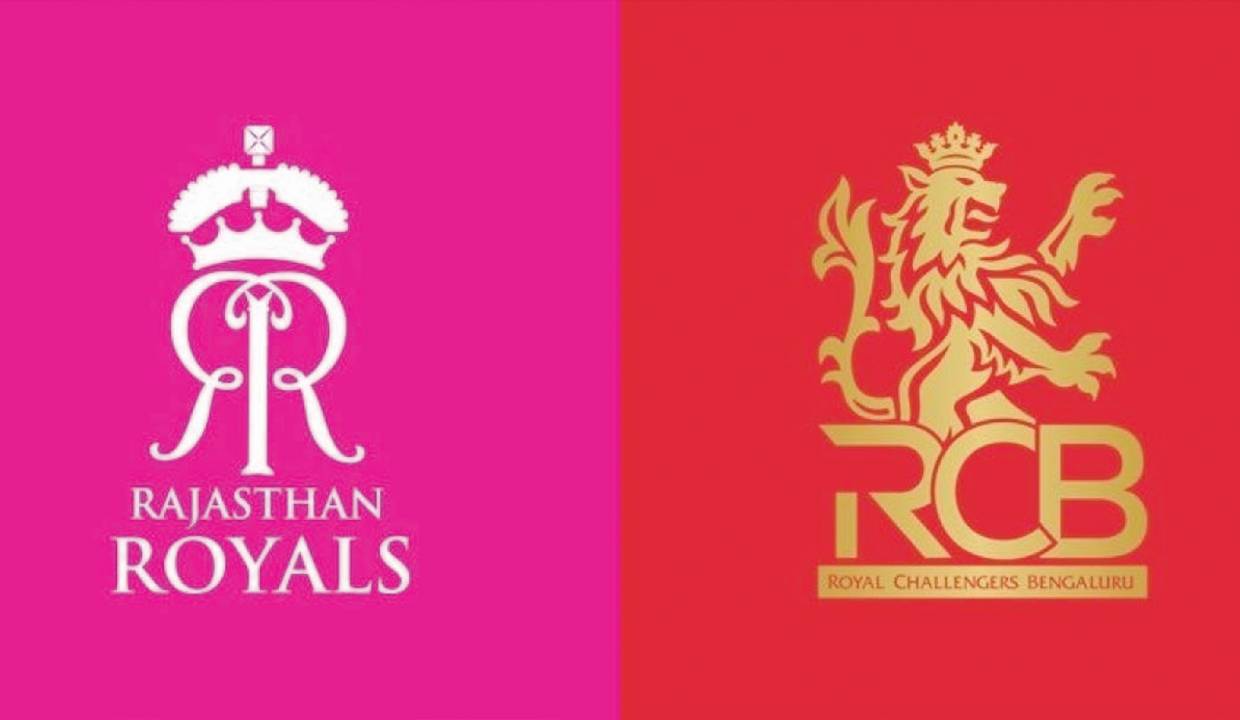
The recent successful bids for Royal Challengers Bengaluru (RCB) and Rajasthan Royals (RR) serve to reaffirm that the Indian Premier League (IPL) is one of the most valuable sporting properties in the world.
The staggering valuations achieved by both these franchises underline the league's commercial strength, cultural influence, and long-term investment appeal.
At the heart of this story lies the sheer scale of value appreciation. RCB, originally purchased in 2008 by Vijay Mallya's United Spirits for $111.6 million, has now been sold for approximately $1.78 billion (approximately?16,600 crores), marking nearly a 15-fold increase in dollar terms and even more in rupee terms.
Rajasthan Royals, bought for a modest $67 million in 2008, has similarly witnessed exponential growth, with recent valuations hovering around $1.635 billion (approximately `15,000 crores).
The buyers themselves reflect the IPL's global pull. RCB has been acquired by a consortium that includes the Aditya Birla Group and will be chaired by Aryaman Vikram Birla. Rajasthan Royals, meanwhile, have attracted interest from international investors led by US-based tech entrepreneur Kal Somani, further underscoring the league's cross-border appeal.
This surge in valuations is not an isolated phenomenon. It builds on a trend that was evident during the IPL's expansion in 2021, when two new franchises Lucknow and Ahmedabad were sold for?7,090 crore and?5,625 crore respectively.
These figures, which seemed astronomical at the time, now appear almost conservative when compared to the recent RCB and RR deals. The rapid escalation in franchise values within just a few years highlights the IPL's accelerating growth trajectory.
There are two key points though that must be given as a caveat, both Royal Challengers Bangalore and Rajasthan Royals are existing franchises who already have dedicated fanbases and they have other franchises that come under their umbrella.
Royal Challengers Bangalore has a Women's Premier League team while Rajasthan Royals have a team in the South African T20 as well as a men's and women's team in the Caribbean T20 league.
But what makes franchises like RCB and RR such compelling investments? For RCB, the answer lies significantly in brand equity driven by superstar appeal.
The presence of Virat Kohli arguably the most marketable cricketer globally and one of the most marketable sportspersons across all sports has been central to the franchise's identity. His long association with the team has created a loyal fan base, amplified digital engagement, and attracted sponsors.
Beyond individual stardom, RCB's consistent visibility, strong merchandising, and recent on-field success (including an IPL title) have strengthened its brand proposition. Kohli, 37, although retired from T20 internationals and Test cricket, still remains a formidable force and is one of the fittest cricketers in the world, which could allow him to play in the IPL for a few more years, an added bonus for the new owners of the franchise.
Rajasthan Royals present a slightly different but equally attractive model. Historically known for spotting and nurturing young talent, the franchise has built its value on a sustainable cricketing philosophy.
Young Indian players like Yashasvi Jaiswal symbolise this approach, blending performance potential with future marketability.

RR's emphasis on youth development, analytics-driven decisions, and global scouting has positioned it as a forward-looking sports business, appealing to investors seeking long-term growth rather than immediate returns.
When placed in a global context, the valuations of RCB and RR become even more striking. At roughly $1.6-1.8 billion, these franchises are now in the same conversation as mid-tier European football clubs.
IPL teams may still be a far cry from the Dallas Cowboys (valued at $13 Billion) and the most valuable football teams like Real Madrid ($6.75 billion) and Manchester United ($6.6 billion).
But their valuation is very close and even greater than Italian football giants like Juventus, AC Milan and Inter Milan. This is quite a feat for a league that has been in existence for just 18 years.
Data from Forbes list of most valuable sports teams: Indeed, the IPL itself has evolved into a commercial powerhouse.
Its overall valuation has crossed $18 billion according to a study done by Houlihan Lokey, driven by lucrative media rights deals, central revenue sharing, and a tightly structured franchise model. The doubling of broadcast rights to over $6 billion in 2022 further cemented its status as a premium sports product.
Unlike many traditional leagues, the IPL combines the intensity of a short tournament with year-round engagement, making it highly attractive for broadcasters, sponsors, and investors alike. It is therefore fair to argue that the IPL now belongs among the world's top sports properties.
Its ability to attract global capital, generate massive viewership, and create billion-dollar franchises places it alongside the NFL, NBA, and English Premier League in terms of commercial relevance if not yet in absolute scale. Ultimately, the blockbuster sales of RCB and Rajasthan Royals are a testament to the IPL's robust brand value.
They reflect not just the league's current strength, but also investor confidence in its future growth.
In less than two decades, it has transformed from a bold experiment into a billion-dollar sporting juggernaut.
The latest franchise deals are not just milestones, they are signals that the IPL has arrived as a global sporting and business powerhouse, even as it continues to reshape the economics of sport in India.
Shakya Mitra is a sports management consultant with over a decade of experience in sports promotion and development. His work across both the private and government sectors gives him a well-rounded view of India’s sports ecosystem.