IndiGo’s messy meltdown
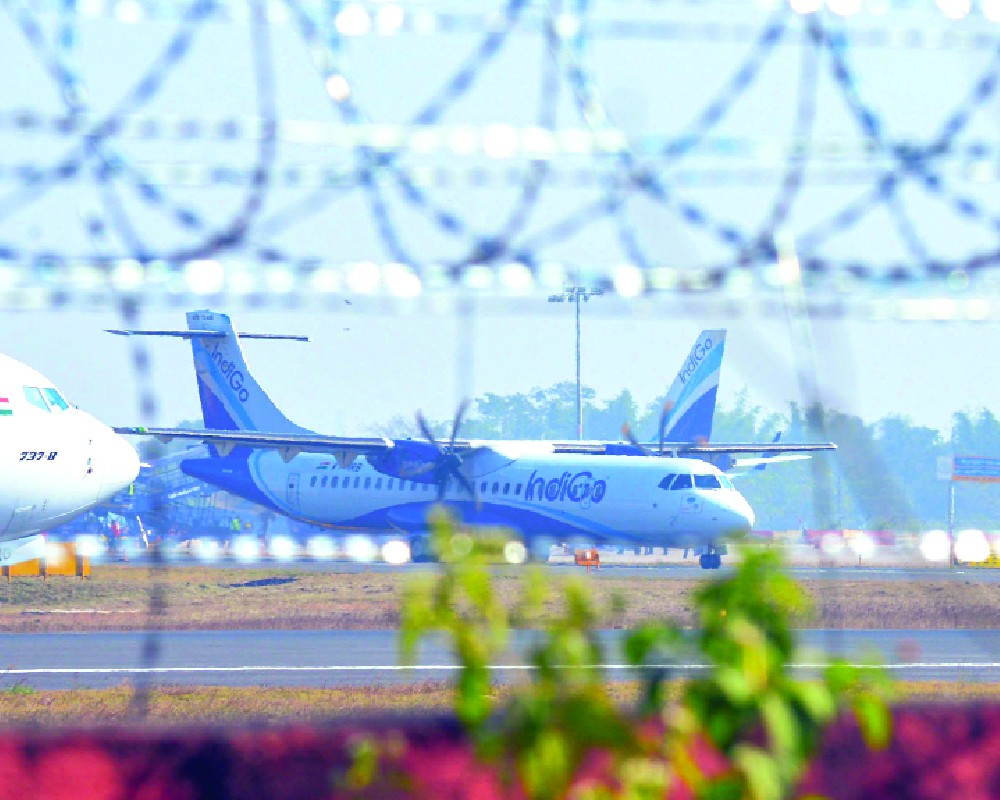
Indigo's case is one of self-induced turbulence to put undue pressure on the Government. Indigo has not failed or faltered but has scrupulously mismanaged itself with the ulterior motive of blackmailing the Government itself. The result is catastrophic inasmuch as the people of India have been taken for a merry ride and hapless, unwary passengers throughout the length and breadth of the country have been lamentably held to ransom. This has had a deleterious effect on the entire economy and hotel fares and fares of other airlines have skyrocketed! And the Minister in charge is totally helpless to deal with this crisis of enormous proportions and has virtually gone into oblivion!
India, a nation of over 1.5 billion people and the world’s fastest-growing aviation market, shockingly depends on just two major domestic carriers, IndiGo and Air India. This extreme concentration is not an accident but the direct result of chronic policy failure and regulatory inertia. Over the past two decades, the Government has repeatedly allowed major airlines to collapse instead of restructuring them under new ownership. Jet Airways and Kingfisher Airlines are the most glaring examples: both could have been saved simply by removing promoters Naresh Goyal and Vijay Mallya, yet no revival mechanism was activated. India watched two full-service carriers die, thousands of jobs vanish, and crucial aviation capacity evaporate.
The pattern continued with Go First, despite clear evidence that the airline’s downfall was triggered by engine supply failures rather than managerial incompetence. No meaningful intervention came from policymakers; no special framework was set up to assist the carrier, and no urgency was shown to ring-fence operations. As a result, Go First joined the long list of avoidable aviation deaths in India. When three airlines disappear within a decade in a market of this size, the problem is not corporate mismanagement but a systemic refusal to protect competition and consumer interest. This shrinking competitive landscape has delivered the nation into the hands of a duopoly that dictates prices, capacity, and service standards with little accountability.
Today, IndiGo controls more than half the domestic aviation market, while the Air India group holds most of the remaining share. Smaller carriers exist only on the fringes, unable to exert meaningful pressure.
This duopoly-like structure has created a suffocating environment for passengers: airfares on busy routes regularly exceed comparable distances in Europe, Southeast Asia, or even the United States. Two-hour domestic flights in India often cost more than four-hour international flights elsewhere. Such pricing is not the outcome of a free market but the predictable result of restricted supply, weak oversight, and a regulatory system that appears increasingly comfortable with limited competition.
India’s aviation sector has long needed at least eight to ten serious operators to create genuine competition, stabilise fares, and reduce the risk of disruptions. Instead, new entrants face steep barriers, license approvals move at a glacial pace, and foreign airlines seeking to expand operations into India remain blocked by outdated protectionism masquerading as strategic nationalism. Ironically, these restrictions do not safeguard Indian consumers; they primarily protect two private carriers while passengers pay inflated fares and endure deteriorating service quality. The state’s refusal to liberalise the sky has effectively turned India into one of the world’s costliest domestic aviation markets.
What makes the situation even more disturbing is the perception that this restrictive ecosystem suits certain entrenched interests. With opaque decision-making, irregular enforcement, arbitrary slot allocation, and no dedicated passenger rights authority, India’s aviation sector functions with minimal accountability. When fares soar unchecked, when airlines collapse without rescue, and when the Government repeatedly avoids structural reforms, it becomes difficult to dismiss concerns of a silent understanding, or at least a systemic rot, sustaining this duopoly at the cost of the common traveller.
India’s aviation future cannot be built on the convenience of two carriers. The Government must urgently open the skies, encourage new domestic operators, revive grounded airlines under competent management, and allow credible foreign players to compete under regulated conditions. Only by restoring competition and prioritising passengers can India become the global aviation leader it claims to be. Until then, the Indian traveller will continue paying heavily, learning, again and again, an unnecessarily harsh aviation lesson.
The author is a public policy expert