India’s urban waste crisis: A ticking time bomb
55kg per household. 170,000 tonnes per day. 1.43 billion people
India is facing an urban waste management crisis. According to the Food Waste Index Report 2024 (UNEP), each household generates 55kg of municipal solid waste per year, totalling 78.2 million tonnes annually. With 37 per cent of the 1.43 billion population now living in cities (529 million people), municipal solid waste is surging uncontrollably.
Rising mountains of garbage
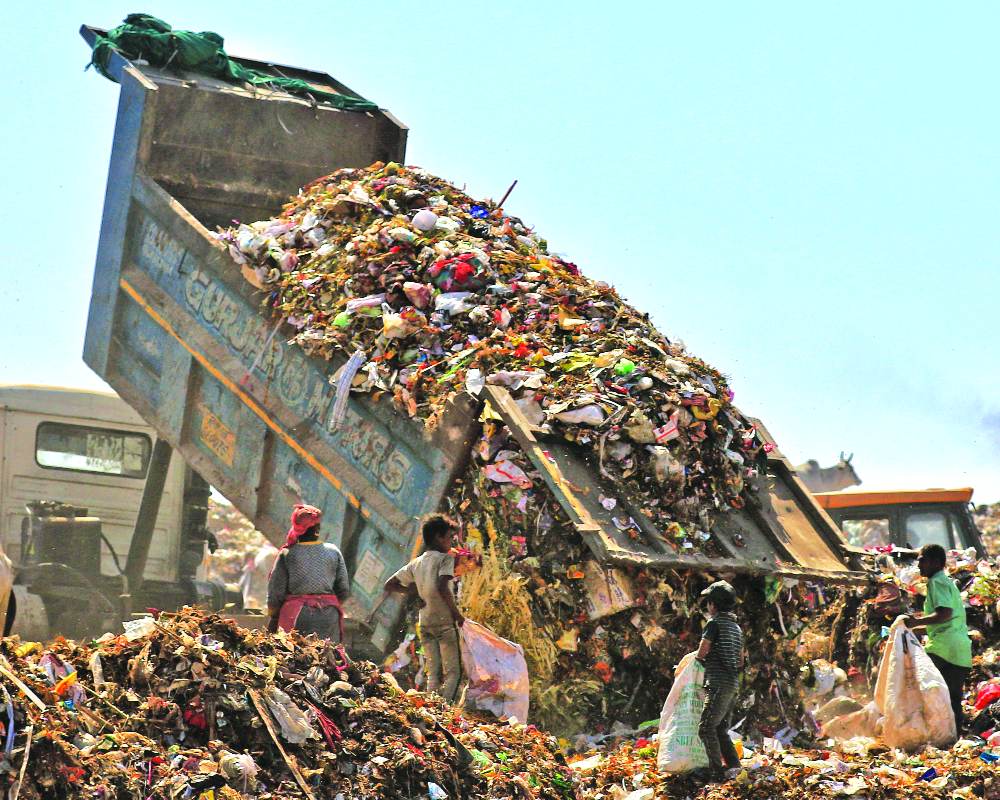
The latest available figures (from the financial year 2021-22) show India produced 170,000 tonnes of municipal waste daily. About 156,000 tonnes were collected, 54 per cent treated and 24 per cent sent to landfills. The remaining 22 per cent vanished into drains, open spaces, water bodies or went up in smoke, leaking toxic pollutants into the environment. Experts warn that by 2050 Indian cities could generate 435 million tonnes of solid waste annually.
Half of it is organic
Organic waste, which makes up 50 per cent of municipal solid waste (GIZ, 2022), is a ticking methane time bomb. India’s 535 landfill sites emit nearly 986 kilotonnes of methane annually, worsening climate change. Methane has a warming effect 86 times stronger than CO2 over 20 years.

Health under siege
Rapid urbanisation and population growth exacerbate pollution from urban areas, including solid waste and runoff.
Cities with populations over 100,000 generate 16,662 billion litres of wastewater daily, even though at least 30 per cent of them have no sewage treatment plants.
70 per cent of surface water is unsafe, half of 605 rivers are heavily polluted, and 37.7 million people suffer water-borne diseases annually, with diarrhoea alone killing 1.5 million children.
Meanwhile, air pollution linked to open waste burning contributed to nearly 1.8 million deaths in 2016. Open burning in cities accounts for 18 per cent of national PM2.5 pollution, considered to be one of the most dangerous air pollutants by the World Health Organisation, is projected to almost double by 2050.
Lessons from Europe
India is not the first country to face this issue. In the 1970s, many developed countries were confronting a similar waste crisis, from unregulated dumping and disposal to landfill mountains. This was the situation across Europe.
The Netherlands is widely recognised as the first European country to take decisive action on landfill sites. In the 1970s, the country faced severe environmental problems due to uncontrolled landfill dumping, including soil and groundwater contamination, methane emissions and odours.
Strict landfill regulations were introduced, mandatory waste separation and early landfill gas recovery programs. By the 1990s, the Netherlands had adopted policies aiming to reduce landfill use, promote recycling and enforce environmental monitoring.
Other countries like Germany and Sweden followed soon after. Europe-wide regulations started to emerge in the 1990s, culminating in the current mandate for separate food waste collections across all 26 member states. These stricter landfill regulations and bans on organic waste disposal were a major driver for anaerobic digestion adoption in Europe. Essentially, limiting landfill options created the “push” for alternative, sustainable treatment technologies like AD.
A chance to leapfrog
India can learn from Europe’s experience. Restricting landfilling, incentivising segregation and adopting anaerobic digestion could convert the organic waste crisis into renewable energy and biofertiliser, reducing methane emissions and safeguarding public health. Key actions to usher in a new are of waste management include:

Adopt a national waste hierarchy policy
Prioritise waste reduction, segregation, recycling and resource recovery before disposal.
Explicitly favour anaerobic digestion (AD) and composting for organics over incineration and landfilling.
Introduce progressive landfill taxes and organic waste bans to drive the transition.
Establish universal source segregation and food waste collection systems
Mandate separate collection of wet (organic) and dry waste nationwide, with strict enforcement.
Support public awareness campaigns and community-level incentives for participation.
Create standards for segregated waste quality, crucial for AD feedstock.
Invest in domestic biogas and waste-to-energy infrastructure
Scale up AD and CBG (compressed biogas) facilities and connect them to city gas networks.
Facilitate public — private partnerships (PPPs) and green finance instruments for large-scale deployment.
Integrate biogas into India’s renewable energy targets.
Build international and inter-state cooperation
Leverage global success stories and funding mechanisms (e.g., German Export Finance Bank funding, EU-India clean energy partnerships).
Foster state-to-state collaboration within India to share models and procurement frameworks.
Promote technology transfer, training and certification standards for AD operators.
Implement spatial planning and data-driven zoning
Map urban feedstock availability (food waste, market waste, sewage sludge).
Designate “green energy zones” suitable for AD/CBG plants with clear environmental safeguards.
Use GIS-based (Geographic Information System) zoning tools to optimise logistics, collection routes, and pipeline connectivity.
Promote innovative finance and business models
Leverage public funds to de-risk private capital through guarantees, viability gap funding, green bonds and carbon markets for urban waste management.
Incentivise circular-economy business models and strengthen the creditworthiness and market access of urban bodies / municipal corporations.
Foster innovation ecosystems by facilitating partnerships between cities, academia and private investors to pilot scalable models for decentralised waste management.
The clock is ticking
Without urgent action, India faces a catastrophic future: air choked with smoke, rivers poisoned and cities drowning in waste.
The time to act is now-before the country’s urban population pays the ultimate price.
Call to action!