Hussain convicted for Ankit Sharma murder
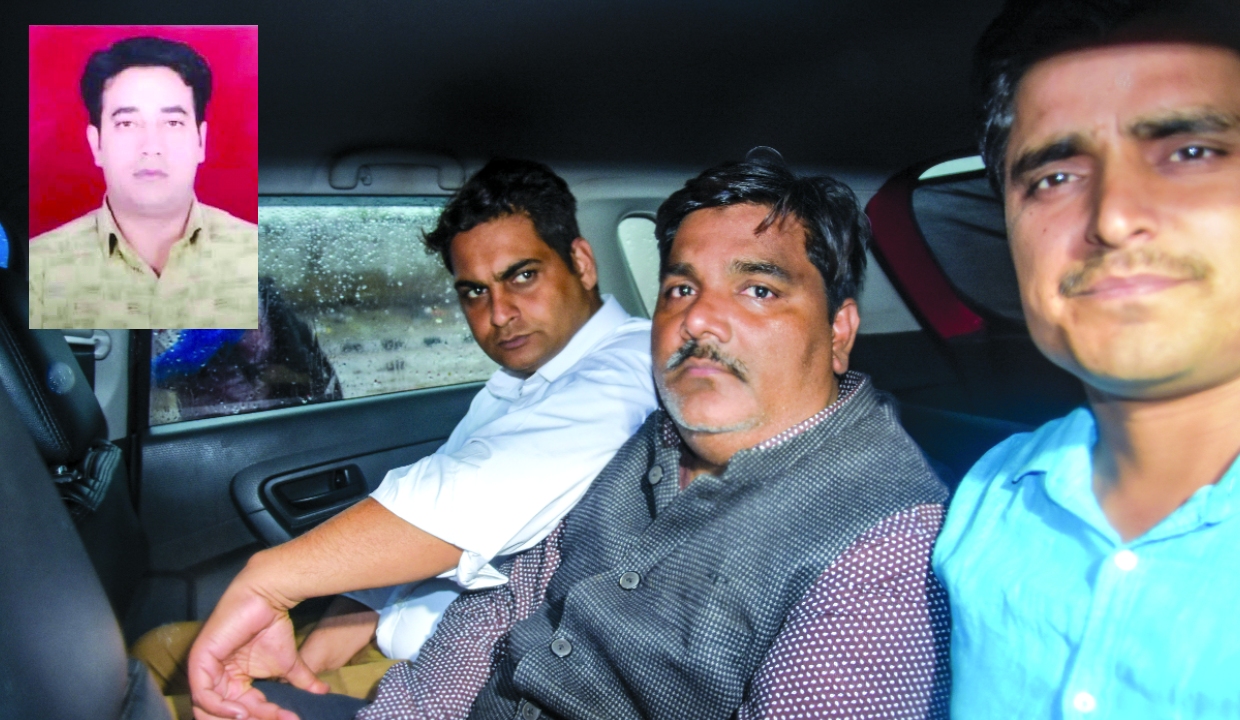
More than six years after Intelligence Bureau staffer Ankit Sharma was killed during the 2020 North East Delhi riots, a Delhi court has convicted former AAP councillor Tahir Hussain and four others for his murder.
The court found that a local politician allegedly supplied firearms to a mob, showing that the violence was planned, not random. The trial court will announce the quantum of sentence on July 16. Additional Sessions Judge Amitabh Rawat at Karkardooma Courts found Tahir Hussain guilty of planning a conspiracy to target and kill members of one community.
The court said Hussain, then the AAP councillor from Mustafabad, gave pistols and ammunition to his co-accused: Mohd Abid Khan (Fauzi), Parvez Ahmed (Babloo), Mohd Shadab (Chintu) and Shah Alam (Shahzada), to carry out the attacks.
Ankit Sharma, a central intelligence officer on leave, was attacked and killed by the mob in Khajuri Khas on February 26, 2020.
Tahir Hussain was convicted for his alleged role in supplying arms during the riots. As an elected AAP councillor, he had local influence. The court found that he allegedly used his position to arm those involved in the attacks. This conviction challenges the belief that the 2020 violence was only spontaneous.
Ankit Sharma, an IB staffer on leave, was reportedly attacked and killed by a mob on February 26, 2020, in Khajuri Khas, North East Delhi. His body had multiple injuries typical of mob violence. The incident occurred amid widespread clashes in areas such as Khajuri Khas, Jaffrabad, Maujpur, and nearby neighbourhoods.
Commissioner of Police, Delhi, Satish Golchha, who served as Special Commissioner of Police during the Delhi riots and led the investigation, said, “During the Delhi riots, our primary responsibility was to maintain law and order and ensure a fair, impartial and evidence-based investigation. Every effort was made to gather credible evidence and bring those responsible to justice under the law. With the court delivering its judgment, I feel satisfied that the hard work and professionalism of the investigating team have stood the test of judicial scrutiny. We remain committed to bringing all those responsible for crimes committed during the 2020 riots to justice through the due process of law.”
The Northeast Delhi riots began in February 2020 after protests against the Citizenship Amendment Act (CAA). The unrest soon escalated into large-scale communal violence between Hindu and Muslim communities.
The violence lasted for several days, leading to more than 50 deaths, hundreds of injuries, and widespread property damage. Delhi Police filed many FIRs, and investigations found both spontaneous and planned violence. Ankit Sharma’s murder became a key case for the Delhi Police’s Special Investigation Team (SIT). Tahir Hussain was arrested soon after the riots and remains in custody, facing other charges related to murder, rioting, arson, and conspiracy.
Tahir Hussain was a well-known local politician and former AAP councillor from Mustafabad ward. Along with him, Mohd Abid Khan (Fauzi), Parvez Ahmed (Parvez or Babloo), Mohd. Shadab (Shada or Chintu) and Shah Alam (Shahzada or Shada) were tried together for Ankit Sharma’s murder.
The trial ended on Friday, with the court convicting the accused after reviewing evidence, including witness statements and documents. The defence argued for an acquittal, but the court found that the prosecution had proved guilt beyond a reasonable doubt. This case is part of the wider legal response to the 2020 riots. The Delhi Police have investigated many cases, resulting in arrests, charge sheets, and ongoing trials.
Some accused have been convicted, while others are still on trial or have been acquitted.
Tahir Hussain’s conviction is part of his ongoing legal battles in several riot-related cases. The AAP leadership has not yet given a detailed public response to this verdict. Sentencing is scheduled for July 16.
The court’s decision is an important outcome in a sensitive case from the 2020 Delhi riots. It shows the justice system’s ongoing effort to hold people accountable for the violence that affected Delhi six years ago. This case highlights the complexity of the riots, with communal tensions and claims of targeted conspiracy in some incidents. Prosecuting large-scale mob violence years later remains a challenge. More updates are expected after the sentencing on July 16, 2026.