HP Launches War on Drugs: 5k NDPS Cases, Rs 36.95-cr Seized
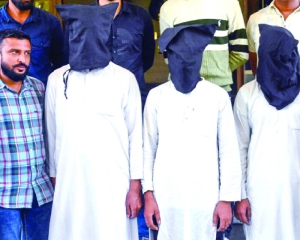
Himachal Pradesh has mounted one of the most aggressive and sustained crackdowns against drug trafficking in the country, registering over 5,000 NDPS cases and seizing illegal assets worth Rs 36.95 crore in just two and a half years. With a robust blend of legislative reforms, law enforcement action, and rehabilitation efforts, the hill state is waging a full-scale war on narcotics — taking aim at drug syndicates, corrupt officials, and the deepening crisis of synthetic drug abuse.
The state government, under its zero-tolerance policy, has initiated a relentless campaign against the growing threat of narcotics and synthetic drugs like heroin, MDMA, and Tramadol, particularly in districts adjoining pharmaceutical hubs such as Baddi, Una, and Sirmaur. A government spokesperson on Sunday revealed that 1,214 illegal properties linked to drug trafficking have been identified, with 70 encroachments cleared, and demolition proceedings initiated.
As part of the crackdown, 80 government employees complicit in the drug network have been dismissed from service, signaling the government’s commitment to clean its own house. To tighten the legal noose, the state has enacted two powerful legislations — the Himachal Pradesh Organized Crime (Prevention and Control) Bill, which includes provisions for death penalty, life imprisonment, and property confiscation; and the HP Drugs and Controlled Substances (Prevention, De-addiction and Rehabilitation) Bill, focusing on rehabilitation, awareness, and prevention.
In a landmark move, Himachal invoked preventive detention under the PIT-NDPS Act in 2024. Of 123 proposals, 41 detention orders have been issued against habitual offenders. Meanwhile, asset seizures surged — Rs 4.87 crore in 2023, Rs 25.42 crore in 2024, and Rs 6.66 crore till June 2025. Another Rs 7.74 crore worth of property is currently under confirmation.
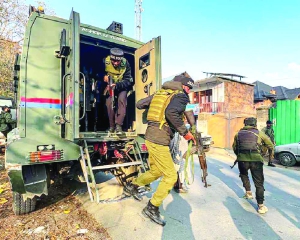
In March 2025, a Special Task Force (STF) was constituted with zones in Dharamshala, Mandi, and Parwanoo, covering 13 police stations in high-risk areas. Six of these are already operational, targeting major drug corridors in Kullu, Una, Sirmaur, and Baddi.
Law enforcement agencies also reported record seizures — 919 kg of charas, 32.9 kg of heroin, 1,632 kg of poppy husk, 89.6 kg of opium, and over 1.64 lakh banned tablets and capsules. More than 70 lakh cannabis plants have been uprooted and destroyed in inaccessible terrain.
Going beyond punitive measures, the Government is focusing on rehabilitation and recovery. De-addiction centres for men are active in Kullu, Una, Hamirpur, and Kangra, with a women-specific centre run by the Red Cross in Kullu. A state-of-the-art 100-bed centre is under construction at Kotla Barog (Sirmaur), with plans to set up similar facilities across all districts.
To support recovery, the state has launched ward-wise mapping to classify areas into red, yellow, and green zones, depending on the concentration of addicts and traffickers. This targeted model allows tailored interventions in high-risk areas.
Starting next academic session, drug awareness education will be introduced in school curricula, empowering students to resist peer pressure and understand the dangers of substance abuse early on.
On the health front, 14 Targeted Intervention Projects for Injecting Drug Users (IDUs) are being implemented by the Himachal Pradesh State AIDS Control Society with support from NACO, offering free clean needles, HIV/STI testing, counselling, and ART linkage. These efforts are critical in preventing the spread of infections among vulnerable populations.
Chief Minister Sukhvinder Singh Sukhu said: “We are not just fighting a criminal enterprise; we are fighting to reclaim our youth and future. The message is clear — Himachal will not allow drugs to ruin its soul.”