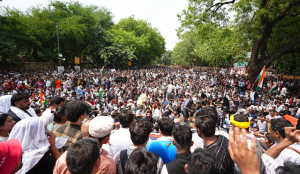
Heavy security keeps West Bengal poll violence in check
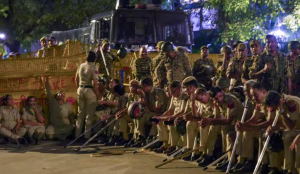
Heavy presence of paramilitary forces in the poll-bound West Bengal prevented any major incidents of violence, with only sporadic incidents of attacks reported as voting concluded for the first phase of Assembly elections on Thursday.
Sporadic violence, intimidation, and assaults on BJP candidates occurred in some areas, casting a shadow over polling. However, according to administrative officials, the number of such incidents was lower compared to past West Bengal elections.
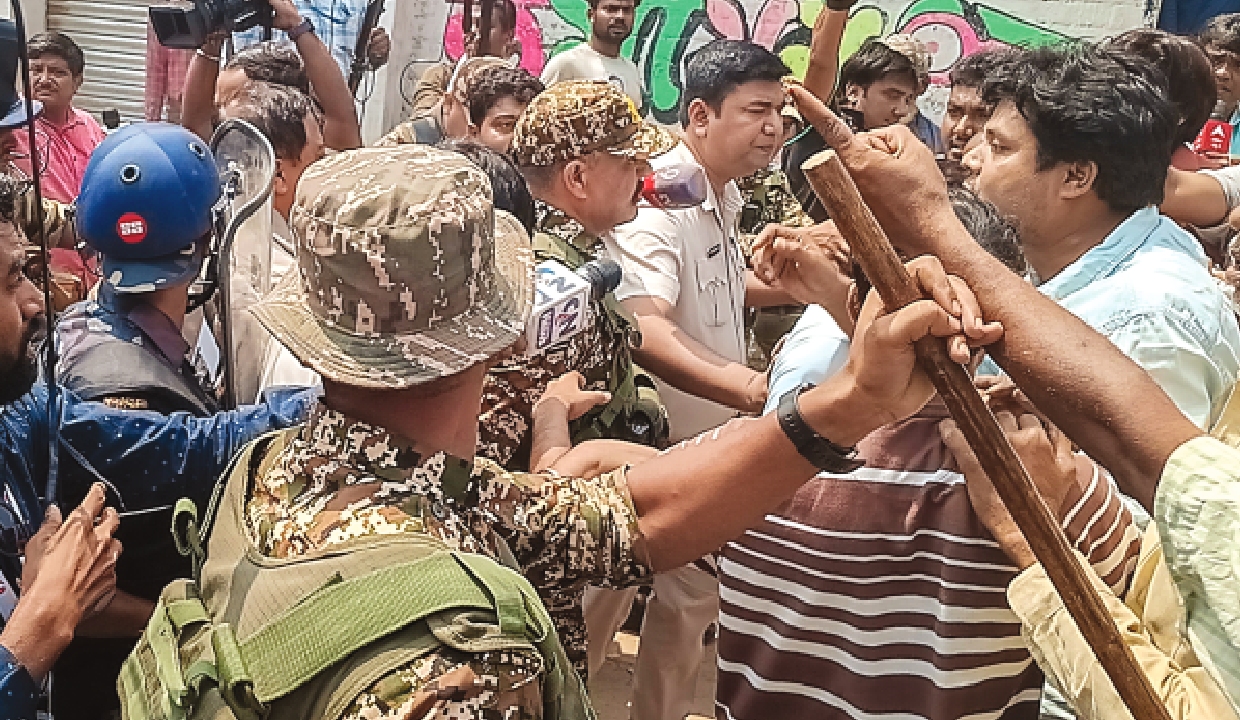
Clashes broke out between locals and security personnel in the Kharisaol area in Birbhum on Thursday after allegations of EVM malfunctioning triggered tension during the final hours of polling.
Security personnel, including central forces, intervened to disperse the crowd, following which clashes erupted. Police and CRPF personnel were pelted with stones, prompting them to resort to mild force to bring the situation under control.
Several personnel of the central forces were injured in the incident, the officials said. A police vehicle was also damaged during the violence.
BJP alleged that its Kumarganj nominee Suvendu Sarkar was manhandled by TMC supporters. Union Minister of State and Balurghat MP Sukanta Majumdar condemned the incident, asserting that “those responsible will be duly punished after the BJP forms a government in the state”.
Another BJP candidate, Agnimitra Paul’s car was pelted with stones and its rear windowpanes were shattered near Rahmat Nagar in her Asansol Dakshin Assembly constituency on Thursday, police said.
Clashes broke out between supporters of the AJUP and TMC in Naoda area in Murshidabad district, prompting police and central forces to resort to baton charge to disperse the mob, officials said.
Home Minister Amit Shah and West Bengal Chief Minister Mamata Banerjee monitored the ground situation from their ‘war rooms’ from Salt Lake and Kalighat, respectively. Shah was accompanied by senior BJP leaders, including Union minister Bhupendra Yadav, whereas Mamata was accompanied by her nephew and the party’s general secretary, Abhishek Banerjee.
The BJP’s Salt Lake office operated a parallel command structure, with Shah personally taking charge. He arrived at the BJP war room soon after polling began, held closed-door meetings with senior leaders, and assessed real-time feedback from constituencies.
Sources said the Union Minister reviewed voter turnout patterns, reports of disturbances and inputs from booth-level workers, with a particular focus on north Bengal, a region critical to the BJP’s electoral calculus.
Armed with a dense network of local inputs, the TMC leadership was not just monitoring, but also issuing instructions to district leaders, especially in sensitive pockets, reflecting what insiders described as an “extra layer of vigilance” in a fiercely contested election.
As sporadic incidents of violence and allegations of intimidation trickled in through the day, both camps used their respective command centres to calibrate responses - politically and organisationally - in what is shaping up to be one of Bengal’s most closely watched electoral contests.