Govt takes possession of Jaipur Polo Ground
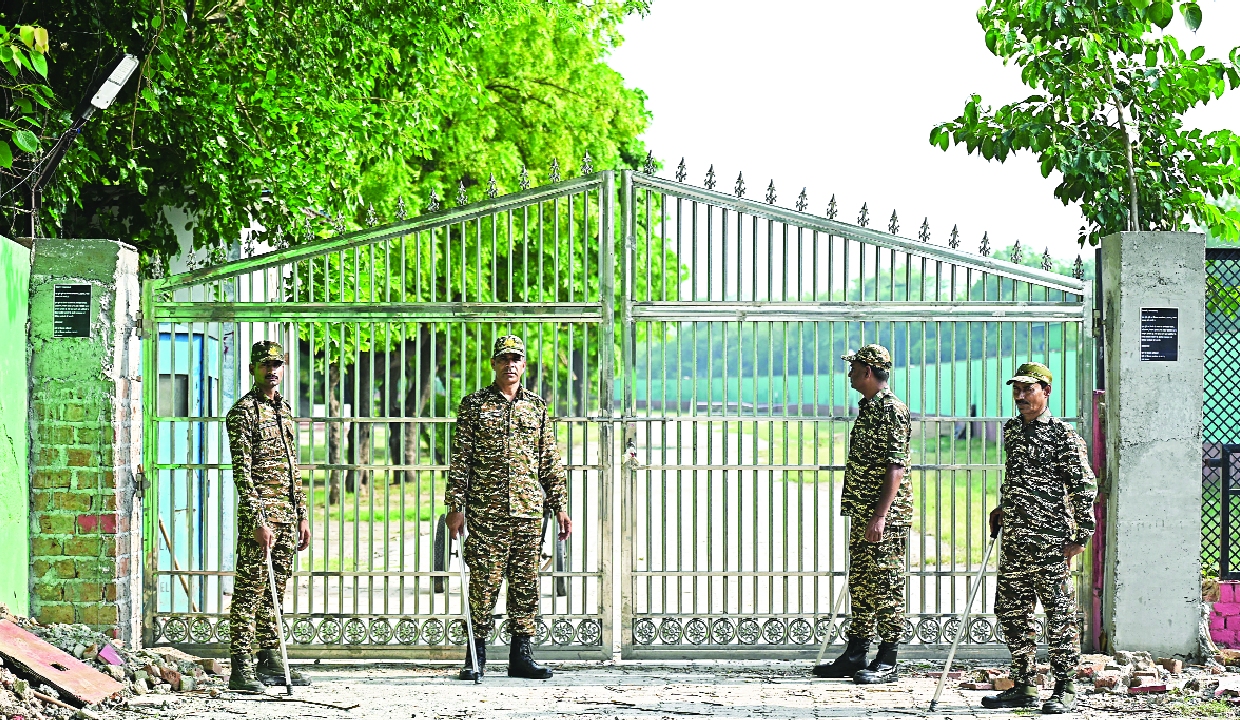
The Land & Development Office (L&DO), under the Ministry of Housing and Urban Affairs, on Saturday took possession of the prime 15.20-acre Jaipur Polo Ground in the Race Course area, located in Lutyens’ Delhi. The action follows an eviction order issued on May 20, through which the L&DO sought possession of the land.
The department, however, cited its requirement for a “larger public purpose” without specifying how the newly acquired land would be used.
The takeover was executed less than 24 hours after a city court declined to grant interim protection to the Indian Polo Association (IPA) against the Centre’s order directing it to vacate the ground. Upon taking control, officials installed prominent signage declaring the land as Government property and warning against any unauthorised entry, encroachment, or construction.
The IPA termed the eviction “wrongful, arbitrary and contrary to law”, and said it would pursue all available legal remedies to safeguard its rights and interests. According to the IPA, the land originally formed part of the Jaipur Estate in Delhi and belonged to the erstwhile Jaipur royal family.
On Saturday, the Central Government officials pasted a notice on the front wall of the historic Jaipur Polo Ground, saying, “This land is the property of the Land & Development Office (L&DO), Government of India.” “Any kind of unauthorised occupation, encroachment, construction, or any other illegal activity on this land is a punishable offence under the law. “Persons engaging in such acts shall be subject to penal and legal action in accordance with the applicable laws,” the notice stated.
In its order posted online on Saturday, the court said, “A similar kind of request was moved before the Learned Principal District and Sessions Judge, PHC and Delhi High Court, and no relief was granted to the appellant. Therefore, keeping in view judicial discipline and propriety, I am not inclined to stay the execution of the impugned order even till next date”. The court, however, directed the Union government to file replies to the appeal and the stay application and listed the matter before the vacation judge on June 17. “As the matter is sub judice and ongoing, the Association does not propose to comment further at this stage,” said IPA counsel, Major (Retd) Nirvikar Singh.
The acquisition of the Jaipur Polo Ground is part of a broader, synchronised campaign by the Central government to scrutinise and reclaim expansive public land parcels held by legacy institutions, with parallel eviction proceedings currently targeting the neighbouring Delhi Gymkhana Club and the Delhi Race Club.
The administrative push began on May 20, 2026, when the L&DO issued an eviction order directing the IPA to hand over the sprawling premises located in the high-security Race Course area. The Centre contends that the lease for the land expired in 1993, rendering the IPA’s continued presence unauthorised.
While the Government has kept specific redevelopment blueprints confidential, it defended its decision in court by stating the land is required for a “larger public purpose and benefit,” including the strengthening of defence infrastructure and other vital public security functions.
Nearly a century after Maharaja Sawai Man Singh II of Jaipur gifted a part of his Delhi estate to the Delhi Polo Club, the historic Jaipur Polo Ground finds itself at the centre of a legal battle over its future.
Named after the legendary ruler and polo player, the 15.2-acre venue in Delhi’s Race Course area has long been regarded as one of India’s most prestigious and oldest polo grounds. For generations, it has hosted some of the country’s biggest polo tournaments and remained closely associated with a sporting tradition that traces its roots to India’s princely era. According to the IPA, the Central Public Works Department (CPWD) signed a 20-year lease for the property in 1951 and polo activities continued at the venue.
When the lease expired in 1971, it was extended from time to time on the same terms and conditions until the end of 1982, according to the association.
A major change followed in 1983 when the Delhi Polo Club was dissolved and the IPA, recognised as the national governing body for the sport, took over the management and possession of the venue.
The association says government communications issued in 1983 and 1984 recorded the transition and extended the lease arrangement in its favour.
According to the IPA, a 1991 communication described the Jaipur Polo Ground as a historic venue that was used for polo since New Delhi was founded. The communication recommended renewing the lease, noting that proposals to shift activities linked to the Delhi Race Club could take time and that relocation could be discussed later. The association further cites a November 30, 1992, communication which, it says, reaffirmed the decision to renew the lease and stated that from April 1, 1993, extensions would be granted on a yearly basis until the ground shifted to an alternative site. The IPA says it continues to pay ground rent and remains in possession of the venue.
The legal battle escalated earlier in the week when the dispute reached the Delhi High Court. On June 8, Justice Neena Bansal Krishna expressed sharp environmental concerns over the loss of central Delhi’s open spaces, noting orally that “Delhi will suffocate” and asking the government counsel, “All of us will suffocate and die. For all the years these have existed, the Government never felt the need for the land?”
Despite these observations, the High Court refrained from granting an explicit stay, recording the Centre’s assurance that no coercive steps would be taken until June 12, and directed the appropriate district court to urgently decide on the IPA’s stay application.
On Friday, June 12, Vacation Judge Dhirendra Rana of the Patiala House Courts officially declined the IPA’s request to halt the eviction process under the Public Premises (Eviction of Unauthorised Occupants) Act, citing judicial discipline and the fact that higher courts had not granted ad-interim relief. With the expiration of the June 12 deadline, central authorities moved swiftly the following morning to secure the perimetre.