Govt allays doubts on women’s bill
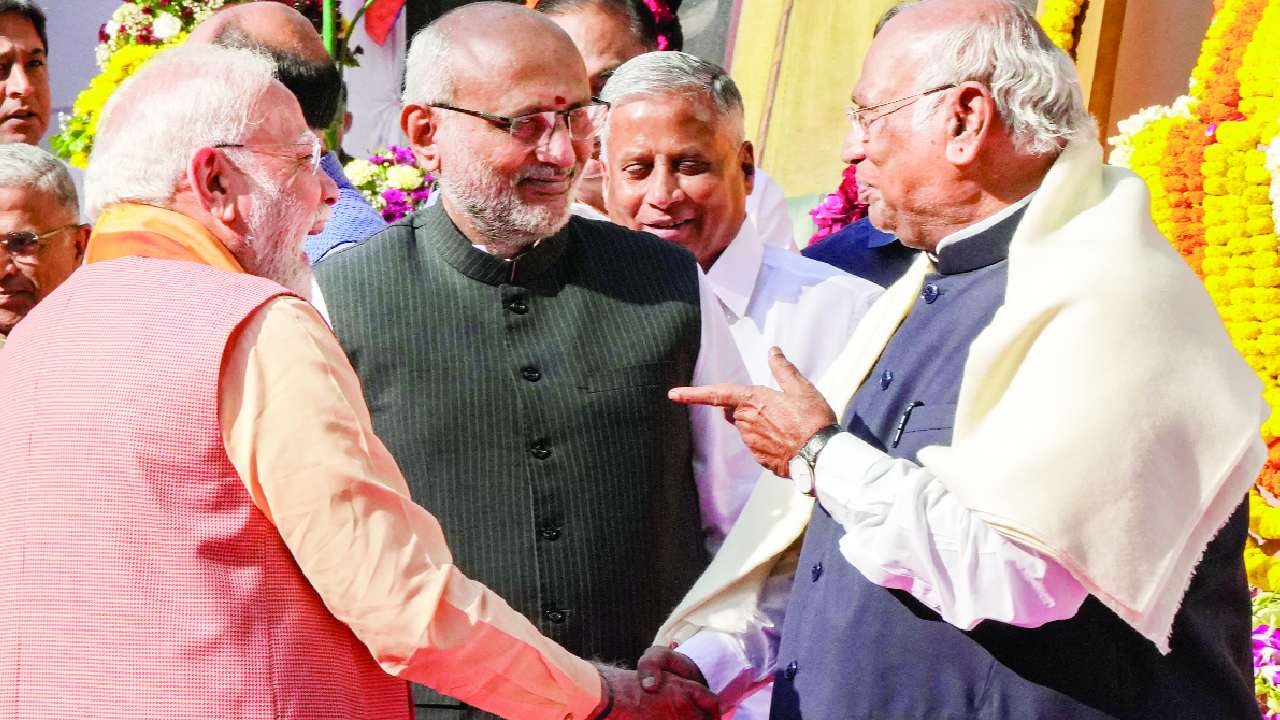
Amidst apprehensions of protest by the Opposition in and out of the Parliament on Thursday when the three-day special sitting of Budget session resumes, sources in the Government said that the treasury benches will clarify the ‘doubts’ being raised.
The three day session has been convened to debate a key Constitution amendment bill that has provisions for the women’s quota law implementation and the contentious delimitation exercise. Sources in the Government said that since some of the States have raised an issue over discrepancy of restructuring the legislative pockets, the Centre will assert that there will be no injustice to any State as there will be a 50 per cent increase in the current legislators’ seats for every State.
“Bill language is self-explanatory, though it’s the responsibility of the Government to clear the air over confusion in some sections. Any wrong interpretation should be avoided,” a ruling side Parliamentarian said. While the Government is set to push the Constitution (One Hundred and Thirty-First Amendment) Bill, 2026, as a big-ticket reform, the Opposition has decided to oppose the bill due to its provisions on delimitation.
The Government plans to bring a Constitution amendment bill, a bill on delimitation law and an enabling bill for Delhi, Jammu and Kashmir and Puducherry — three Union territories with a legislature — on Thursday in the Lok Sabha to fast-track implementation of the women’s reservation Act of 2023.
Lok Sabha seats will be increased to a maximum of 850 from the current 543 to “operationalise” the women’s reservation law before the 2029 parliamentary polls, following a delimitation exercise to be carried out on the basis of the last published census.
According to the draft Constitution amendment bill, which will be introduced and is expected to be passed in the upcoming special sitting of Parliament, seats would also be increased in State and Union territory assemblies to accommodate 33 per cent reservation for women.
Amending the Constitution requires a special majority in both Houses of Parliament: a majority of the total membership (more than 50 per cent) and a two-thirds majority of members present and voting. So if all 540 members, who are in the House currently, are present and voting, the two-thirds majority mark would be 360. The total strength of the NDA in the Lok Sabha stands at 292, while the major Opposition parties have 233 MPs.
The ruling NDA is pitching the move for early implementation of the ‘Nari Shakti Vandan Adhiniyam’ as a “historic step”. In a letter to the Parliamentarians as well as women of the country, Prime Minister Narendra Modi has asserted that Indian democracy will become stronger and more vibrant if elections to the Lok Sabha and the various assemblies in 2029 are held with the women’s quota fully in place.