Gen Z: Choosing creative degrees

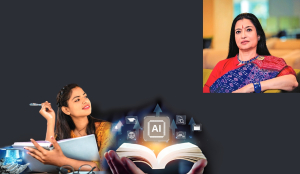
For decades, the career choices of Indian students seemed almost predetermined. Engineering, medicine, law and commerce dominated conversations around higher education, while creative disciplines were often viewed as niche, risky or suitable only for the exceptionally talented. That landscape is changing rapidly. Today’s students, Generation Z, are entering adulthood at a time when technology, artificial intelligence, digital media and the creator economy are fundamentally reshaping the world of work.
Creative education aligns well with these aspirations. Unlike traditional education, which often focuses on established knowledge and fixed answers, creative disciplines encourage students to question assumptions, solve open-ended problems and learn through experimentation. They prepare students not only for today’s jobs but also for careers that evolve with technology and society.
The definition of a “creative career” has expanded significantly. It now spans design, architecture, animation, game development, filmmaking, digital media, UX, product innovation, creative writing, performing arts, advertising, branding, fashion, creative entrepreneurship and many other emerging fields
The definition of a “creative career” has expanded dramatically. It no longer refers only to painters, musicians or fashion designers. Today's creative economy spans design, architecture, animation, game development, filmmaking, photography, visual communication, digital media, user experience (UX), product innovation, creative writing, performing arts, advertising, branding, exhibition design, luxury business, fashion management, creative entrepreneurship and many more emerging fields.
Today, these professions sit at the intersection of creativity, technology and business.
The degrees available today are in far more diverse areas than many parents realise.
Design education has diversified into Product Design, Transportation Design, Interior Design, Communication Design, UX & Interaction Design, Animation, Game Design, Digital Product Design and Service Design. Architecture now extends beyond buildings to encompass sustainable cities, urban experiences and human-centred environments. Fashion education includes not only design but also communication, retail, merchandising, technology and business. Film and communication design programmes prepare students for careers across cinema, OTT platforms, advertising, digital storytelling and immersive content. Performing arts increasingly connect with arts management, digital production and cultural entrepreneurship.
Ironically, the rise of Artificial Intelligence has strengthened the case for creative education.
As India’s creative economy expands, the distinction between “creative” and “non-creative” careers is steadily disappearing. Today, engineers need design thinking, business leaders need storytelling, healthcare relies on human-centred design, and technology companies employ designers, filmmakers, researchers and artists alongside software engineers. Choosing the right creative programme is about more than selecting a degree. Students should consider how they will learn, what they will create and who they will become by the end of the programme.
Creative education is no longer about preparing students for a single profession. It is about preparing them for a lifetime of innovation, learning and reinvention.
Before making a decision, every aspiring student should ask five important questions:
1. Does this programme match my aptitude and interests, not just my marks?
2. Will I graduate with a strong portfolio as well as a degree?
3. Does the curriculum integrate AI, emerging technologies and interdisciplinary learning?
4. Will I learn through studio practice, live projects, internships and industry exposure?
5. Will this programme prepare me for the careers of tomorrow, not just the jobs of today?
The writer is the Founding Vice-Chancellor of World University of Design, Sonipat; Views presented are personal.