From Hijli to the world: The IITs Go Global
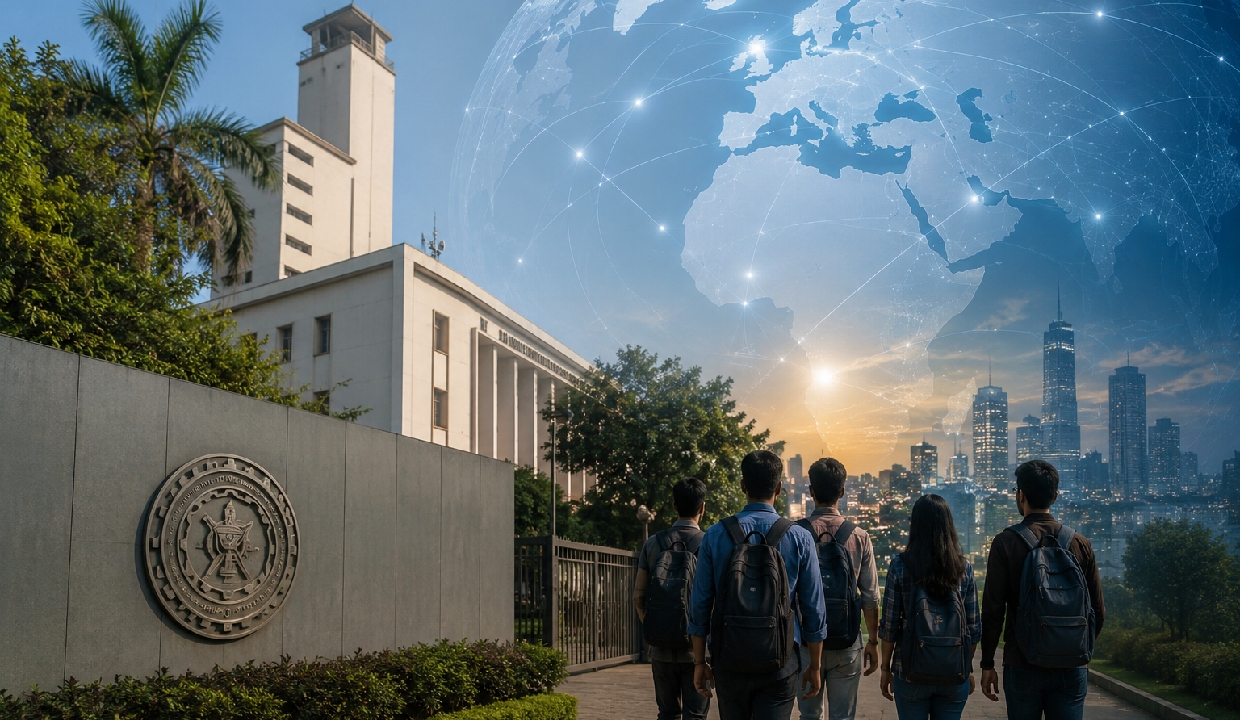
The Indian Institutes of Technology have arrived on the world stage — not as exporters of talent, but as institutions planting their flags on
foreign soil. On 26 June 2026, IIT Bombay announced its first-ever overseas sub-campus in the United States, in collaboration with the State University of New York (SUNY) at Old Westbury. Beginning with certificate programmes in artificial intelligence, sustainability, and clean technology from 2027, the institute plans to develop full-fledged degree programmes open to students from across the globe. This is not merely an academic partnership. It is a declaration that the IIT brand has come of age.
The Seeds Have Been Planted
This was not a sudden decision. The IITs have been methodically expanding their global footprint. In 2023, IIT Madras established the first-ever international campus of an IIT in Zanzibar, Tanzania. In 2024, IIT Delhi inaugurated its campus in Abu Dhabi, welcoming its inaugural cohort of students. Now, IIT Bombay is taking the IIT brand to the United States — the very country that once “imported” IIT talent through the brain drain pipeline. From Hijli to Zanzibar. From Kharagpur to Abu Dhabi. From Bombay to New York. The IITs are no longer just India’s temples of learning—they are becoming global institutions.
Why This Matters
This expansion is not about building monuments abroad. It is about taking the IIT ethos—the rigour, the hustle, the frugal innovation, the first-principles problem-solving—to the world. Brand Globalisation. Twenty-three years ago, in 2003, CBS’s 60 Minutes aired its iconic segment “Imported from India,” where Lesley Stahl told millions of viewers: “Put Harvard, MIT and Princeton together, and you begin to get an idea of the status of this school in India.” IIT undergraduates, she noted, “leave their American counterparts in the dust.” That segment captured the world’s awe of the IITs. Today, the IITs are not waiting to be discovered— they are taking their brand to the world’s most prestigious academic markets. Reverse Brain Drain. For decades, we lamented the exodus of our brightest minds. The 1970s saw 68 per cent of IIT graduates leave for American shores. Today, the tide is turning. IIT Bombay’s sub-campus in the US will not primarily serve Indian students. As Director Shireesh Kedare clarified, “The courses will be open to American students and students from around the world. The idea is not to admit Indian students through JEE (Advanced) there.” This is a reversal of the old model. Instead of Indians going abroad for education, the world will come to IIT— even on American soil.
Financial Sustainability. Revenue generated through these overseas programmes will be reinvested to strengthen research infrastructure in India, including advanced laboratories and new research centres. International campuses can add an additional revenue source for IITs, charging higher fees and, if properly managed, channelling surplus funds back to the main campus. This is not charity; it is strategic institution-building.
The T-Rex on American Streets
In my book, I describe the IITs as a T-Rex in the global education ecosystem—a creature of immense power, legacy and primordial instinct. That T-Rex is now walking the streets of America just like ‘ The Lost World’ the movie from Spielberg . The same rigour that built the IITs from the ruins of Hijli will now shape classrooms in New York. The same hustle that produced the Bhakra Brigade will now produce engineers who work across continents. From Silicon Valley to the Indus Valley—and Beyond My appeal to the global IIT diaspora has been simple: From Silicon Valley to the Indus Valley. Build here, scale here, die here. But that appeal was never about isolation. It was about choice. It was about creating an ecosystem where IITians could build world-class careers in India—not because they had no other option, but because the most exciting opportunities were at home. Today, that ecosystem is maturing. The India AI Mission, the `1.2 lakh crore RDI fund, the National Quantum Mission, the semiconductor push—all of these are creating opportunities that did not exist a decade ago. The IITs are no longer just suppliers of talent to the world. They are becoming institutions that the world seeks out. The Hijli watchtower still stands—not as a relic, but as a beacon. Its light now falls on a startup in Bengaluru, a policy desk in Delhi, a manufacturing facility in Chennai and a research lab in California. And soon, it will fall on a classroom in New York. The IIT story is India’s story. And the next chapter—the chapter of IITs going global—is being written now. Earlier the IITians have taken the IIT spirit abroad but now the institution itself is taking the IIT spirit to the world.