Fadnavis launches work on Orange Gate–Marine Drive tunnel
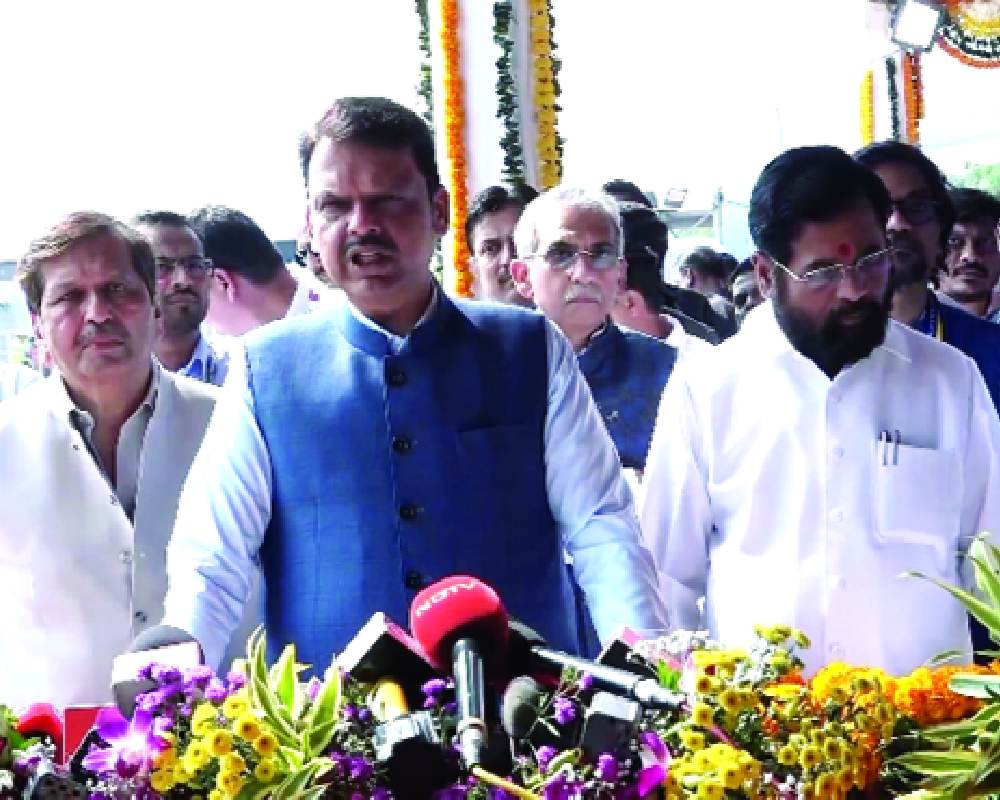
In yet another significant step forward towards easing traffic congestion in the country’s commercial capital, Maharashtra chief minister Devendra Fadnavis on Wednesday kicked off the work on the ambitious 9.96 km Orange Gate to Marine Drive Urban Tunnel Project, with the formal launch of the Tunnel Boring Machine (TBM).
Estimated to cost `8,056 crore, the country’s first urban tunnel project aims to ease Mumbai’s traffic congestion and enhance connectivity, particularly for citizens travelling from South Mumbai to the Navi Mumbai International Airport.
Terming the launch of the Orange Gate-Marine Drive tunnel as an “engineering marvel”, Fadnavis said the upcoming tunnel would “revolutionise commuting in Mumbai” — as the project would create a swift and smooth link between the eastern corridor and the picturesque western sea-front.
Slated for completion in December 2028, the tunnel project will reshape the city’s daily grind for lakhs of motorists who struggle while travelling along the Eastern Freeway and other roads from the suburbs to downtown South Mumbai, where most Government offices and commercial offices exist.
“Once the Worli-Sewri Sea Link opens next year and the Coastal Road connection is established, people from the western suburbs will have two options to reach the Navi Mumbai Airport. This project will save thousands of hours for thousands of people, making today a historic day for Mumbai’s transport,” the chief minister said.
The project, which involves mind-boggling scale and complexity, is being implemented by the State-run Mumbai Metropolitan Region Development Authority (MMRDA).
Being developed below the ground, the twin tunnel will quietly navigate a dense urban landscape, passing underneath roughly 700 properties, including several heritage structures, including some iconic ones, plus crucial transport networks like the Western Railway, the Central Railway and even the underground Metro Line 3, without disrupting existing operations.
According to the MMRDA, there will be a 6.51-km-long twin-tube underground tunnel of 3 lanes each and pedestrian walkways, a viaduct for vehicle access at the Eastern Freeway Orange Gate, open cuts and access roads on both sides of the corridor. The left-side tunnel will pass beneath the seaway and resurface after BD Somani Chowk.
This project is planned after taking into consideration the safety of the underground Mumbai Metro Line-3 project. The average tunnel depth will be 40 metres — to avoid disturbing the railway lines above or the foundations of high-rise buildings, implementing high levels of safety measures considering the dense population in the region, while slashing travel time by around 20 minutes or thousands of hours for lakhs of commuters.
At one section, the TBM engineers will sink a bore nearly 50 metres underground to ensure the Mumbai Metro’s safety. Each tube will have spacious traffic lanes and cross-passages at every 300 metres to provide escape routes in case of emergencies.
The project will feature intelligent features such as AI-enabled traffic control, smart monitoring, and advanced ventilation to maintain smooth flow and quick responses in all conditions, fire-resistant materials, refined illumination and a robust evacuation system further strengthen safety.
Fadnavis said that though completion is planned for December 2028, efforts would be made to finish it six months early for the benefit of the masses.
“MMRDA’s commitment to drive this project is commendable. This initiative will play a major role in strengthening Mumbai’s infrastructure and supporting the city’s long-term growth vision,” the chief minister said.
Once it becomes operational, the tunnel will offer a critical new route for residents of both south Mumbai and the suburbs travelling to the Navi Mumbai International Airport, which will take off this month-end.
With the parallel work on the Sewri-Worli connector, the tunnel will become another essential strand in the fast-evolving network of the Mumbai Coastal Road, the Atal Setu Mumbai Trans Harbour Link, the Bandra-Worli Sea Link and its extensions planned upto Borivali and beyond.
The additional benefits of the project would be the sharp reduction in fuel consumption and emissions, with huge environmental benefits like easing air and noise pollution across some of the city’s most congested pockets.
MMRDA Metropolitan Commissioner Dr Sanjay Mukherjee, who has consistently batted for strengthening transport infrastructure to boost economic progress and sustainable growth, is supervising the implementation of the development of the tunnel — which is being constructed by Larsen & Toubro.