Equal Play, Equal Pay – Empowering in the field & beyond
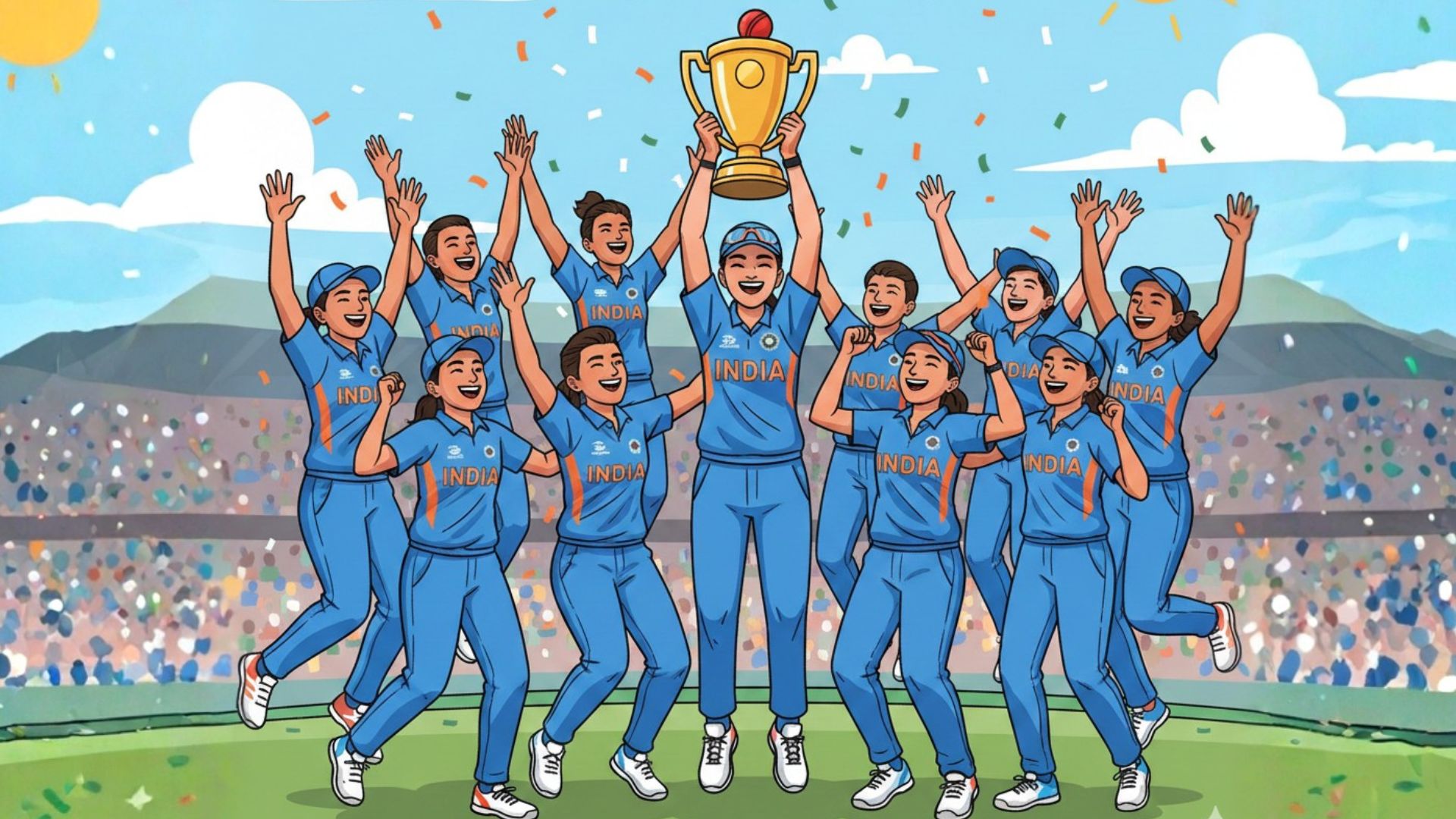
For long, Indian cricketing heroes have been defined by names like Gavaskar, Sachin, Kohli…. Today, that podium is expanding to include Harmanpreet Kaur, Smriti Mandhana, Jemimah Rodrigues, and Shafali Verma—India’s Women in Blue, who are redefining both the game and its social impact, one match at a time!
In recent years, the Board of Control for Cricket in India (BCCI) has taken significant steps to mainstream Women’s Cricket including the introduction of equal match fees extended to domestic cricket in December 2025 marking a watershed moment and correcting a long-standing imbalance. The Women’s Premier League (WPL) which started in 2023, is offering visibility, financial stability, and a competitive platform that had long been denied. These measures represent a sharp contrast to earlier times when the world’s richest cricket board often overlooked the Women in Blue.
The recent heartbreaks in the finals of the 2020 T20 and the 2023 ODI World Cup transformed the landscape as it captured the attention of the nation. The two losses proved one thing: Cricketing Excellence Transcends Gender, and surely the Women in Blue proved it with their triumph at the ICC Women’s World Cup 2025, which was the culmination of years of resilience and belief, a victory that resonated far beyond the boundary ropes.
The WPL played a critical role in bringing Women’s Cricket into Indian living rooms. The emergence of national players from Tier-2 and Tier-3 cities, affordable ticket pricing, and effective promotion during the 2025 World Cup further drew crowds to stadiums. The 2025 World Cup journey was a roller coaster in its own way – from being written off to lifting the trophy felt cinematic, but its real impact was societal.
Yet, the journey towards true equality remains unfinished. The absence of a celebratory open-bus parade, similar to those organised for the men’s team in the past, has raised uncomfortable questions among cricket fans. While safety concerns following a stampede in Bengaluru after RCB won IPL are valid. The BCCI has shown that such events with local administrative bodies can be managed responsibly. The decision suggested a possible underestimation of public enthusiasm; nonetheless, nothing has been blown out of proportion, and the sweet nectar of the World Cup victory is still being cherished.
The next step for the BCCI should be bringing equality and competitiveness to Domestic Cricket for Women’s Cricket. Introduction of longer tournaments, better pay, improved facilities, and consistent visibility are crucial to sustaining this Himalayan momentum. While national and WPL players do enjoy better support; grassroots/domestic cricket continues to face challenges, and this is where the BCCI should pay heed to. However, riding on the 2025 World Cup victory and strengthening the foundation of grassroots/domestic cricket will ensure that future generations of Women Cricketers thrive to their full potential, irrespective of the results in the matches played.
The WPL 2026 is currently running alongside India’s men’s series against New Zealand. While official viewership numbers for the men’s ODI are yet to be released, the WPL recorded a viewership of 5.1 crore for its first match, and the overall viewership trajectory for WPL 2026 is estimated at around 200–250 million, with potential to exceed these projections. With a 40% increase in ad rates and 15 sponsors coming in for WPL 2026, women’s cricket is no longer an experiment or merely an idea of equality on paper, but a reality. Ultimately, the true legacy of women’s cricket lies not in viewership, advertisements, or trophies, but in empowering women—breaking stereotypes and redefining what equality in sport truly means.
Authors: Anshuman Sharma and AK Sharma, Independent Consultant