DJB’s Summer Action Plan prioritises water conservation
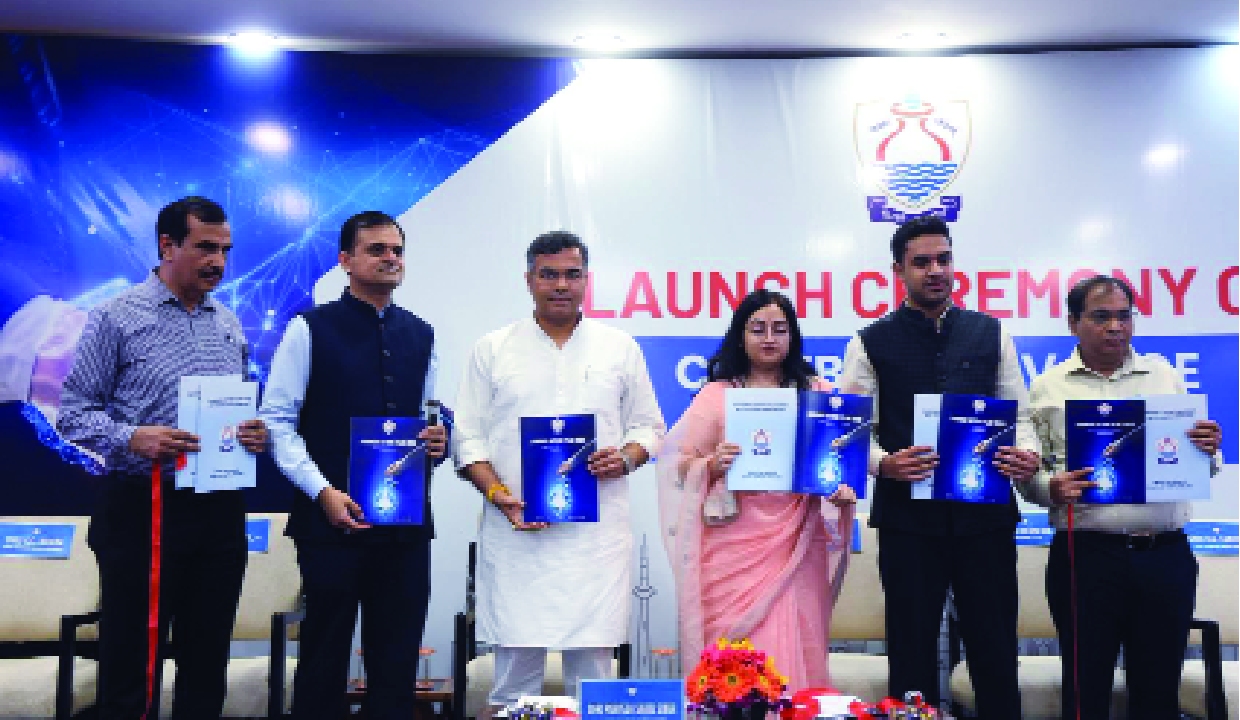
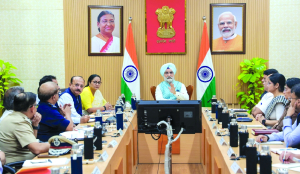
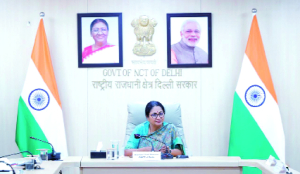
Unveiling the Delhi Jal Board (DJB)’s annual “Summer Action Plan-2026”, Water Minister Parvesh Sahib Singh on Monday appealed to the people to conserve water, focusing on improving water distribution, AI integration and long-term planning. Water demand in the city reaches its peak during the summer season; for this, the Delhi Government comes up with its summer action plan. Under this water production target of 1002 million gallons per day has been set this year.
Singh has urged the people not to leave the tap running while brushing, shaving, washing dishes and clothes; do not use a hose to wash the car; use half a bucket of water and a cloth to clean your car better; and use a broom to sweep your doorway or garage sidewalk instead of using water.
Singh said that the DJB has deployed 1,221 water tankers this summer season to provide water to deficit areas and increase water production through additional tubewells. All the tankers will be tracked through the GPS.
“Despite challenges, we are working to provide drinking water to the growing population of Delhi. Our sources of water are limited, and there are several hurdles in installing new areas for borewells, but it is our responsibility to ensure that every citizen receives an adequate supply,” Singh said.
According to the plan, to augment the water supply, the DJB will install 436 additional tubewells soon at various locations, after which about 6,290 tubewells will be in operation. Additionally, 500 water ATMs will also be installed at places with high footfall, providing drinking water.
Currently, the DJB has nine water treatment plants, which treat raw water, mostly from the Yamuna River, to supply lakhs of residents of the city. However, this supply occasionally gets disrupted because of high levels of pollution in the raw water.
The water minister said that providing water is the work of ‘Punya’ (good deed) and that the water tanker system is just a temporary solution till the current problems are resolved.
“There will be continuous monitoring of raw water quality, including ammonia levels, to avoid disruptions. DJB is also taking up the upgradation of old pumps, motors and electro-mechanical systems to enhance efficiency,” the plan States. “We are planning for the next 50 years. A water master plan is being prepared. Also, the new tankers have GPS installed in them. It is estimated that in the next few years, 20 lakh flats are going to be added in Delhi; we are taking this into account while planning,” he added.
Singh said that digitisation through artificial intelligence integration has started, and the DJB has tied up with IIT-Kanpur, which is working on projects like an AI chatbot.
The water minister also said that in the next two years, DJB will complete the Chandrawal water treatment plant upgradation project, which will resolve the water management system in at least 10 Assembly constituencies; other areas will also be developed similarly.
The water minister launched a new system for complaint tracking and escalation, the DJB 1,916 mobile app for real-time complaint registration and an AI-powered Chatbot for instant grievance support.
“Earlier, outdated systems slowed down our work. Today, we are introducing modern, transparent systems where citizens themselves can monitor services, clean water supply, and Yamuna rejuvenation are not just duties, but a shared responsibility. With the Summer Action Plan 2026-27, our focus is clear: 1 reliable water supply, 2 technology-driven transparency, as this is not just about systems, it’s about delivering results on the ground,” he said.
Under the summer action plan, DJB has also informed that out of 1,799 unauthorised colonies, water pipelines have been laid in 1,646 colonies. “Work on remaining colonies is ongoing in a phased manner,” the plan added. The water minister also said that the Delhi Government is discussing with the Haryana Government for 51 cusecs of additional water.