Digvijaya exits RS race, to stay in politics

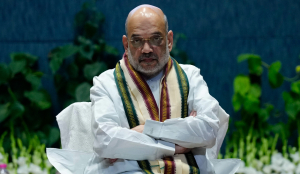
In a significant political announcement that is likely to reshape the Congress party’s calculus for the upcoming Rajya Sabha election in Madhya Pradesh, senior leader and former Chief Minister Digvijaya Singh on Sunday declared that he would not seek a third consecutive term in the Upper House of Parliament. His current tenure concludes on April 9, 2026.
Speaking to reporters at his residence in Bhopal, Singh said he had already communicated his decision to the party leadership. He was, however, emphatic that his withdrawal from the Rajya Sabha race should not be misconstrued as a retreat from active politics.
“I have requested my party that after completing my second term, I do not want to go to the Rajya Sabha for a third term. But that does not mean I will stop working for the Congress. I will continue to work for the party till my last breath,” he said, with the characteristic resolve that has defined six decades of his public life.
Singh has been an indomitable presence in Madhya Pradesh’s political landscape for decades. He served as Chief Minister from 1993 to 2003 — a decade that left a defining imprint on the State’s administrative and political character — and has remained one of the Congress party’s most consequential strategists at the national level. His assertion that he would continue working at the grassroots in Madhya Pradesh signals that his departure from Parliament will by no means dim his political engagement within the state.
In a separate but equally significant development, Singh wrote to Prime Minister Narendra Modi demanding that basmati rice cultivated across 14 districts of Madhya Pradesh be granted a Geographical Indication tag. He argued that the absence of GI recognition has long deprived farmers in the Gwalior-Chambal, Malwa and Mahakaushal regions of the fair market value their produce commands.
Despite yielding aromatic basmati of exceptional quality, cultivators in districts including Sheopur, Morena, Bhind, Gwalior, Shivpuri, Datia, Guna, Vidisha, Raisen, Sehore, Harda, Hoshangabad, Narsinghpur and Jabalpur have remained economically disadvantaged — a grievance, Singh noted, that has persisted without resolution for nearly two decades.