Did you know?
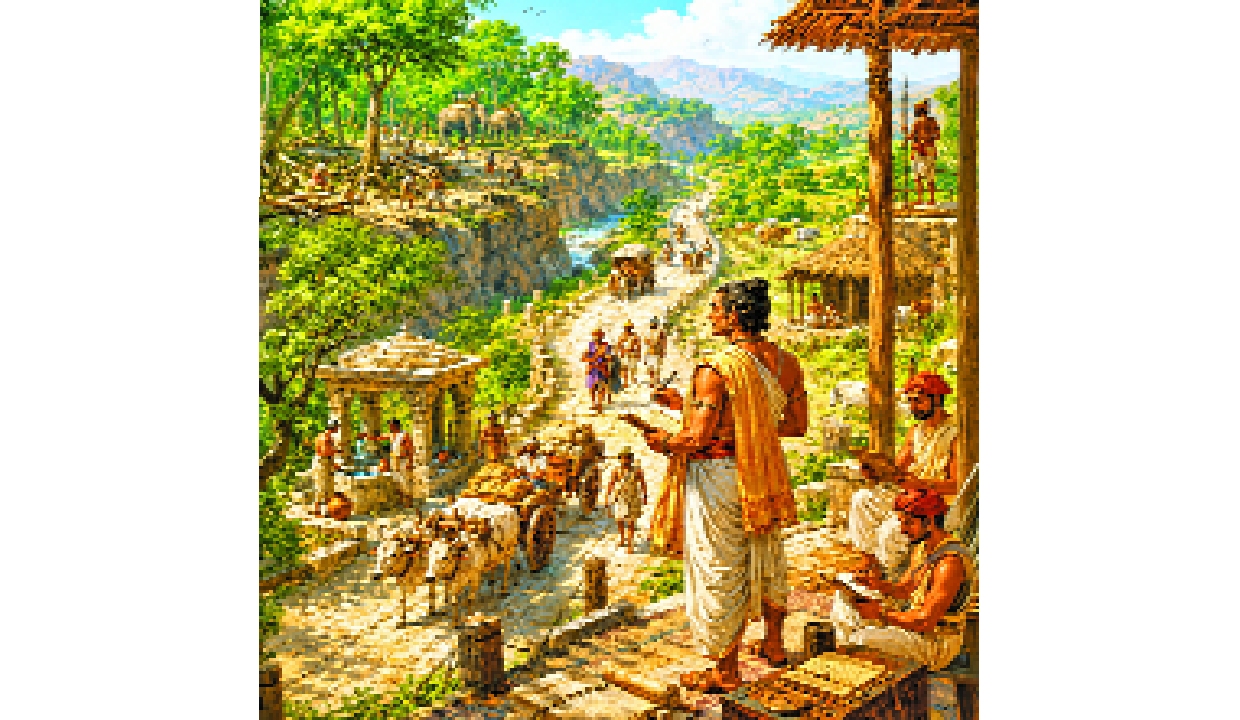
Did You Know Kautilya Treated Roads, Wells and Traveller Safety as Administrative Duties?
In the Arthashastra, the safety and maintenance of travel routes was assigned to Vivitadhyaksa or the Superintendent of Pasture Lands. However, his responsibilities extended beyond managing grazing areas. He was expected to examine travellers’ passes, maintain roads, watch over wilderness routes, arrest thieves and ensure the safety of mercantile traffic.
The text directs that pasture grounds should be opened between dangerous places and that valleys should be cleared of threats posed by thieves, wild elephants and other animals. The superintendent was also charged with protecting timber forests, elephant forests and cattle while keeping commercial routes operational. The Arthashastra also refers to prapas, places where water was supplied freely to travellers, as recognised features of the administrative landscape. Roads, irrigation works, feeding houses, pasture grounds and public water points were to be identified and recorded while village and territorial boundaries were being established.
From a governance perspective, the arrangement linked infrastructure, policing, communication and economic policy. The Arthashastra recognised that secure mobility encouraged trade, protected state revenues and connected distant parts of the kingdom.