Did You Know?
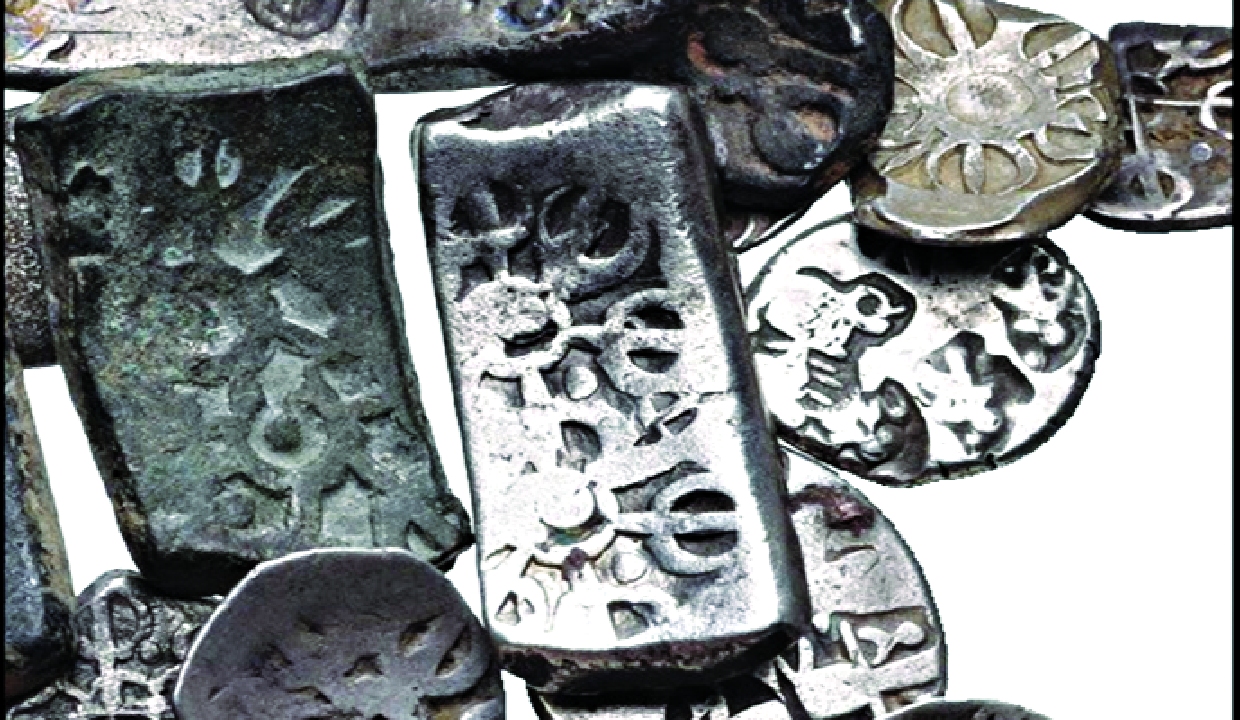
Did you know that Punch-marked coins are the earliest known coins in the Indian subcontinent, dating from the 6th century BCE to the 2nd century CE. Punch-marked coins were not "minted" like later coins with a king's portrait, name or inscription. Their authority came from small symbols punched separately into pieces of metal, usually silver. That is why each coin can look slightly irregular, almost like a small metal document carrying several official or semi-official marks. They were predominantly made of silver, though fractional copper and a few gold or lead pieces also exist.
They lacked written text or legends. Instead, they featured punched motifs inspired by nature and daily life, such as the sun, trees, hills, rivers and animals. In ancient Indian literature, they are referred to by names such as Purana, Karshapana, Pana, and Mashaka.
Punch-marked coins are mentioned in the Manu Smriti (c. 200 BCE - 200 CE), and Buddhist Jataka (c. 300 BCE- 400 CE) as circulating in the North until approximately the beginning of the 1st century CE, and lasting three centuries longer in the South until about 300 CE.
So, a punch-marked coin is not just an old coin. It is evidence of a society moving from barter and weighed metal exchange toward a more organised monetary economy. Their symbols were marks of trust in an expanding world of trade, guilds, janapadas and early states.