Darkness came the day after
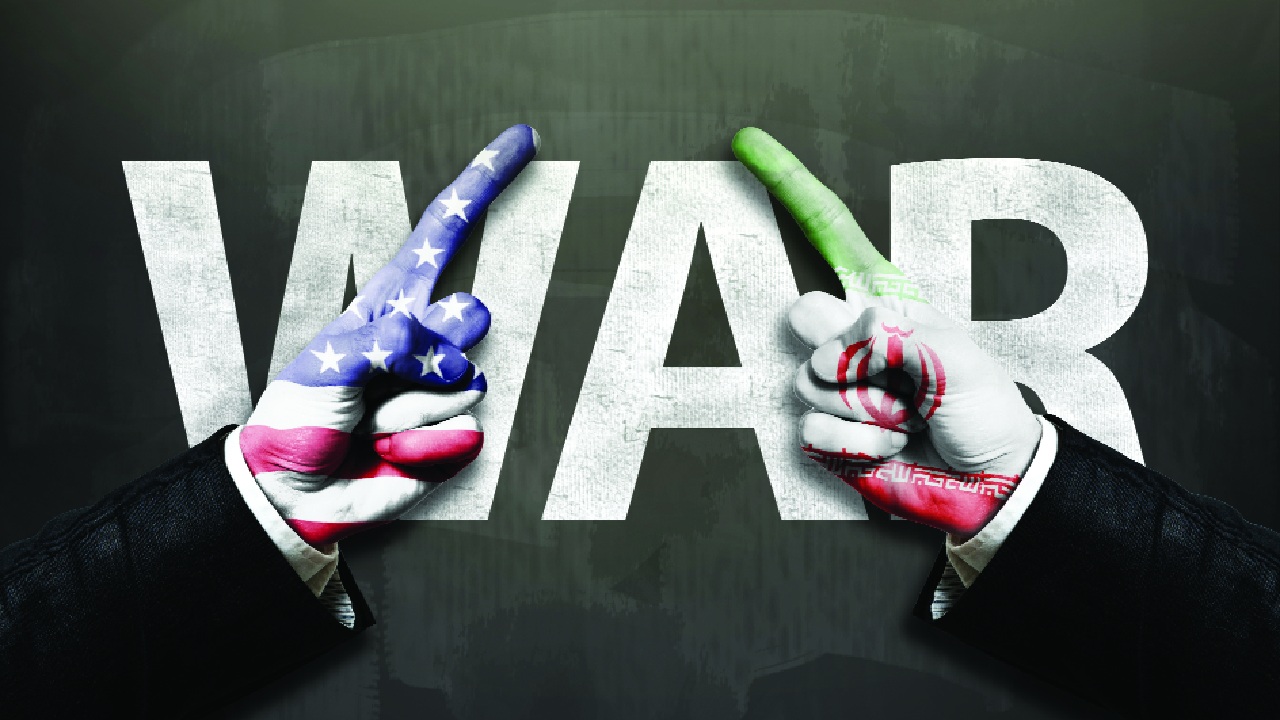
For 21 hours, the world waited with baited breath. Whatever time it was in whichever part of the globe, even as the sunrays touched Iran on Sunday, the message was clear. One swallow does not make a summer, and one round of talks does not bring Tehran any closer to a peace accord with Washington. The highly-anticipated face-to-face discussions concluded without an agreement in Pakistan's capital. It was back to the status quo, albeit in a new form. The Strait of Hormuz was blocked, this time by the US, not Iran, as economies braced for the worst. Equities were down, so was gold, oil zoomed, and so did the dollar.
Global crude prices went up to over $100 a barrel, yet again for the umpteenth time in the past six weeks, and Indian Sensex was down by nearly a per cent. Natural gas markets tightened, and the so-called contagion spread to shipping, insurance, commodities, currencies, agriculture, and other sectors. It was back to the old predictions that global recovery to the pre-crisis “normal” may take 18-36 months, even if the escalations stop, and longer if it spreads, as was pointed out by several experts, including the International Monetary Fund (IMF).
“Beyond its painful human toll, the war has caused serious disruption to the economies… including damage to their infrastructure and industries that could become long-lasting. Although these countries are resilient, their short-term growth prospects will be negatively affected,” stated an earlier blog on the IMF website. “Meanwhile, large energy importers… are bearing the brunt of higher fuel and input costs: About 25 to 30 per cent of global oil, and 20 per cent of liquefied natural gas pass through the Strait of Hormuz…. Economies heavily dependent on oil imports in Africa and Asia are finding it increasingly hard to access the supplies they need, even at inflated prices,” the blog stressed.
In an April 2026 report, the World Bank warned, “Economic Growth to Slow in Europe and Central Asia as Risks Rise.” Its update added, “Economic growth in the developing countries of Europe and Central Asia is likely to slow substantially… because of the impact of the conflict in the Middle East, geopolitical tensions, and trade fragmentation.” According to its assessment, regional growth is expected to weaken to 2.1 per cent in 2026, growth in Russia is expected to slow to 0.8 per cent, and the pace of expansion elsewhere is likely to ease to 2.9 per cent due to energy costs and investment uncertainty.
“Growth in China, the region’s largest economy, is projected to decelerate from 5 per cent in 2025 to 4.2 per cent in 2026, and 4.3 per cent in 2027,” added the report. Overall, aggregate global losses may accrue up to even hundreds of billions of dollars annually. Multilateral institutions stress that the shock is global but asymmetric, and the energy importers and poorer countries will suffer the most. Even before the war, uncertainty was writ large over the outcome of the US-Iran talks, given the long-standing distrust, tension, and freeze.
As is now well-known, the Iran/West Asia conflict has impacted India across energy, economy, and security dimensions. Almost half of India's crude oil and 90 per cent of LPG imports pass through the Strait of Hormuz, where uncertainty possibly returns with a greater force following the talks' failure. India faces pressure on the imports of crude and fertilisers, and analysts warn of higher subsidy burdens. Crisil estimates a potential INR 20,000-25,000 crore rise in the fertiliser subsidy if disruptions persist, and domestic production falls 10-15 per cent. Food prices will of course be directly affected.
The World Bank Group has stated in its twice-a-year regional outlook that the growth in South Asia is expected to slow to 6.3 per cent in 2026, down from 7 per cent in 2025. Released this month, the South Asia Economic Update stated that “despite the near-term slowdown, South Asia continues to grow faster than other emerging-market and developing economies. The growth outlook is driven primarily by India’s performance, underpinned by robust domestic demand as well as tariff cuts and recent trade agreements (like with the European Union).”
However, “Given the region’s reliance on imported energy, South Asia’s outlook is vulnerable to spillovers from the current conflict in the Middle East, and is exceptionally uncertain. A prompt resolution would lift growth prospects, while further dislocation in global energy markets could raise inflation, necessitate monetary policy tightening, and dampen remittances.” The Bank’s “India Development Update” projected growth at 6.6 per cent in FY27, or lower than estimates by the Reserve Bank of India. “But even with the slowdown, India remains among the fastest-growing major economies in the world,” it states.
“The conflict in the Middle East has disrupted critical maritime routes, and placed pressure on global supply chains, energy markets, and both imports and exports. Indian companies are experiencing downstream effects, from shipment delays to constraints in key energy inputs, as well as emerging shortages in essential raw materials and intermediates across several sectors that rely heavily on timely cross border flows,” said CII director general, Chandrajit Banerjee. “India, however, entered this period from a position of strength, supported by sustained reforms and the emphasis on Atmanirbharta, which have significantly enhanced the economy’s self- resilience,” he added.
FICCI highlighted the emerging risks, and outlined a roadmap for coordinated action by industry and government. Its report, based on consultations with industry stakeholders, provided a structured assessment of the evolving situation, and its cascading impact on the economy. It indicated early signs of visible stress across sectors, which needed proactive measures to mitigate risk as well as to build long-term resilience. It felt that the ongoing crisis presented an opportunity for India to accelerate structural reforms. Though published before the Islamabad talks, the FICCI report explained that it was imperative for businesses to prepare for multiple scenarios, ranging from the best-case short-term disruptions to worst-case prolonged instability.
Despite the several official proactive steps to mitigate the impact of the crisis, there was a greater need to focus on agriculture, apart from manufacturing. While fertiliser availability is crucial, this is probably the time to promote adoption of bio-fertilizers, and precision agriculture to ensure long term input resilience. This is a sensitive area, and fertiliser markets have been hit by supply disruptions, and higher feedstock costs, like natural gas, ammonia, and phosphate. This will threaten crop yields, farm incomes, and food prices.
(The author has more than three decades of experience across print, TV, and digital media) ; views are personal